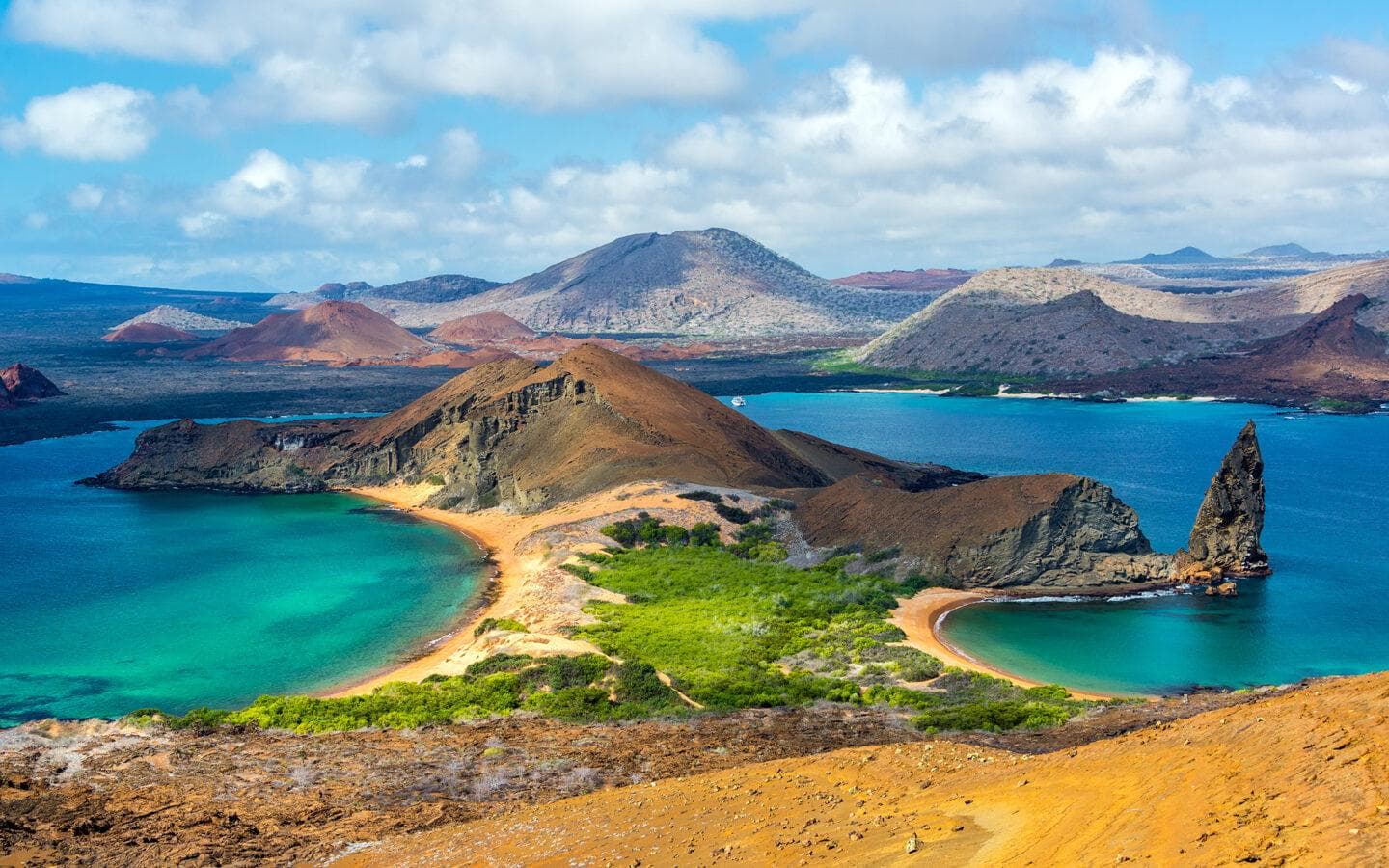
The Galápagos Islands can be visited all year, and there's no single best month. What changes is the mix of conditions: warmer, wetter weather and calmer seas from about December to May, and cooler, drier, breezier weather from about June to November, when the water is cooler and rich in nutrients. Wildlife activity, water comfort, crowds and how rough the ocean feels all shift with the seasons, so the best time depends on what you most want from your trip.
This guide explains how the seasons work, what each month tends to look like, and how to match your dates to your priorities. Conditions vary by year and island, and wildlife sightings can't be guaranteed.
The Short Answer
There isn't one best month, but this table points you toward the right season for your priorities.
|
If you care most about… |
Consider |
Why |
|
Warmer water and generally calmer seas |
December to May |
Warm-season ocean and weather are typically milder for swimming and for people prone to motion sickness |
|
Active marine life, whales and penguins |
June to November |
The cooler, nutrient-rich water supports more marine activity |
|
Courting and nesting seabirds |
March to June, with some species through November |
Timing varies by species and island |
|
Lush, green landscapes |
January to May |
The warm season brings rain and greenery |
|
Cooler air for long walks |
June to November |
Mild, breezy weather suits hiking |
|
Families with children |
December to May, or summer school breaks |
Warmer, calmer conditions, but holiday periods are busy and book early |
|
Fewer crowds |
Check dates carefully |
Holiday weeks, including late December to early January, tend to be busiest |
The Galápagos By the Numbers
|
Fact |
Detail |
|
Location |
About 1,000 km (600 miles) off Ecuador's coast, on the equator |
|
Islands |
13 main islands, plus many smaller islands and rocks |
|
Protected area |
About 97% of the islands' land area is national park |
|
Daylight |
About 12 hours a day year-round |
|
Air temperature |
Roughly the low 70s°F in the coolest months to the upper 80s°F in the hottest |
|
Water temperature |
Roughly the mid-60s°F at the coolest to the mid-70s°F at the warmest |
|
Rainfall |
Driest in the cool season, wettest in the warm season, with March often the wettest month |
|
Marine life |
About two dozen species of whales and dolphins have been recorded |
How the Galápagos Seasons Wwork
Because the islands sit on the equator, temperatures don't swing the way they do in the U.S. But the islands do have two distinct seasons, driven by ocean currents. In the warm season, warmer Pacific waters bring heat, humidity and rain. In the cool season, cooler, nutrient-rich currents, including the Humboldt Current, feed marine life, and the weather is milder and often misty. Exactly when each season starts and ends varies from year to year.
|
Aspect |
Warm season |
Cool season |
|
Months |
About December to May |
About June to November |
|
Air feel |
Hot, sunny and humid |
Mild, breezy and often misty |
|
Water temperature |
Mid-70s°F |
Upper 60s to low 70s°F |
|
Rain |
Short, heavy showers |
Light drizzle (garua) |
|
Seas |
Generally calmer |
Often choppier |
|
Often popular for |
Snorkeling, beaches, land birds |
Marine life, whales, hiking |
These are typical patterns, not guarantees. Conditions differ by island, by year and by the currents.
 Best Time To Visit The Galápagos By Month
The numbers below are approximate averages and the highlights are typical, not promised. Wildlife timing varies by year and island.
|
Month |
High (°F) |
Water (°F) |
Rain (in) |
What stands out |
|
January |
84 |
74 |
2.0 |
Hot and green; turtle and land bird nesting |
|
February |
86 |
76 |
2.6 |
Warm, clear water; peak turtle nesting |
|
March |
88 |
76 |
3.3 |
Hottest, wettest month; booby displays |
|
April |
86 |
76 |
1.4 |
Waved albatrosses return |
|
May |
82 |
74 |
0.6 |
Drier, warm water; albatross courtship |
|
June |
78 |
74 |
0.1 |
Booby nesting; cooler, drier weather begins |
|
July |
76 |
72 |
0.2 |
Whales possible; busy seabird colonies |
|
August |
74 |
66 |
0.2 |
Coolest water; penguins and whales possible |
|
September |
76 |
68 |
0.3 |
Whales, dolphins and rays possible |
|
October |
77 |
70 |
0.3 |
Fur seal pups; iguana breeding |
|
November |
78 |
72 |
0.2 |
Quieter in some years; turtles off beaches |
|
December |
80 |
74 |
0.3 |
Warming water; first flowers; busy holiday period |
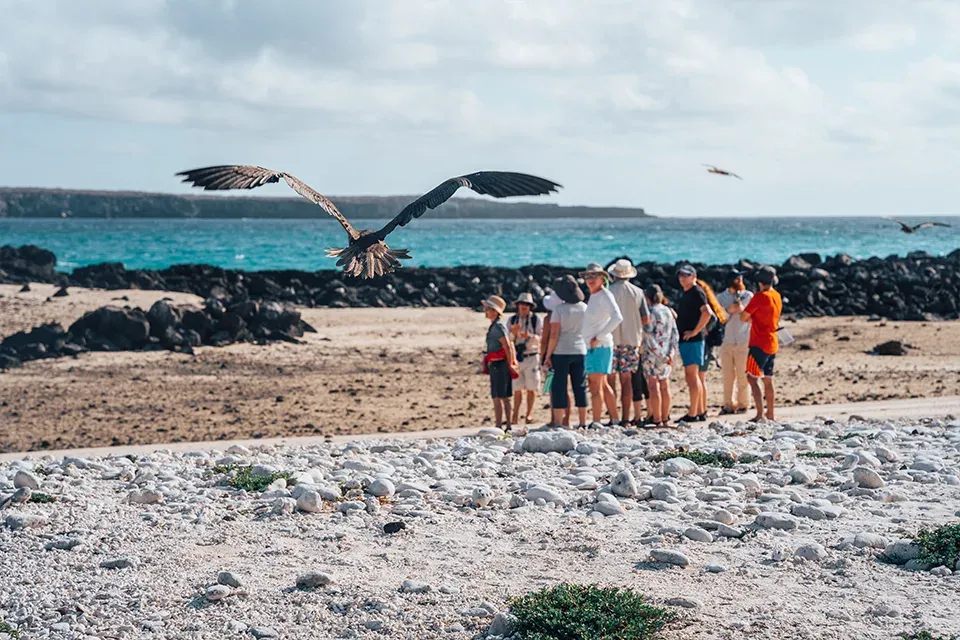
How to read it. From January to March it's hot and humid, and the water is usually warm enough to swim comfortably, though comfort is personal. April and May bring albatross courtship and warm water, with the rain tapering off. June and July turn cooler and drier, with busy seabird colonies. August and September have the coolest water and some of the best marine life activity, so most visitors want a wetsuit. October and November bring young animals such as fur seal pups. December brings new greenery, and also holiday crowds.
Best Time To Visit The Galápagos By Island
What you see depends on where you are as well as when. Visitors can only go to approved visitor sites, and which islands you reach depends on your boat's route or your day-tour options. Santa Cruz, San Cristóbal and Isabela have towns and hotels, while many other islands are reached only by cruise or licensed excursions.
|
Island |
Best months |
What you'll see |
|
Española |
April to December |
Waved albatrosses return in April and stay through December; "Christmas iguanas" turn red and green from October |
|
Genovesa |
December to May |
Frigatebird nesting peaks, with males inflating bright red throat pouches; red-footed boobies peak in June |
|
Fernandina and Isabela |
May to October |
Penguins and flightless cormorants nest from May; marine iguanas breed in October |
|
Santa Cruz highlands |
Year-round, with variations |
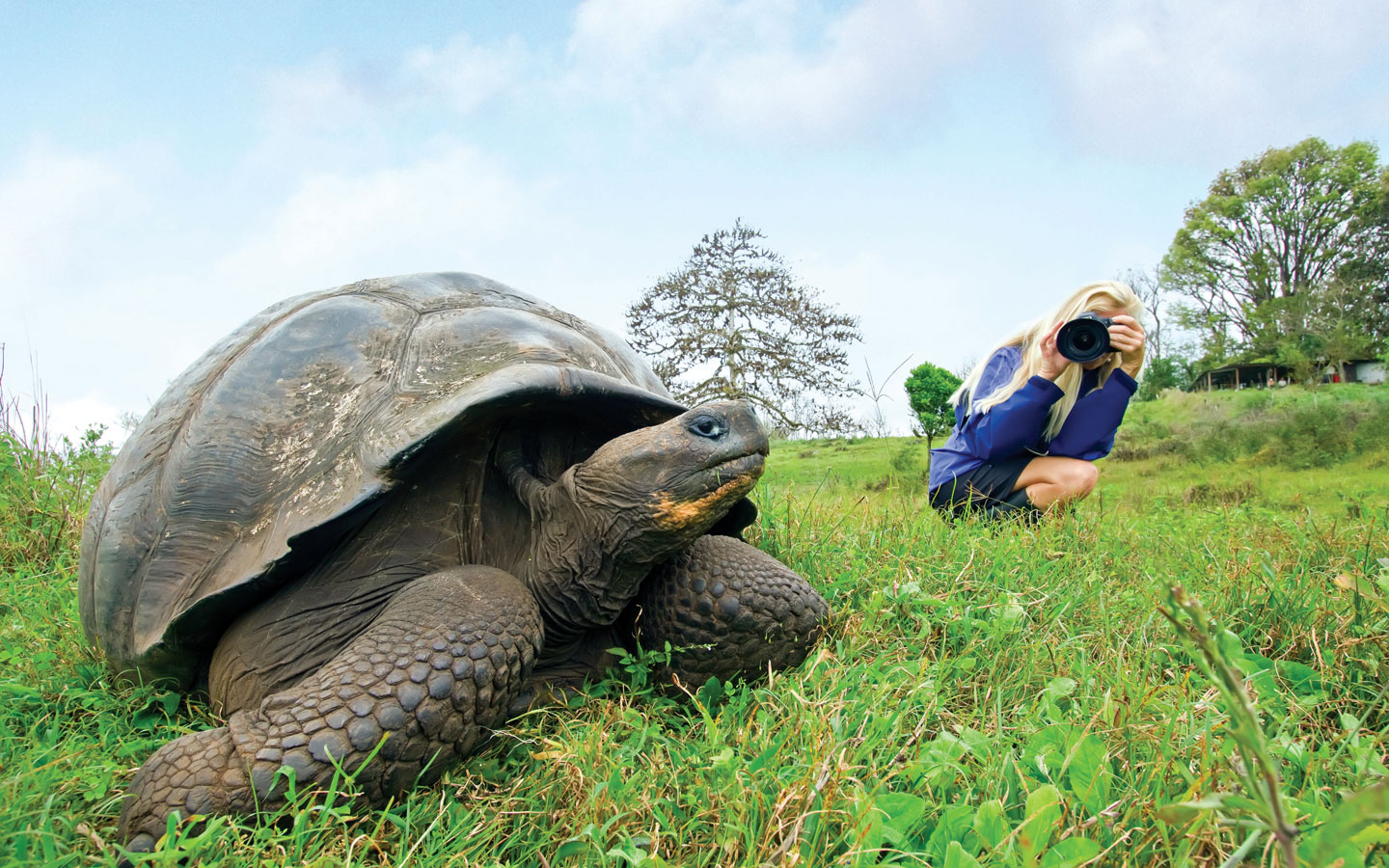
Giant tortoises can be seen throughout the year; some move between highlands and lowlands seasonally, so ask your guide |
|
Beaches across the archipelago |
December to March |
Green sea turtle nesting, with activity peaking in January and February |
The waters around the western islands, such as Isabela and Fernandina, are often cooler because of upwelling, and the temperature changes from year to year rather than on a fixed schedule. If you plan to snorkel there, bring or rent a wetsuit and ask your operator what to expect.
Best Time To Visit The Galápagos For What You Love
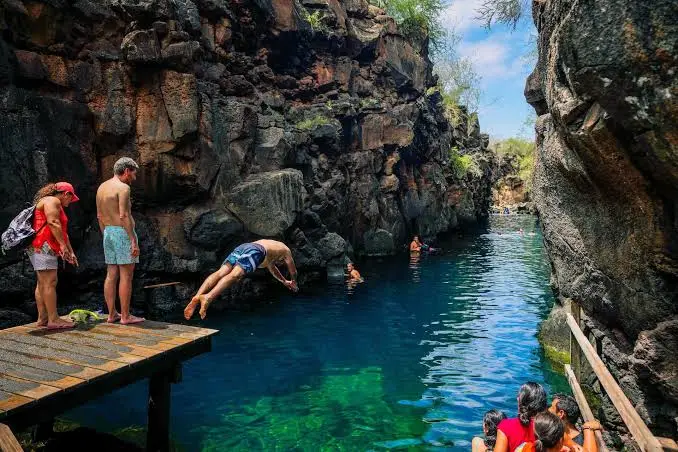
Snorkeling and swimming. The warm season (December to May) usually has warmer, clearer water. The cool season (June to November) often brings more marine activity but chillier water. Wetsuit needs vary by person, season and excursion, so check with your operator about what's provided or available to rent, and choose the thickness you'll be comfortable in.
Wildlife and birdwatching. Wildlife is active in every month. Many seabirds breed and nest between about March and June, and colonies stay busy until about November, when fur seal pups arrive. The islands differ, so match your itinerary to the species you most want to see.
Whales and marine life. Whales and dolphins can be seen in the cooler months, often from about July to September, but sightings are never guaranteed. Whale sharks gather around the far northern islands of Darwin and Wolf, mainly from about June to November. Reaching them usually means a specialized scuba-diving liveaboard trip for certified divers, not a standard Galápagos cruise or land-based visit.
Families. The calmer seas and warmer water of December to May suit many families. Summer school vacations also work for many, though holiday weeks are busy, so book early.
Photography. The warm season, roughly January to April, brings sunny conditions and vivid greens. The cool season brings active wildlife and dramatic skies, and misty light can make for moody photos.
Cooler air. If heat bothers you, the cool season is more comfortable for long walks across seabird colonies and other open landscapes.
If you're prone to seasickness. Seas are generally calmer in the warm season, but conditions vary by route and day. Tell your trip planner, and ask about cabin location and vessel size.
Timing And Crowds
The islands are busiest during holiday periods, especially from late December to early January, and U.S. summer vacations can also bring more visitors. Cruise cabins and island hotels fill early at those times, and cabins on the most popular boats can book out many months ahead. [Insert verified visitor and occupancy data by month, from the park or your suppliers.]
If your dates are flexible, ask us which weeks are likely to be quieter for your itinerary. Seasons also shift a little from year to year, so treat months as a guide rather than a guarantee.
Tips For Choosing Your Dates
- Start with what matters most. Swimming and snorkeling, wildlife, comfort at sea or school breaks all point to different months.
- Pack for the season. In the warm season, bring sunscreen, a hat and rash guards. In the cool season, bring a light jacket for breezy mornings and boat rides. Ask your operator whether wetsuits are provided or available to rent.
- Budget for fees. Most adult foreign visitors currently pay the Galápagos National Park entrance fee, US$200 as of August 2024, plus a separate Transit Control Card. Exceptions apply by age, residency and nationality. Check the official site, galapagos.gob.ec, and ask us whether your quote includes these fees.
- Follow the park rules. Visits to the islands are with licensed naturalist guides, and visitors are asked to keep a safe distance from wildlife, typically about 6 feet (2 meters). Rules can change, so your guide will explain the current ones.
- Book early. The best cabins and hotels fill well ahead, especially around holidays.
 Plan Your Galápagos Trip With Us
Choosing your month is the first step. VA Expeditions is a U.S.-based travel planner that works with local specialists in Ecuador to design private trips across South America, including the Galápagos. Tell us your dates, who's traveling and what you most want to experience, and we'll help match them to the right season and itinerary.
Start Planning Your Galápagos Journey
Commonly Asked Questions About the Best Time to Visit the Galapagos
When's the best time to take a first trip to the Galápagos?
There's no single best month. For warmer water and calmer seas, many people choose December to May. For active marine life and cooler air, June to November is popular. Late December and early January are busy, so book early if you travel then.
When's the best time to go for snorkeling?
December to May usually has warmer, clearer water. June to November often has livelier marine life but cooler water. Ask your operator whether wetsuits are included or available to rent.
When can I see whales?
The cooler months, often around July to September, offer the best chances, but sightings aren't guaranteed.
When are the Galápagos least crowded?
Crowds vary by year and itinerary. Late December to early January is among the busiest times, and summer vacation periods can be busy as well. Ask us which weeks look quieter for your plans.
Is it bad to visit during the rainy season?
No. In the warm season, rain usually comes in short, heavy showers, and the islands turn green. March is often the wettest month.
When's the best time to visit with children?
Many families choose December to May for warmer water and calmer seas, though summer school breaks work too. Holiday periods are busy, so plan ahead.
I get seasick. When are the seas calmer?
Seas are generally calmer from about December to May and choppier from June to November, but it varies by route and day. Tell us about your concerns when you plan.
When can I see giant tortoises?
Giant tortoises can be seen all year, including in the Santa Cruz highlands. Some tortoises move between highlands and lowlands at certain times of year, so ask your guide what to expect.
Do I need a wetsuit?
It depends on the season, the water and how you feel the cold. Many people want one in the cooler months, roughly June to November, and some find the warm season comfortable without one. Check with your operator about what's provided.