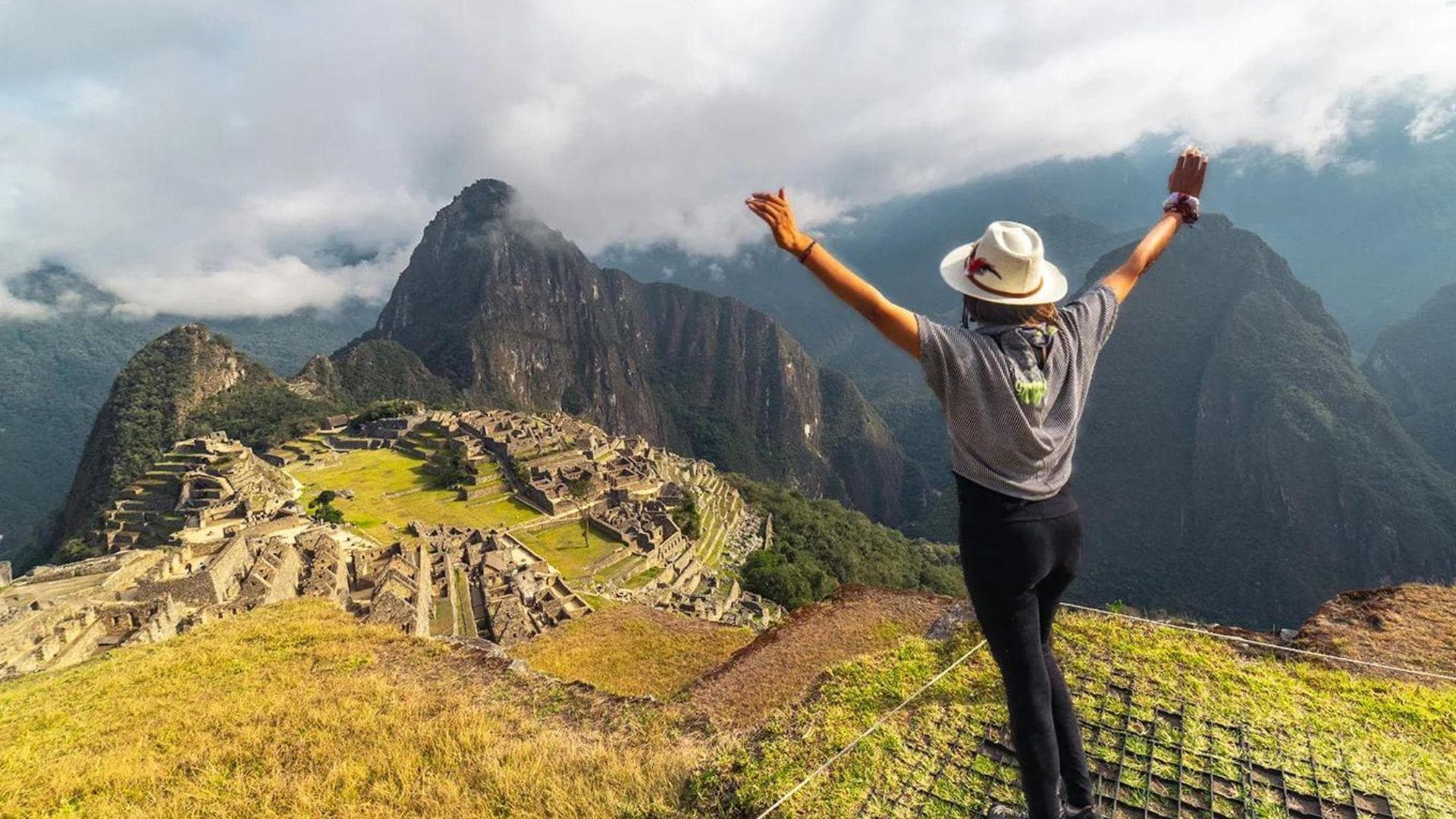
There is no continuous public road from Cusco to Machu Picchu Pueblo (also called Aguas Calientes) or to the archaeological site's entrance. Road access does reach the Hidroeléctrica sector, where travelers continue on foot or by rail and a separate shuttle road connects the pueblo with the entrance. Most visitors therefore arrive by train, on foot or a combination of the two. The citadel sits at 2,430 meters (7,970 feet) in Peru's Cusco region.
Daily attendance is capped. Ministerial Resolution No. 000285-2025-MC sets a maximum of 5,600 visitors per day on high season dates (January 1; April 2 to 5; June 19 to November 2; December 30 to 31) and the cap is 4,500 per day for the rest of the year. The resolution was published in the official gazette El Peruano on November 1, 2025.
This guide covers the route stage by stage: getting to Cusco, adjusting to the altitude, choosing a train, reaching the site and the trekking options. Fares, schedules, permit limits and transfer times change during the year. Treat the figures here as planning guidance and confirm them with the operator or official source before you book.
How to Get to Machu Picchu: The Short Answer
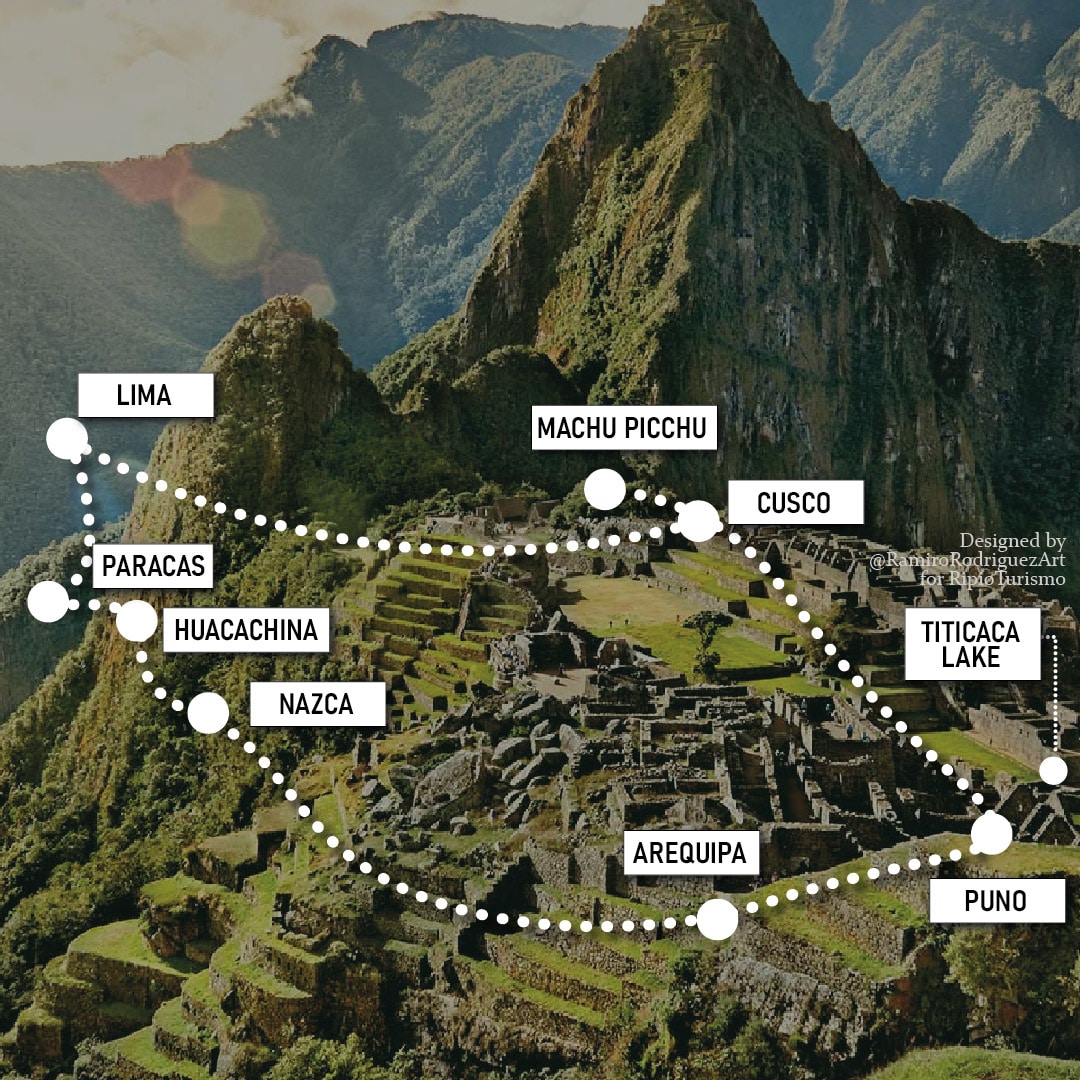
Most travelers fly to Cusco, usually connecting through Lima. They spend time adjusting to the altitude, take a train to Machu Picchu Pueblo, and ride a shuttle bus up to the site entrance. Others trek in, either on one of the regulated Inca Trail routes or on a different trek such as Salkantay.
These routes are not interchangeable. Each requires a different combination of entrance ticket, trail authorization, authorized operator, train and shuttle, and they do not all end at the same entrance point. The right choice depends on your time, fitness, budget, comfort preferences, permit availability and the experience you want.
Step 1: Fly to Cusco
Most international itineraries connect through Lima. From the US, that usually means an international flight to Lima, then a domestic flight to Cusco. LATAM, SKY and JetSMART all operate daily nonstops on that route, with a block time of roughly 1 hour 15 minutes to 1 hour 30 minutes.
We found no confirmed scheduled direct international service to Cusco for this review, so this guide assumes a Lima connection. Check current airline schedules from your origin airport.
Build in buffers. A same-day connection in Lima carries real risk if your first flight is delayed, so many travelers arrive in Lima the night before or leave generous time between flights. Lima moved all operations into a new single terminal on June 1, 2026, with longer walking distances, so allow extra time from curb to gate, according to The Only Peru Guide.
Step 2: Plan for the Altitude
Cusco sits at about 3,399 meters (11,150 feet), higher than most travelers have ever been. The lower Sacred Valley is lower, and Machu Picchu is lower than Cusco at 2,430 meters (7,970 feet). You don't have to stay in Cusco. Travelers can transfer from Cusco's airport to the lower Sacred Valley and continue toward Machu Picchu.
The CDC's Yellow Book describes an option for Cusco: travelers can descend to elevations lower than the airport to sleep for 1–2 nights before beginning their ascent, which may reduce the need for medication. The same guidance recommends avoiding alcohol and keeping exercise mild for the first 48 hours at altitude. Individual response varies widely, so no single number of days works for everyone. Talk to a doctor or travel-medicine clinic before you go, especially if you have a health condition or a history of altitude illness as per NCBI
Step 3: Reach the Rail Line
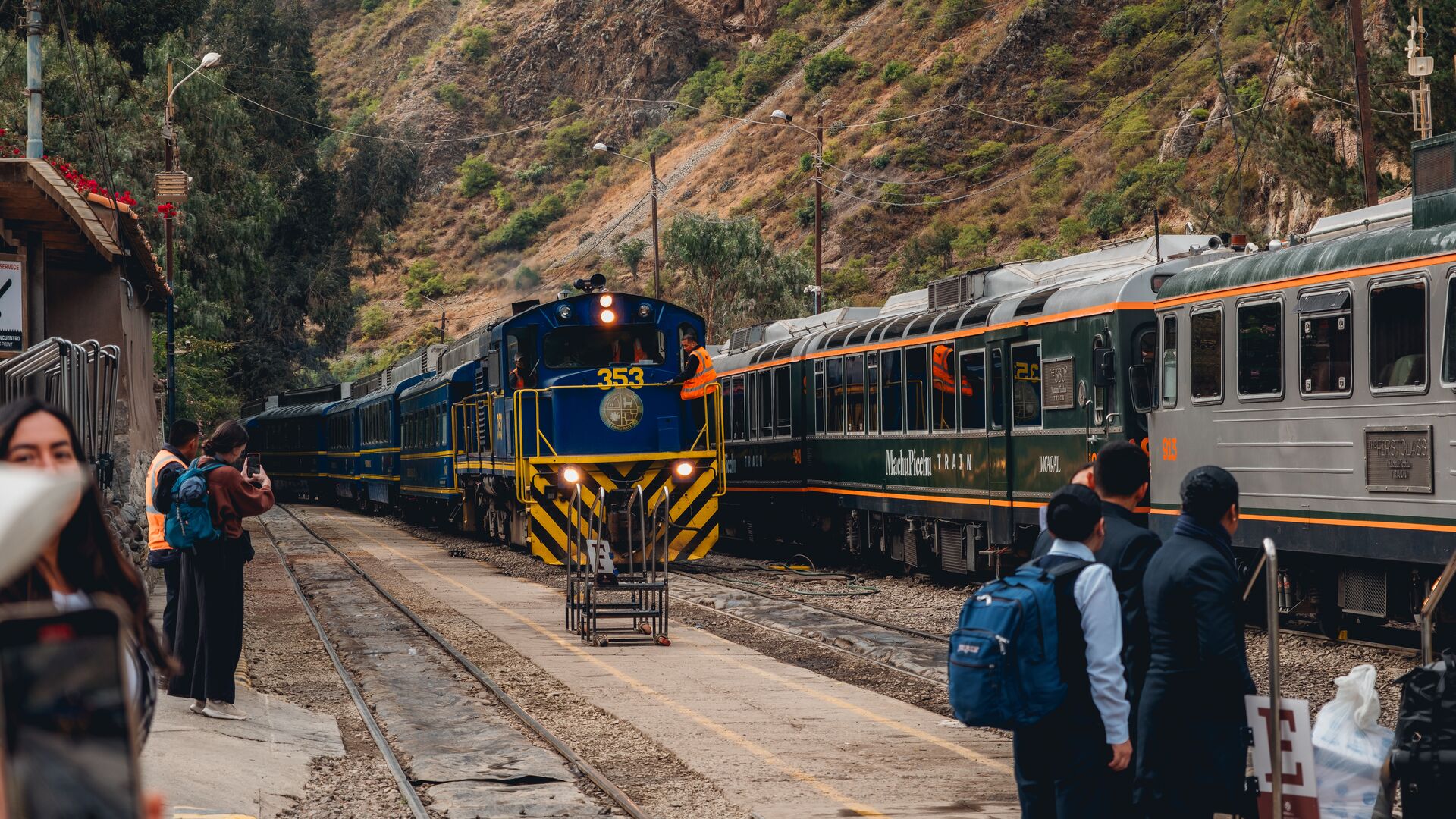
Trains to Machu Picchu Pueblo depart from different stations depending on the provider, service, date and season. PeruRail operates from the San Pedro, Poroy and Wanchaq (bimodal service) stations in Cusco, from Ollantaytambo in the Sacred Valley, and from Machu Picchu Pueblo.
- Ollantaytambo: Reached by road from Cusco. The transfer typically takes roughly 1.5 to 2 hours depending on traffic and route.
- Cusco-area stations (San Pedro, Poroy): Used by certain services and dates. Travel time to the pueblo is longer, roughly 3.5 to 4 hours door to door for services from Cusco.
- Bimodal services (bus + train): A combined journey in which a bus leaves Cusco (Wanchaq for PeruRail, Av. El Sol for Inca Rail) and connects to the train at Ollantaytambo, under a single booking. Operating dates vary by provider, so check the schedule for your travel date.
Which option is best depends on your hotel location, schedule and entry time, not on a single rule. Check current schedules on perurail.com and incarail.com.
Step 4: Choose Your Train
PeruRail and Inca Rail both run services to Machu Picchu Pueblo on the same track. Fares are dynamic and inclusions depend on the exact product and booking conditions.
|
Operator |
Named service |
Typical origin stations |
Basis |
What it generally offers |
|
PeruRail |
Expedition |
Ollantaytambo, Poroy, San Pedro; bimodal from Wanchaq |
One-way, per adult, USD |
Entry-level service |
|
PeruRail |
Vistadome |
Ollantaytambo, Poroy, San Pedro, Wanchaq (bimodal) |
One-way, per adult, USD |
Panoramic windows |
|
PeruRail |
Vistadome Observatory |
Varies by date |
One-way, per adult, USD |
Panoramic cars with an open-air observation car |
|
PeruRail |
Hiram Bingham (Belmond) |
Bimodal from Wanchaq; varies |
Per adult, USD |
Luxury service; confirm inclusions for your booking |
|
Inca Rail |
Voyager, 360°, First Class, Private |
Ollantaytambo; bimodal from Av. El Sol |
One-way, per adult, USD |
Tiered service; compare on the Inca Rail site |
Before publishing, add two columns pulled live from each operator's booking engine on the day of review: the current fare and the last-checked date. Do not hard-code fares in the copy. The Hiram Bingham is a separate category. Operator comparisons note that it typically includes entry and a private bus, while some Inca Rail all-inclusive fares also bundle entry and the bus. Confirm exactly what your fare includes at booking.
Baggage. PeruRail allows one bag or backpack per passenger on its Machu Picchu services, up to 8 kg (17.64 lb) and 115 linear cm (height + length + width), roughly 55 × 35 × 25 cm. Inca Rail's baggage policy is at incarail and secondary sources report an 8 kg limit with a slightly larger dimension cap. Verify the dimension limit directly with Inca Rail before publishing.
For larger bags, don't assume the hotel will hold them. PeruRail lists free luggage storage at Ollantaytambo Station, open daily from 4:15 AM to 9:00 PM. Confirm current storage hours, and any hotel storage, with the provider.
Step 5: The Final Stretch, from the Pueblo to the Site
The train ends at Machu Picchu Pueblo, a small town in a river gorge. From there a shuttle bus climbs a switchback road to the site entrance. The uphill ride takes roughly 25 to 30 minutes. The first bus leaves at 5:30 a.m. from Avenida Hermanos Ayar, and the last uphill bus leaves at 3:30 p.m.
The shuttle ticket and the archaeological entrance ticket are separate unless a package explicitly includes both. Consettur has long held the concession, but from February 2026 the pueblo agreed that Consettur and San Antonio de Torontoy would both operate temporarily while a new concession process is defined. Confirm the current operator, fare and boarding procedure. The reference fare for foreign adults has been reported as US 24 round trip. Other sources list higher figures, so verify before publishing.
Your entrance ticket is for a specific time, so build in a generous cushion. Bus queues, weather, road controls and train delays all affect how much time you need. On peak mornings, operators suggest arriving well ahead of the first bus, and note that tickets can't be bought at the stop that morning. The buffer is itinerary-specific, and no single number is safe.
If you're late, PeruRail reports a tolerance of 30 minutes in low season and 45 minutes in high season after your printed entry time, and after that you can't enter unless there is a justified reason. Confirm the current policy with the Ministry of Culture.PeruRail
The Other Way In: Trekking
Several regulated Inca Trail routes exist with different distances and durations. SERNANP and the Ministry of Culture (through DDC Cusco) jointly regulate access. The two most common routes are:
- Classic Inca Trail: 4 days, roughly 42 km, following original Inca stonework. It crosses Dead Woman's Pass at about 4,215 meters (13,828 feet) and finishes via Intipunku (the Sun Gate). Whether you get a view of the citadel from there depends on the weather.
- Short Inca Trail (Km 104): 2 days, and part of the regulated network.
Access requires booking through an authorized operator. By law a maximum of 500 people per day may enter the Classic Trail, and only around 200 of those spaces go to trekkers, with the rest allocated to guides, cooks and porters. The 2-day Km 104 route reportedly has a separate quota of roughly 250 daily starts. These allocations come from operator sources. Confirm the 2026 figures with SERNANP or DDC Cusco before publishing them as fact. Permits often sell out well ahead of the start date.
The Classic Trail closes in February for maintenance and reopens March 1. Confirm this against a current official source before publishing.
|
Route |
Permit or authorization |
Entrance ticket |
Operator |
Final access |
|
Classic Inca Trail |
Trail permit, non-transferable, issued through an authorized operator |
Handled separately in 2026, see note below |
Authorized operator required |
Finishes via Intipunku |
|
Short Inca Trail (Km 104) |
Same regulated network; permit required |
Same treatment as Classic, see note below |
Authorized operator required |
Typically enters via Intipunku |
|
Salkantay |
No Inca Trail permit; separate route and starting point |
Standard circuit ticket |
Operator recommended |
Typically ends in the Hidroeléctrica / Machu Picchu Pueblo corridor |
Note on 2026 ticket treatment (hold for operator confirmation): Operators report that from January 1, 2026 the trek permit and the citadel ticket are separate documents, purchased separately. Resolution 000306-2025-MC added Article 15-B to the visitor regulations, allowing Inca Trail trekkers to access Circuit 3-B through limited quotas booked through authorized agencies. Operator sources disagree on exactly what the permit itself includes, so have VA's Peru operator confirm the current rule in writing before this goes live.
The Short Inca Trail is not a permit-free alternative. Salkantay doesn't share the Classic Trail's starting point or automatically enter through Intipunku.
Booking the Machu Picchu Entrance Ticket
Every visitor needs an entrance ticket, however they arrive. Tickets are sold exclusively through the official site, tuboleto.cultura.pe, and 1,000 tickets per day are also available in person at the Centro Cultural in Machu Picchu Pueblo. The current system has three circuits grouping ten routes:
|
Circuit |
Routes |
Notes |
|
1 – Panoramic |
1-A Machu Picchu Mountain; 1-B Upper Terrace; 1-C Intipunku; 1-D Inca Bridge |
1-C and 1-D are high season only |
|
2 – Classic |
2-A Designed Route; 2-B Lower Terrace |
Both open year-round |
|
3 – Royalty |
3-A Huayna Picchu; 3-B Lower Urban Sector; 3-C Great Cavern; 3-D Huchuy Picchu |
3-D is high season only |
The Panoramic circuit's upper terrace route is available all year, while Intipunku and Inca Bridge routes are available only in high season. Verify the high-season status of the other routes on the official circuits page for your date, since not every route covers the terraces, Intipunku or the mountain hikes. Mountain routes have smaller daily limits.
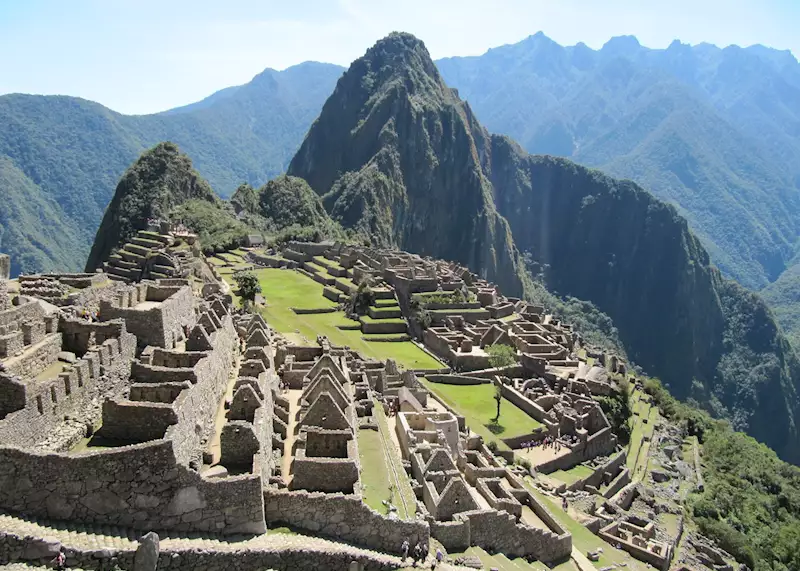
Prices (foreign adult, in soles). A standard circuit costs S/152 through April 30, 2026, and S/163 from May 1, when a SERNANP conservation fee of S/11 applies. Mountain routes cost S/200 and S/211 respectively. At an assumed rate of S/3.70 per US dollar, S/163 is roughly US$44. This is an approximation only, so check the current exchange rate. Student and child rates and Andean Community rates differ. Confirm all figures against the official portal, since these numbers come from operator sources.
Capacity is 4,500 on regular-season days and 5,600 on the specified high-season dates listed at the top of this guide. Availability varies by route, date and entry hour, so check live availability instead of relying on a fixed lead time. We recommend securing your entrance ticket before your train ticket. That is a planning recommendation, not a government rule.
Best Time to Go
May through September often brings drier conditions, but clear skies, uninterrupted rail operations and lower crowd levels can't be guaranteed. December through March is typically the wetter period, and weather can affect travel plans. Bimodal service depends on the operator and date, so check current schedules on perurail.com and incarail.com. Official admission tariffs aren't presented as seasonal discounts, so don't budget on that assumption.
Putting the Route Into an Itinerary
Once you've chosen a route, decide how many days to allow. VA Expeditions itineraries that include Machu Picchu range from a few days to a couple of weeks in the Sacred Valley and Andes.
Frequently Asked Questions
Can you drive to Machu Picchu?
Not directly. There is no continuous public road from Cusco to Machu Picchu Pueblo or the archaeological entrance. Road access does reach the Hidroeléctrica sector, from which travelers continue on foot or by rail, and a separate shuttle road connects the pueblo with the entrance. In practice, most visitors take the train and shuttle, or trek.
Do I need a guide?
For the Inca Trail network, yes. Access requires an authorized operator and can't be done independently. For the site itself, official visitor materials recommend a qualified guide. Reports on enforcement at the gate are inconsistent, and one review noted the Ministry said in 2024 it was evaluating making a guide mandatory for the citadel. Confirm the current rule for your route and date. VA Expeditions must state whether its itinerary includes a private guide and who supplies that service.
How far in advance should I book?
Lead times depend on live availability and should be verified when you inquire. Plan separately for the Classic Inca Trail, the Short Inca Trail, high-demand Machu Picchu routes, trains and peak periods. Operators suggest booking the Classic Trail roughly six months ahead for high season. Treat that as an operator estimate, not a guarantee. PeruRail recommends booking trains at least 2 to 4 weeks ahead and earlier in June to August and December to January.
Is it worth staying overnight in Machu Picchu Pueblo?
It can be. An overnight stay adds flexibility, gives you a buffer against transport disruptions, and can support an early or late timed entry. It doesn't guarantee smaller crowds, which depend on your date, circuit, entry hour and conditions. Hot springs are an optional local activity. The trade-off is added cost and time versus a same-day visit, which is faster but tighter and more exposed to delays.