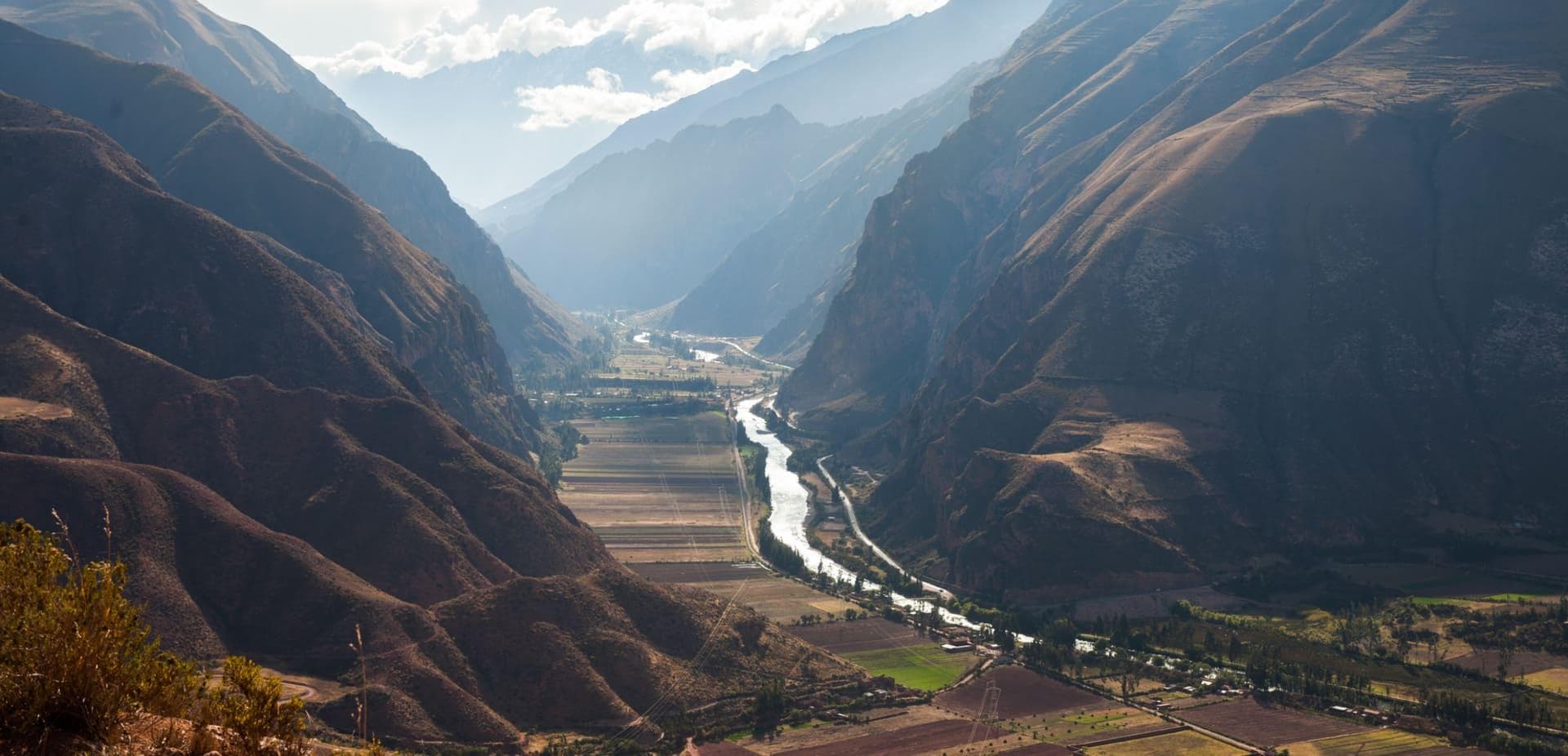
The Sacred Valley (Valle Sagrado) lies in the Andes between Cusco and Machu Picchu, along the Urubamba River, which Quechua speakers call Willkamayu, or “sacred river.” The valley floor sits lower than Cusco, though some attractions above it, such as Chinchero and Moray, are higher. Inca archaeological sites, agricultural terraces, and market towns line the route, and many visitors pass through on the way to Machu Picchu. Some treat the valley as a stop of a few hours, while others build several days around it.
This guide helps first-time visitors make the decisions that shape a Sacred Valley trip: how many nights to spend, whether to stay in the valley before or after Cusco, which sites to prioritize, how to get around, and how to fit the valley around your train and Machu Picchu entry. An overnight stay in the valley is most useful for travelers heading to Machu Picchu by train, those who want a quieter base than Cusco, and anyone who wants to see several sites without a long day of driving. Whether you have one day or a week or more, you will find what you need to choose a route.
Where Exactly Is the Sacred Valley?
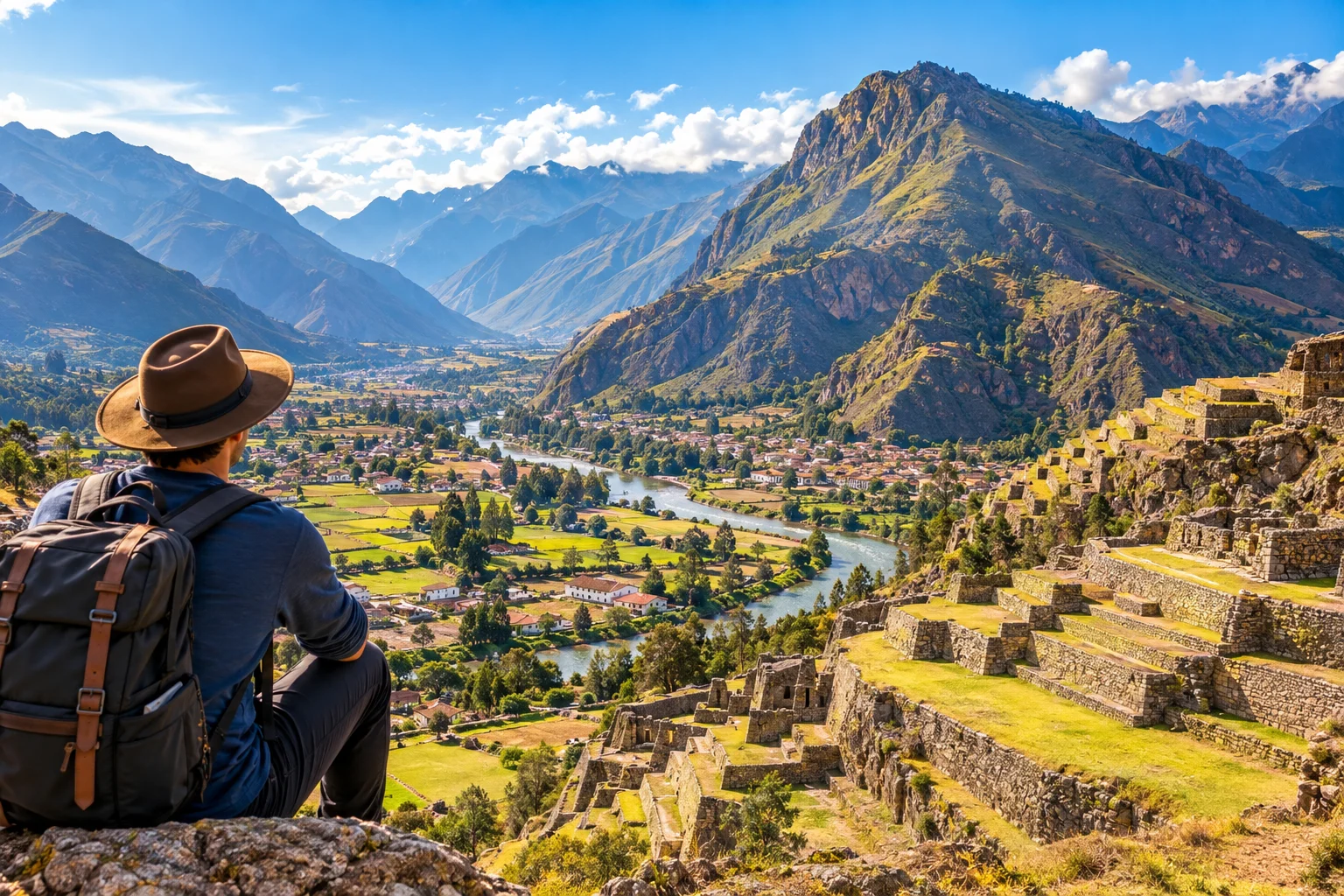
The Sacred Valley, known as Valle Sagrado in Spanish, follows the Urubamba River northwest of Cusco. The core valley corridor runs roughly from Pisac to Ollantaytambo, with Urubamba and Yucay in between. Higher attractions, such as Chinchero, Moray, and the Maras salt pans, sit on the plateau above the valley floor and are usually reached by separate roads. The table gives approximate distances, drive times, and elevations from Cusco.
|
Place |
Approx. distance from Cusco |
Typical drive time |
Approx. elevation |
|
Cusco |
— |
— |
11,150 ft (3,400 m) |
|
Pisac (town) |
20 mi (33 km) |
45–60 minutes |
9,700 ft (2,970 m) |
|
Chinchero |
18 mi (30 km) |
40–60 minutes |
12,300 ft (3,760 m) |
|
Moray |
30 mi (50 km) |
1–1.5 hours |
11,500 ft (3,500 m) |
|
Maras salt pans |
30 mi (48 km) |
1–1.5 hours |
11,100 ft (3,380 m) |
|
Urubamba and Yucay |
36 mi (58 km) |
1–1.5 hours |
9,400 ft (2,870 m) |
|
Ollantaytambo |
45 mi (72 km) |
1.5–2 hours |
9,160 ft (2,790 m) |
Figures are approximate and vary with the route, traffic, and road conditions. Because the valley floor sits roughly 1,400 to 2,000 feet below Cusco, some travelers sleep there first. That can be one element of a gradual itinerary, but sleeping lower does not prevent altitude illness or guarantee an easier adjustment, and Chinchero, Moray, and the Maras salt pans are as high as or higher than Cusco. Reactions to altitude vary from person to person.
Geographically, the valley brings together Andean villages, Inca remains, family farms, and the Urubamba River, which flows northwest past the base of the Machu Picchu mountain and on toward the Amazon basin. People have farmed and lived here for centuries, so visitors can see everyday Andean life alongside the archaeological sites.
Best Time to Visit the Sacred Valley
Highland seasons run opposite to the four-season pattern many travelers know, so timing matters.
Dry season (May to September)
Skies are generally clearer and rain is less frequent, which makes this the main travel season for the valley. PROMPERÚ describes the Andes' lower-rainfall period broadly as April through October, and conditions vary by elevation, month, and year, so clear weather is never guaranteed. Nights can be cold, especially at higher elevations, so bring warm layers.
Demand is a separate matter from weather. Visitor numbers are highest from June through August, when hotels fill and popular sites are busy. Book trains, Machu Picchu tickets, and Inca Trail permits many months ahead for that period.
Transition months (April and October)
April and October are transition months, when weather can shift between dry-season and rainy-season patterns. September is commonly still part of the dry-season travel period. Visitor numbers and prices are often lower than in peak months, but this varies by year and by supplier, so confirm availability and rates instead of assuming them.
Rainy season (November to March)
Rain is more frequent, and showers can fall at any time of day, though many days include dry periods. The scenery is greener, and some sites may be quieter, but this varies. The Inca Trail network is normally closed throughout February for annual conservation, and rain can affect roads, outdoor activities, and rail operations, so this season will be better for those who can be flexible about their travel dates and are mainly interested in the valley itself rather than the popular trek.
 Getting To and Around the Sacred Valley
Most visitors fly into Peru via the international airport in Lima and then connect to Cusco on a short flight. From Cusco, the valley is roughly one to two hours away by road, depending on your destination and traffic. The options below differ in flexibility, comfort, cost, and risk. A driver and a guide provide different services, so decide which you need.
Private transfer (driver)
Best for travelers with luggage, families, older travelers, or tight schedules. A driver provides transportation and typically does not provide interpretation at the sites. Routes and stops are agreed in advance and can usually be adjusted within the day. Luggage space depends on the vehicle, so confirm your bags in advance. Vehicle types vary, and access to many sites involves steps and uneven ground. Payment is usually arranged in advance or on the day, under the operator's terms. Transfers do not include site tickets, and travel times vary with road conditions.
Licensed guide
A licensed guide provides interpretation and context at the sites and is a separate service from transportation unless a package combines them. Before you book, confirm the guide's license and language, group size, whether entrance tickets and transport are included, and the payment and cancellation terms.
Colectivos (shared vans)
Colectivos are shared vans that residents use between towns, and they are the lowest-cost option. They usually leave when full rather than on a fixed schedule, pickup points are informal, and routes generally connect towns rather than individual sites. Bring small bills in local currency, expect limited luggage space and crowded conditions, and allow extra time. Road-safety standards vary, and recourse is limited if something goes wrong. This option suits flexible travelers with little luggage who are comfortable asking for directions.
Rental car
Renting a car offers the most independence, but Andean driving is demanding: steep, narrow mountain roads, unmarked turns, livestock, and variable road surfaces. Before you rent, consider your mountain-driving experience, the rental's insurance coverage and deductible, offline navigation, parking at busy sites and towns, and current weather and road conditions, which can change with rain. Roadside assistance may be limited outside towns. If you are unsure, a private driver removes many of these variables.
Organized day tours from Cusco
A full-day tour from Cusco is a common way to see the valley in a single day. Itineraries typically include Pisac, Ollantaytambo, and either Chinchero or Moray and Maras, and some include lunch. One day means a limited number of stops, a set schedule, and time in transit, and admission tickets may be separate. Confirm what is included before you book.
Transport options at a glance
|
Option |
Best for |
Flexibility, luggage, and access |
Payment |
Main risks and limits |
|
Private transfer (driver) |
Families, older travelers, travelers with luggage, tight schedules |
High route flexibility within the day. Luggage depends on the vehicle. Door-to-door, but site access still involves steps. About 1–2 hours from Cusco, depending on destination and traffic. |
Usually arranged in advance or on the day, under the operator's terms |
No interpretation at sites. Tickets not included. Delays from road conditions. |
|
Licensed guide |
Travelers who want context and interpretation at the sites |
A separate service from transport unless a package combines them. Ask about pace, steps, and group size. |
Confirm what is included (tickets, transport) and the cancellation terms |
Confirm the license and language before you book |
|
Colectivo (shared van) |
Flexible travelers with little luggage |
Low flexibility: leaves when full, connects towns rather than sites. Limited luggage space and crowded conditions. May not suit travelers with mobility needs. |
Cash in small bills |
Variable road-safety standards, limited recourse, unpredictable timing |
|
Rental car |
Experienced mountain drivers who want independence |
Highest flexibility. Luggage is easy. Parking can be difficult at busy sites and towns. |
Rental terms, insurance coverage, and deductible |
Steep, narrow roads, livestock, weather changes, limited roadside assistance |
|
Organized day tour |
One-day visits with a set schedule |
Low flexibility. A full day, including transit. Fixed pace and stops. |
Usually paid in advance. Admission tickets may be separate. |
Limited stops and time at each site, group pace |
Machu Picchu is not a Sacred Valley stop in the same way as Pisac or Ollantaytambo. It lies farther down the Urubamba River and is the onward destination for many valley itineraries. Trains to Machu Picchu Pueblo (Aguas Calientes) operate from selected stations, depending on the operator, season, and schedule. Ollantaytambo is a common departure point, but not the only one. Your hotel location, train time, luggage rules, the bus from Machu Picchu Pueblo, and your Machu Picchu entry circuit and time all need to fit together, so confirm each before you book lodging. Trains have luggage size and weight limits, and Machu Picchu entry is timed.
Top Things To Do in the Sacred Valley
Below are the main sights and towns of the Sacred Valley, with notes on access, elevation, and physical demands to help you plan.
Pisac
Pisac Archaeological Complex. The complex sits on the hillside above the town. According to COSITUC, it includes religious, urban, and agricultural sectors and a major cemetery from the Tawantinsuyo period. The terraces are archaeological agricultural features, not working farmland. You can reach the complex by road or on foot up a steep route from the town, so confirm your access route. Expect stairs, uneven paths, and exposure to sun and wind at an elevation of roughly 11,000 feet. A ticket is required (see the Boleto Turístico section).
Pisac Town and Market. In the town below, the market has stalls selling textiles, alpaca clothing, silver jewelry, and fruit and vegetables. COSITUC specifically identifies the Sunday market, and market size and offerings vary by day, so confirm current market days before you plan around them. The market serves residents and visitors alike. Ask permission before photographing people, and buy directly from makers when you can confirm who made an item. If you can, visit before the crowds arrive.
Ollantaytambo
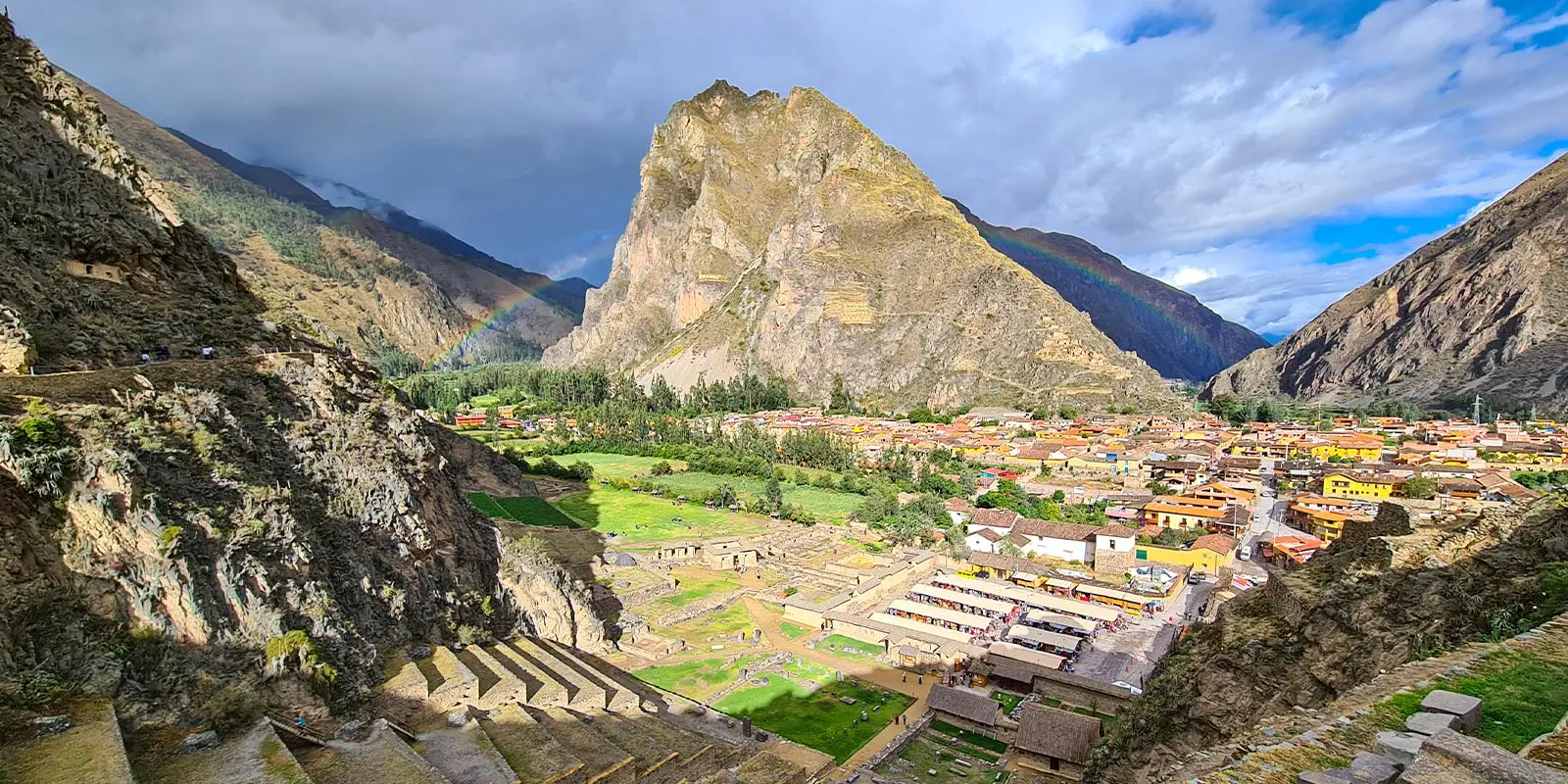
Ollantaytambo Town. The old town is still inhabited, and many of its streets, stone walls, and water channels follow Inca-era construction. It is a well-known example of Inca urban planning that is still lived in. The town is also a departure point for trains to Machu Picchu, so many travelers pass through or stay here.
Ollantaytambo Archaeological Complex. The fortress above the town has large stone terraces and an unfinished temple sector, often called the Temple of the Sun. Historical accounts describe Inca forces under Manco Inca repelling a Spanish attack here in 1536 before the Inca withdrew from the site; accounts of the battle's scale and details vary. Plan on roughly two hours at the complex, more if you climb to the upper sectors (a planning estimate). Expect steep stone steps and uneven surfaces, and note that access is limited for travelers with mobility needs. A ticket is required (see the Boleto Turístico section). On train days, allow extra time for luggage and station check-in.
Chinchero
Chinchero sits on a high plain above the main valley, at roughly 12,300 feet (about 3,760 meters), which affects routing, weather, and acclimatization. It is known for traditional Andean weaving. Weaving associations in and around the town offer demonstrations of natural dyeing and backstrap-loom weaving, and each visit should name the exact association or partner involved.
The Center for Traditional Textiles of Cusco (Centro de Textiles Tradicionales del Cusco, CTTC) is a nonprofit organization that works with weaving communities in the region, so ask how visits are arranged and how proceeds are shared. Before you book, ask which weaving association will host your visit, how the visit was arranged with the community, and what the commercial terms are. Visiting arrangements vary, so confirm them in advance. Ask permission before taking photographs, and pay fair prices when you buy directly from weavers.
Chinchero Archaeological Site. The archaeological site includes Inca-era terraces and walls and requires a ticket (see the Boleto Turístico section).
Colonial Church. At the edge of the main square, a colonial church was built atop old Inca stone foundations. Both are visited separately from any weaving demonstration. A market is held in Chinchero, but market days vary, so confirm them before you plan around one.
Moray
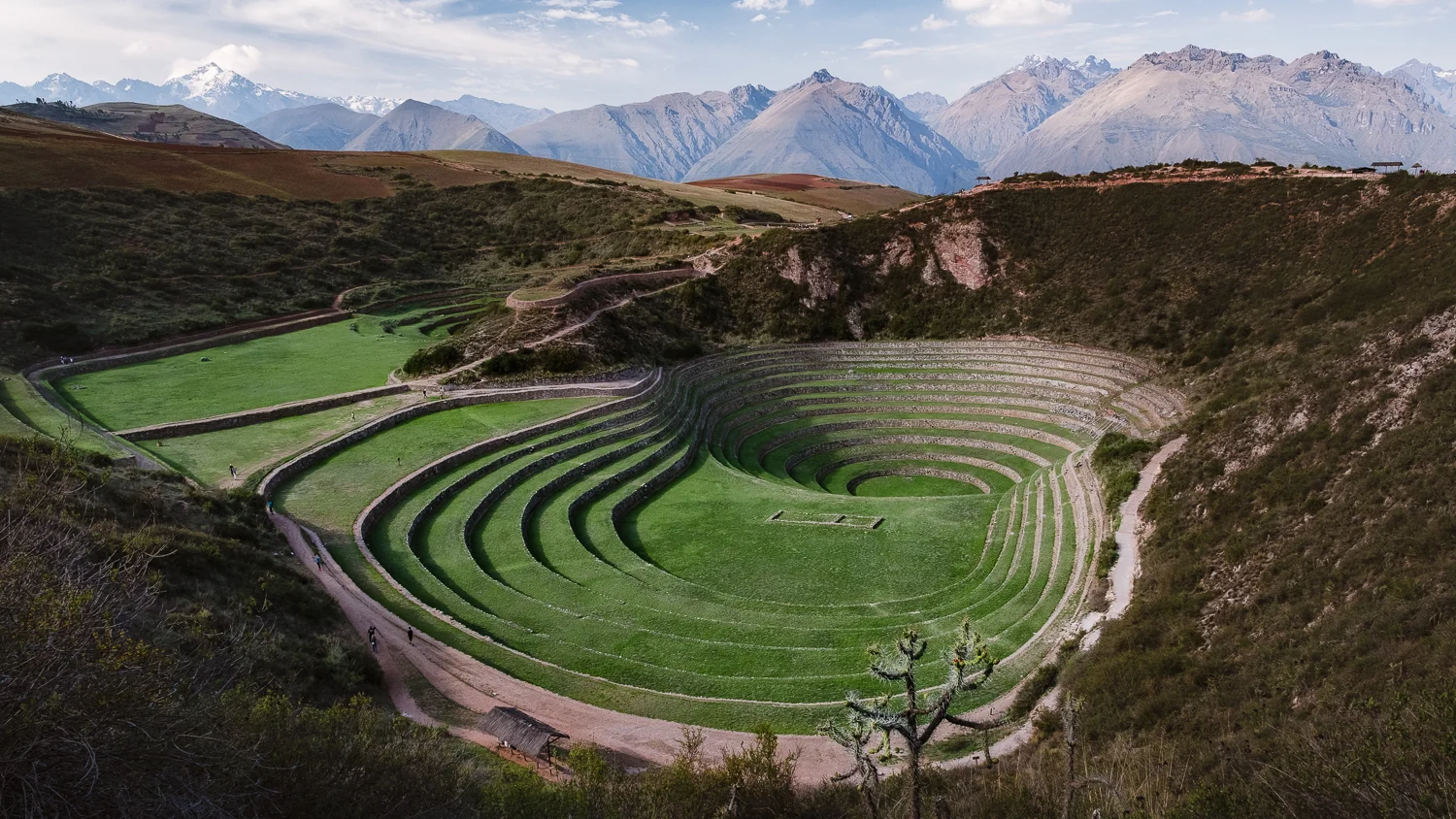
Moray's concentric circular terraces form large sunken circles, and temperatures can differ between the upper and lower levels. COSITUC describes the site as a pre-Inca and Inca center of agricultural experimentation. Researchers have proposed that the terraces were used to test crops in different microclimates, but this interpretation is not conclusively proven. Moray sits at roughly 11,500 feet (3,500 meters), so expect strong sun, wind, and little shade. The path around the rim is level, but surfaces can be uneven, and you should follow site rules about walking on the terraces. A ticket is required (see the Boleto Turístico section). Plan roughly 45 to 60 minutes (a planning estimate). Moray pairs logically with the Maras salt pans, which are a short drive away.
Maras Salt Mines (Salineras de Maras)
A short drive from Moray, thousands of tiny salt pools step down the hillside, fed by a natural saline spring. Local families still harvest the salt using traditional methods with roots that predate the Inca. The pans are managed by families from the nearby community of Maras, and the community sets the visitor rules, and entry requires a separate ticket. Viewing areas and walking routes are set by the community and can change, so confirm the current visitor route and permitted areas before you plan. Light varies by day and season, so a particular photography time cannot be promised. On-site shops sell Maras salt.
Urubamba
Urubamba is one of the valley's main commercial towns, with a market, shops, banks, and a range of hotels and restaurants. It sits near the center of the valley at roughly 9,400 feet, which makes it a practical base for Moray, Maras, and Ollantaytambo. Ollantaytambo is roughly 30 to 45 minutes away by road (an estimate).
Yucay
Yucay is a small village a few minutes from Urubamba. It has a quieter setting and fewer services, so it suits travelers who prefer a calm base and do not mind less choice for dining and shopping. Choose Urubamba for services and a central location, or Yucay for a quieter stay just a few minutes away.
Beyond the Classics
Biking, rafting, horseback riding, and the Huchuy Qosqo trek are different activities with different risks, and they are not interchangeable add-ons. Use the table to compare them, and book only with a licensed, insured supplier.
|
Activity |
Season and duration |
Terrain, altitude, conditions |
Fitness and age |
Safety checks and cancellation |
|
Mountain biking |
Rides run through much of the year, with drier months easier; half-day to full-day options, so confirm the route and duration with the operator |
Mix of paved and unpaved roads and descents from high plateaus; roughly 9,000 to 12,000 ft |
Moderate fitness; minimum age set by the operator |
Licensed, insured operator; well-maintained bikes, helmets, guide, support vehicle, emergency plan; cancellation for heavy rain or unsafe roads |
|
Rafting on the Urubamba |
Depends on water level; the operator should state which sections run in which months, and the route and duration when you book |
River sections range from calm to whitewater; the operator should state the grade and water level before you book |
Ability to swim advised; minimum age set by the operator and section |
Licensed, insured operator; certified guides, life jackets, helmets, safety briefing, rescue equipment; cancellation for high water or unsafe conditions |
|
Horseback riding near Maras |
Available through much of the year, weather permitting; typically a few hours, so confirm the route and duration |
Dirt tracks and uneven ground at roughly 11,000 ft |
Basic balance; rider weight and age limits set by the operator |
Helmets and trained guide; animal welfare criteria: healthy, well-fed animals, suitable tack, weight limits, rest and water, no visible sores; cancellation for storms or unsafe trails |
|
Huchuy Qosqo trek above Calca |
Dry season more reliable; one to several days depending on the route |
Significant climbing at high altitude; some routes pass above 13,000 ft (about 4,000 m) |
Good fitness and prior acclimatization; minimum age set by the operator |
Licensed trekking operator; guide, equipment, emergency and evacuation plan; cancellation for storms or trail hazards |
The Boleto Turístico (Tourist Ticket)
The Boleto Turístico del Cusco is the official multi-site ticket. Pisac, Ollantaytambo, Chinchero, and Moray are covered by the integral ticket and by the partial ticket for the Sacred Valley circuit. The integral ticket also grants access to a number of sites in and around Cusco, including Sacsayhuamán and Qenqo. Each ticket has a set validity period (10 days for the integral ticket and 2 days for the partial Sacred Valley circuit, known as Circuit III), and identification such as your passport may be required at purchase.
How to buy. The ticket is not sold online. It is purchased in person at the COSITUC central office (Av. El Sol 103, Galerías Turísticas, Cusco) and at the ticket points of most included sites. Confirm current sales points and hours with COSITUC before you go.
The ticket covers site admission only; a guide and transportation are not included. Machu Picchu and the Maras salt pans require separate tickets and arrangements. Whether a partial or integral ticket saves money depends on the sites you plan to visit, so total your planned sites before buying instead of assuming.
Prices differ by traveler type and ticket type and can change, so check current rates on the official COSITUC tariff page (cosituc.gob.pe/tarifario). For official answers on where to buy and what the ticket includes, see the COSITUC FAQ (cosituc.gob.pe/preguntas-frecuentes). Last reviewed: September 30, 2026.
Where to Stay in the Sacred Valley
Lodging ranges from family-run guesthouses to luxury hotels and haciendas. Compare bases by route, altitude, and how you will reach the train or Machu Picchu.
|
Base |
Approx. elevation |
Route efficiency |
Train access |
Dining and walking |
Suits |
|
Pisac |
9,700 ft |
Closest to Cusco; a good first stop; roughly 45–60 minutes by road |
No station; onward travel by road |
Smaller town with cafés and hotels; some steep streets |
Travelers who want a small-town base and early access to the ruins and market |
|
Urubamba |
9,400 ft |
Central; convenient for Moray, Maras, and Ollantaytambo |
Some train services may depart nearby; confirm with the operator |
A good range of restaurants and hotels for a valley base |
A multi-night base for several sites |
|
Yucay |
9,400 ft |
A few minutes from Urubamba; similar routing |
As for Urubamba |
Fewer services; quieter; check dining options |
Travelers who prefer a calm stay |
|
Ollantaytambo |
9,160 ft |
Western end; closest to trains for Machu Picchu |
Station a short walk or taxi ride from the main plaza |
Compact town with cobbled, sloping streets |
The night before or after a Machu Picchu train |
Families and travelers with mobility needs should ask about stairs, room location, and step-free access, since many properties spread across sloping grounds. For current, approved hotel recommendations at each base, request a tailor-made proposal.
Cusco sits at roughly 11,150 feet (about 3,400 meters). Starting in the valley, which is lower, can be one element of a gradual itinerary, but it does not prevent altitude illness, and Chinchero, Moray, and Maras are higher than the valley floor. Ascend gradually, keep your first day light, and speak with a clinician before you travel, especially if you have heart, lung, or other health conditions. Seek medical care if you develop symptoms such as severe headache, confusion, difficulty breathing, or trouble walking. This is general information, not medical advice. For more, see the CDC guidance on high-altitude travel and altitude illness (CDC Yellow Book).
Food and Culture of the Valley
The Sacred Valley is a good place to try Andean cooking outside Lima's fine-dining scene. Look for pachamanca, a traditional method of slow-cooking meats and vegetables in an earth oven with hot stones; cuy (guinea pig), a traditional Andean dish; trout, often served at valley restaurants, so ask where it comes from; and chairo, a hearty soup of the southern Andes. Dish names and preparations vary by region and by cook. Some restaurants in and around Urubamba say they source ingredients from nearby farms; ask about sourcing if it matters to you.
Culturally, Quechua, an Indigenous language that predates the Spanish conquest, is still spoken daily alongside Spanish, and traditional clothing, weaving, and farming remain part of daily life for many families rather than a performance for visitors. When you visit a community or weaving association, find out which association or partner you are visiting, how the visit is arranged with the community's consent, and what commercial terms apply. Buying directly from weavers or an association can support producers, but the impact varies, so ask how proceeds are shared. Avoid ranking communities as more or less “authentic.” Community and weaving visits are best arranged in advance through a named association or a trusted operator, so you know who benefits.
A Sample 3-Day Sacred Valley Itinerary
This route assumes you start in Cusco, sleep in Urubamba or Yucay for two nights, and continue to Ollantaytambo on the third day before a Machu Picchu train or a return to Cusco. If you have an early-morning train, consider spending the third night in Ollantaytambo instead. It avoids backtracking along the valley. Driving times are estimates. Verify site hours, ticket requirements, and train times before you book.
Day 1: Pisac
Drive from Cusco to Pisac (about 45 to 60 minutes) and visit the archaeological complex in the morning (allow two to three hours, a planning estimate), then the town and market, with lunch in town around midday. Expect steps and sun exposure at the ruins. A Boleto Turístico ticket is required. Continue to Urubamba or Yucay (about 45 minutes) for the night.
Day 2: Moray and Maras
From Urubamba, drive to Moray (roughly 30 to 45 minutes), then to the Maras salt pans, and have lunch nearby. Both sites are high, with strong sun and wind. Moray uses the Boleto Turístico, and the salt pans need a separate ticket. If you want a weaving visit, arrange it in advance with a named association. Chinchero does not fit this route without backtracking; if you want to include it, see the note at the end of this itinerary. Return to Urubamba or Yucay for a second night.
Day 3: Ollantaytambo
Transfer to Ollantaytambo (roughly 30 to 45 minutes) and visit the complex and old town in the morning, about two hours at the complex. Plan lunch in Ollantaytambo before an afternoon train. Then either take an afternoon train to Machu Picchu Pueblo for a timed entry the next day, or transfer by road to Cusco (about 1.5 to 2 hours). For the train, check in at the station on time, follow luggage limits, and send larger bags ahead or leave them at your hotel as arranged.
Adding Chinchero
If Chinchero is a priority, swap it for Pisac on Day 1. Drive from Cusco to Chinchero (about 40 to 60 minutes), visit the archaeological site, the church, and a weaving visit arranged in advance with a named association, then continue to Urubamba or Yucay. Chinchero is higher than Cusco, so keep the day light. You can then visit Pisac on your way back to Cusco at the end of the trip.
A one-day route with fewer stops
If you have only one day, choose a shorter route: Cusco to Pisac (ruins or market), then Ollantaytambo (old town and complex), then back to Cusco. Expect roughly three to four hours of driving plus about three to four hours at the sites (an estimate). The trade-off is that you will miss Chinchero, Moray, Maras, and any unhurried time. A same-day train to Machu Picchu is a different plan and needs its own timing check.
Planning Your Trip with a Local Expert
VA Expeditions is a U.S.-based travel company. We design your itinerary and coordinate the trip with local Peru specialists, including Valencia Travel Cusco where applicable, who deliver services on the ground. For a Sacred Valley itinerary, that can mean sequencing sites and hotels around your train and Machu Picchu entry, arranging private transfers and licensed guides, planning a pace that suits altitude, and adjusting when weather or schedules change.
Machu Picchu entry and Inca Trail permits are controlled by the government and limited in number. No company can obtain preferential access, but planning early improves your chances of securing the dates you want. Whether you want a few relaxed days among markets and Inca sites, a Machu Picchu trek, or a honeymoon stay in a luxury lodge, start with our Peru page or request a tailor-made proposal.
Final Thoughts
Stay in the valley if you are heading to Machu Picchu by train, want a quieter base than Cusco, or want to see more than two or three sites without long transfers. One night suits a simple move from Cusco to the train. Two to three nights allow a selection of sites at an easier pace, and four or more suit travelers adding hikes, a cooking class, or slower days. The choice that matters most is where you sleep, because Pisac, Urubamba and Yucay, and Ollantaytambo each change your driving time, backtracking, and train logistics. Your next step is to fix your Machu Picchu train day and entry time, then build the valley days around them, and to talk with a clinician about altitude before you go.
Frequently Asked Questions for Sacred Valley Travel
Is it worth adding a Sacred Valley day if I mainly want to see Machu Picchu?
It can be, if the plan works logistically. A half-day stop works when your arrival point, train departure, chosen site, and transfer route line up. Ollantaytambo can fit before a train departing from that station, while Pisac adds driving time. If you have only a day or two, choose one or two priority sites rather than trying to see the whole valley.
Should we stay in the Sacred Valley before going up to Cusco, or does it not matter?
Staying in the valley first can support gradual acclimatization because the valley floor is lower than Cusco, but it does not guarantee an easier adjustment or prevent altitude illness. Arrival time, the number of nights you have, your health, and your onward Machu Picchu plans matter more. Ascend gradually, keep the first day light, and talk with a clinician if you are older or have health concerns.
How many days should I spend in the Sacred Valley for a relaxed pace?
It depends on your priorities, pace, and mobility. Two to three days can cover a selection of major highlights, such as Pisac, Moray and Maras, and Ollantaytambo, at a comfortable pace, though not every important site. With a single day, choose two or three sites and accept the trade-offs. If you are continuing to Machu Picchu, factor in your train day.
Is the Pisac market worth visiting?
Pisac serves residents and visitors, and what you see varies by day and by section. The official COSITUC description specifically identifies the Sunday market. Some stalls sell items made elsewhere, and others are run by local producers, so ask where and by whom an item was made. Ask permission before photographing people, and buy directly from makers when you can confirm provenance.
Is it possible to do the Sacred Valley independently, or do we really need a guide?
Yes, many travelers explore independently, but the options differ. Colectivos and rental cars call for knowledge of routes, pickup points, cash, luggage handling, road conditions, navigation, parking, and insurance, and roadside assistance can be limited. A licensed guide adds interpretation at archaeological sites, while a driver provides transportation. A private guide and driver suit travelers who want context and a flexible route. An organized day tour suits those who want a set schedule, with less flexibility.
Can you drink tap water or eat street food in the Sacred Valley?
Not all water is safe to drink. Use sealed bottled water or water you have treated or filtered yourself, and ask your hotel whether its refill system provides treated water. Choose food that is fully cooked and served hot, clean your hands before eating, and be cautious with raw produce, unpasteurized dairy, and undercooked food, especially where hygiene is uncertain. This is general information, not medical advice; talk with a clinician or travel medicine provider about your health and vaccinations. For more, see the CDC guidance on food and water precautions (CDC Yellow Book).
When should we book the Inca Trail?
As early as you can. Inca Trail access is controlled by the Peruvian government, permits are limited, and availability depends on your travel date and the official permit release, so no booking window can be promised. Demand is highest from June through August. Permits must be arranged through an authorized operator using your correct passport details. The trail network is normally closed throughout February for annual conservation, and closures can be extended during heavy rain.
Alternative treks can be a good option, but they are not automatically easy to book: many still depend on campsite, transport, guide, ticket, and supplier capacity. If Machu Picchu is a priority, secure those dates first and build the rest of the trip around them. Official notices: Dirección Desconcentrada de Cultura Cusco and SERNANP.
Is the Sacred Valley good for kids?
It can be, depending on your children's ages and your family's mobility and comfort at altitude. Many sites involve steps, uneven surfaces, strong sun, limited shade, and variable restroom access. Consider age, stamina, supervision near steep edges, child restraints in vehicles (confirm availability with your driver or transfer provider), rest stops, and realistic walking demands. Markets, salt pans, and animals such as llamas and alpacas often interest children, but plan for shorter days.
What do people forget to bring?
Pack something warm for the evenings. Even in the dry season, it cools quickly after the sun goes down. Sun protection and sunglasses matter at this elevation, and sturdy shoes help on uneven stone steps. Be sure to pack a light rain jacket, even when traveling in the dry season. Needs vary by season, elevation, and traveler, so adjust this list for your route and health. This is general information, not medical advice.
How do I find a trusted local operator instead of just booking the first online tour I find?
Look for objective signs: a clear legal identity, destination expertise, transparency about which partners deliver your services, insurance, emergency support, verified reviews, clear payment and cancellation terms, and a clear statement of who is responsible before and during travel. VA Expeditions is a U.S.-based travel company that coordinates with local destination specialists in Peru. To start planning, request a tailor-made proposal.