


Claire
Travel in South America is a joy to behold. The rich variety of destinations, experiences, landscapes and geography fascinated me so much, that I chose to relocate here, over 20 years ago! The best thing I ever did! Allow me to share my knowledge and passion for Central and South America with you and help you plan your holiday of a lifetime!

DIVING ON THE GALAPAGOS ISLANDS
Written by:Claire
Last Update: 2024-12-05
The Galápagos Islands have some of the best snorkelling and dive sites in the world. You can experience a number of sub-aquatic creatures in their natural habitat, including sea turtles, marine iguanas, penguins, sea lions and hammerhead sharks.The Galapagos is a playground for divers and snorkellers, who visit from all over the world. From January to June, which is classed as the wet season, the water is warmer at around 24C-27C in the dry season, from July to December, the water cools to 21C-24C. While divers usually prefer the warmer water, the best time to dive is in the dry season, because the cooler Humboldt Current brings in much more nutrient-rich waters, attracting marine life in abundance, as they search for food. Whenever you choose to go, head out on a sub-aquatic adventure for a mind-blowing experience!
Kicker Rock
Kicker Rock, or also called the “Sleeping Lion” is a 150m high rock formation composed of compacted volcanic ash. It’s a 45-minute boat ride northeast of Puerto Baquerizo Moreno, the main town on San Cristóbal island. The waters around it are excellent for snorkelling and diving, particularly in the channel that splits the rock in two. Sea animal species include white-tipped reef sharks, Galápagos sharks, hammerhead sharks, sea turtles and most species of stingray.
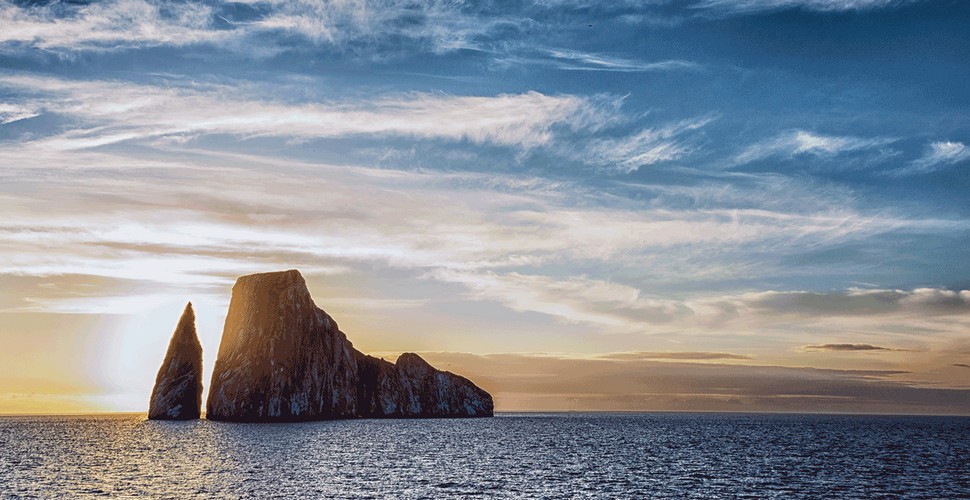
Kicker rock
Punta Espinosa, Fernandina Island
Punta Espinosa, on the northern tip of Fernandina Island is famous for its barren volcanic landscape and its concentration of wildlife. It’s home to one of the largest populations of marine iguanas in the Galápagos, and in the Bolivar Channel, which separates Fernandina from Isabela Island, you might also spot Galápagos penguins swimming in the water. Sea lions, sea turtles and dolphins can also be found bathing in these waters.
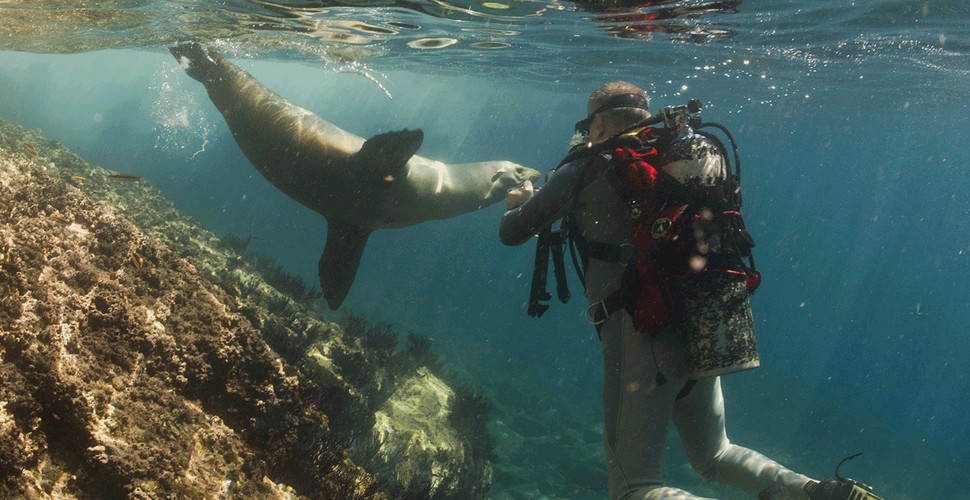
Diving around Fernandina Island
Tagus Cove, Isabela Island
Across the Bolivar Channel from Punta Espinosa, Tagus Cove is a sheltered inlet below the Darwin Lake. Once a pirate’s hideaway and named after a British ship that visited Isabela Island in 1814, its bed is a carpet of green algae, which gives the impression of an underwater meadow. The nutrient-rich water attracts a myriad of marine life, such as Galápagos penguins, sea lions, sea turtles, seahorses and even sharks. Tagus Cove is also a popular spot to go kayaking and other water sports.
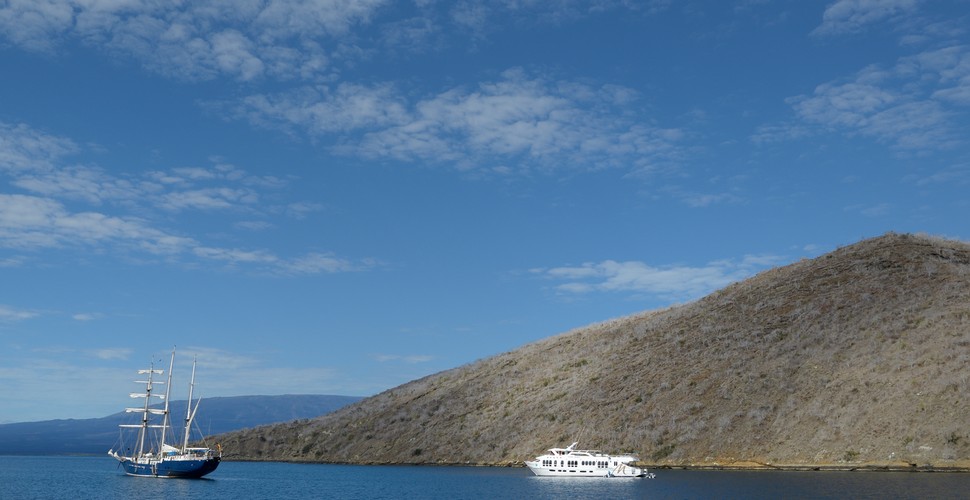
Tagus Cove
Prince Philip’s Steps, Genovesa Island
Genovesa Island is a horseshoe-shaped island in the far north of the Galápagos Islands – Prince Philip’s Steps are a steep, rocky trail leading up to a plateau on top of a cliff face. Beneath lies a submerged caldera, excellent for snorkelling due to a large amount of brightly coloured fish who swim in its depths, including butterfly, parrot and unicorn species. On a good day, you can also find manta rays and hammerhead sharks swimming in the waters.
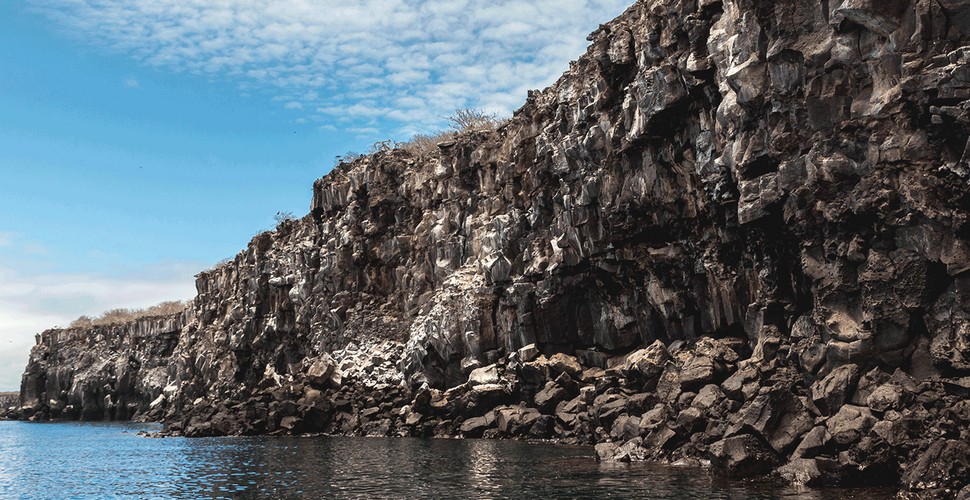
Prince Phillip steps
Devil’s Crown, Floreana Island
The eroded volcanic crater, found on Floreana Island, is now submerged in water. This was actually the first inhabited island in the Galápagos. Moray eels, surgeonfish, yellow-tailed grunts and scorpionfish call the Devils Crown home. Spotted eagle rays, golden rays and hammerhead sharks have also been seen in the waters, here. You can snorkel or dive, but be aware that the current can be strong, so be cautious, especially near the rocks.
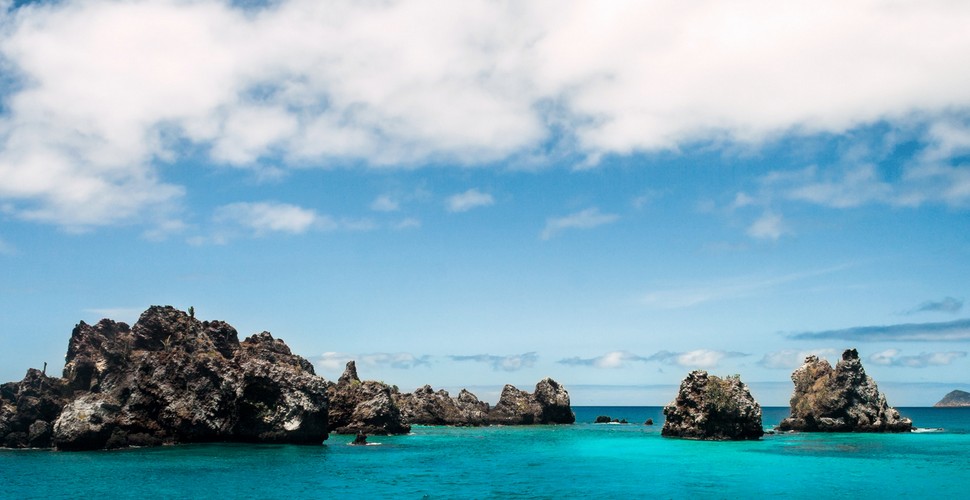
Devils Crown
Pinnacle Rock, Bartolomé Island
Pinnacle Rock is a tall, pointed, volcanic rock formation on the edge of Playa Dorada, Bartolomé Island. The waters in the moon-shaped bay, is typically calm and clear, and can be reached directly from the beach. The area is excellent for snorkelling and swimming, with the added bonus of seeing sea lions, sea turtles and penguins.
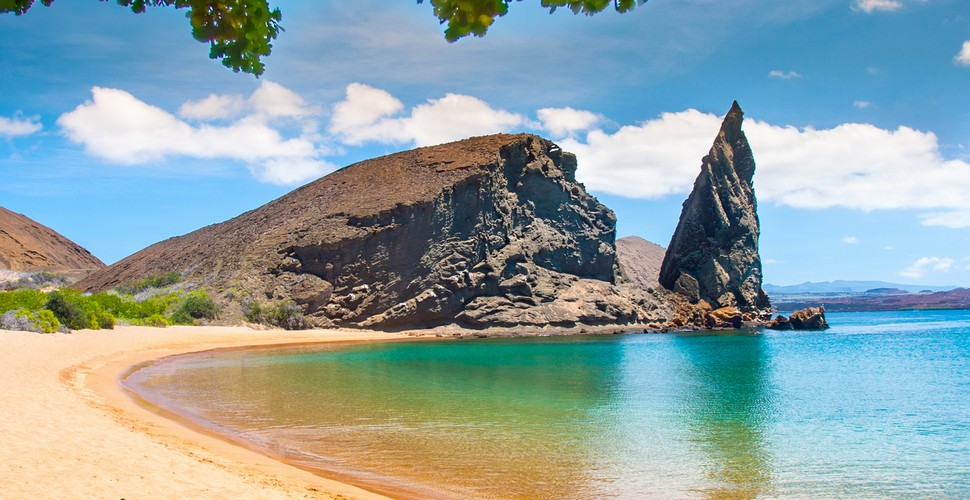
Pinnacle Rock
Punta Vicente Roca, Isabela Island
On the northern shores of Isabela Island, Punta Vicente Roca is an underwater wall, which descends to 27m, in the Bolivar Channel. The coves on either side, offer protection form the open sea, making it excellent for snorkelling and diving. The water temperature drops rapidly the deeper you go, so you will need a wetsuit if you plan to go deep. Like many snorkelling and diving destinations in the Galápagos, you’ll see marine iguanas, sea lions and penguins an if you are really lucky, a sunfish, one of the largest fish species in the world.
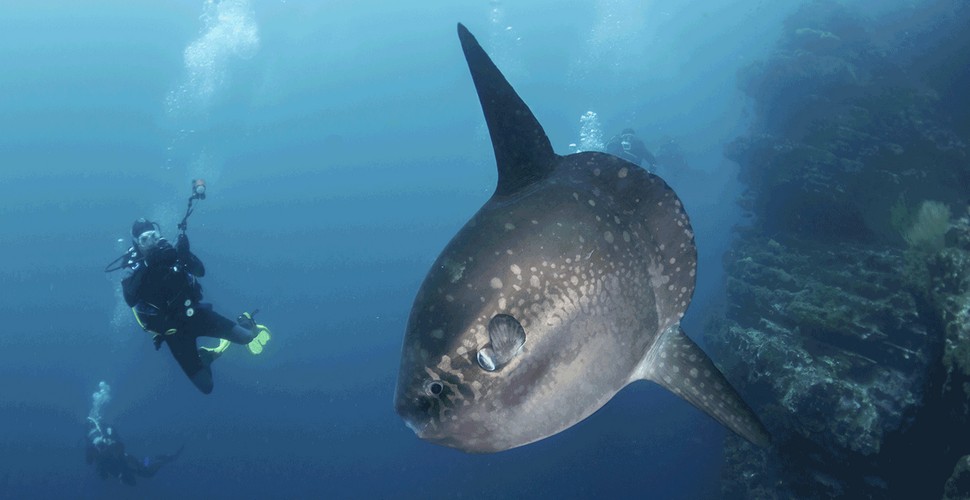
Punta Vicente Roca
North Seymour Island
A small, uninhabited island just north of Baltra Island, North Seymour was formed an estimated 2 million years ago. The island is known for its large colonies of blue-footed boobies and frigatebirds, it’s also one of the best places in the Galápagos to spot white-tipped reef sharks, hammerhead sharks, tiger sharks and Galápagos sharks. Few currents allow for excellent snorkelling and diving.
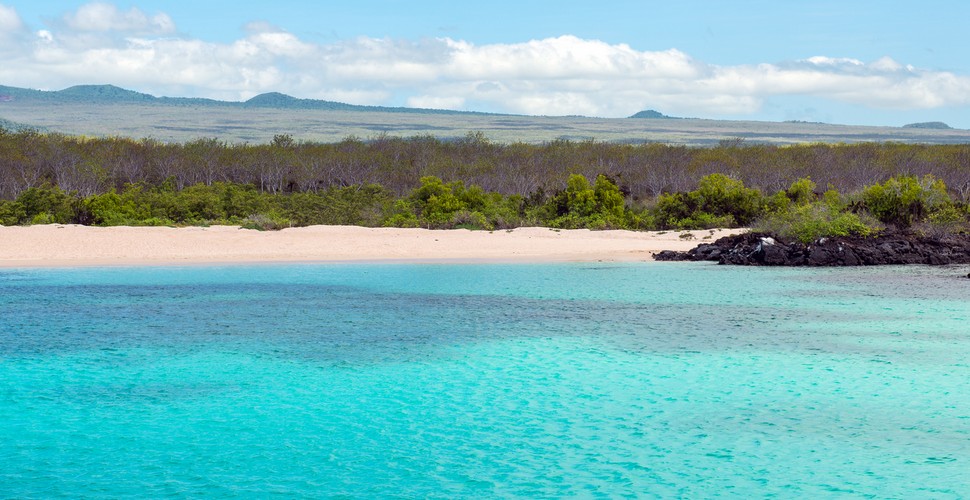
North seymour
Cerro Tijeretas, San Cristóbal Island
Cerro Tijeretas – also known as Frigatebird Hill – is an easy 2km hike from the centre of Puerto Baquerizo Moreno, on San Cristóbal Island. You will pass through lava fields and cactus forests before arriving at a viewing point with spectacular views over the island and a back drop of Kicker Rock. The bay below is an idyllic spot to cool off and snorkel with sea lions, sea turtles and masses of tropical fish. It’s one of the few places in the Galápagos where you can snorkel without a guide.
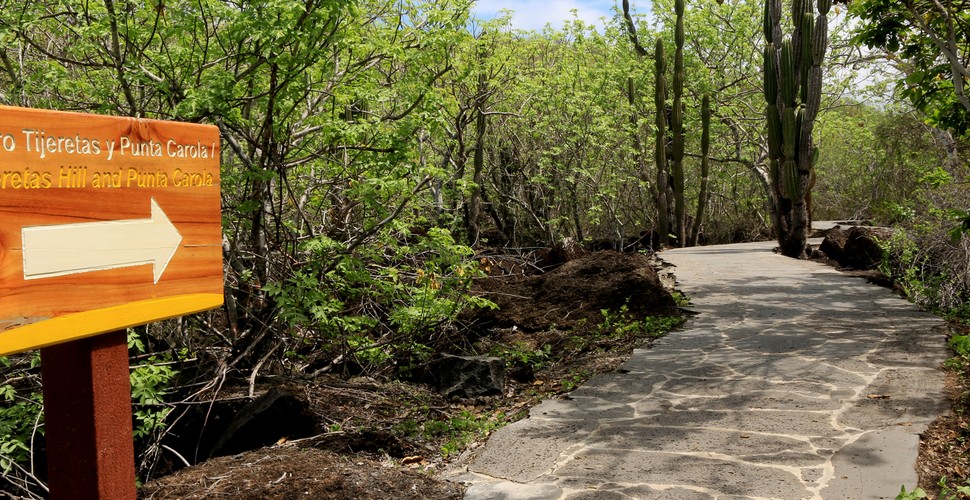
Cerro Tijeretas
Shark Point, Wolf Island
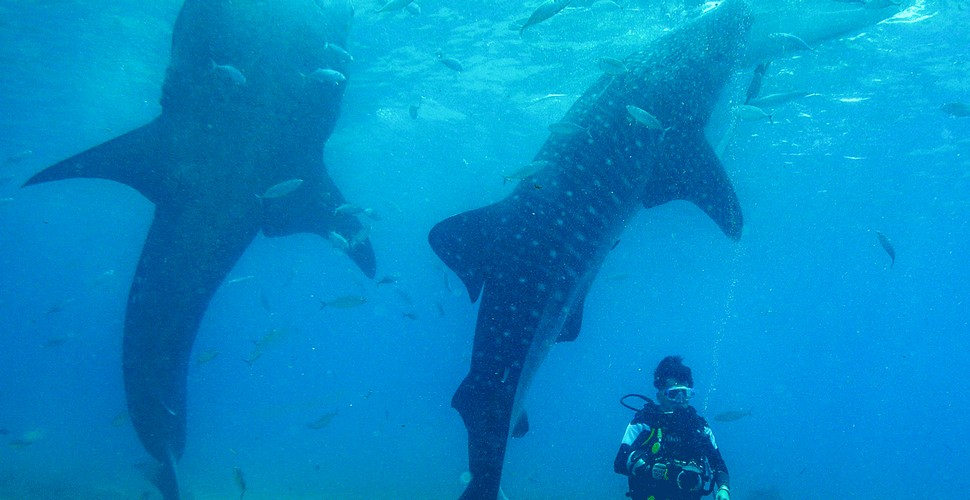
The appropriately named Shark Point, found just off Wolf Island, one of the most remote Galápagos islands in the far north of the archipelago, has a large population of Galápagos and hammerhead sharks that are visible between May and November. If you are really lucky, you may spot a giant, whale shark, one of the largest shark species in the world. Due to the strong current, it is only recommended to dive here if you are an experienced diver.
Gordon Rocks, Santa Cruz Island
Gordon Rocks is an eroded crater volcano off the northeast coast of Santa Cruz Island. The central crater, descends to a depth of 25m and is one of the best places in the Galapagos to spot large hammerhead sharks. You can also see Galápagos sharks, blacktip sharks, Galápagos eels and barracudas. This area is often called the Washing Machine, due to its incredibly strong currents, so diving here is for the experienced!
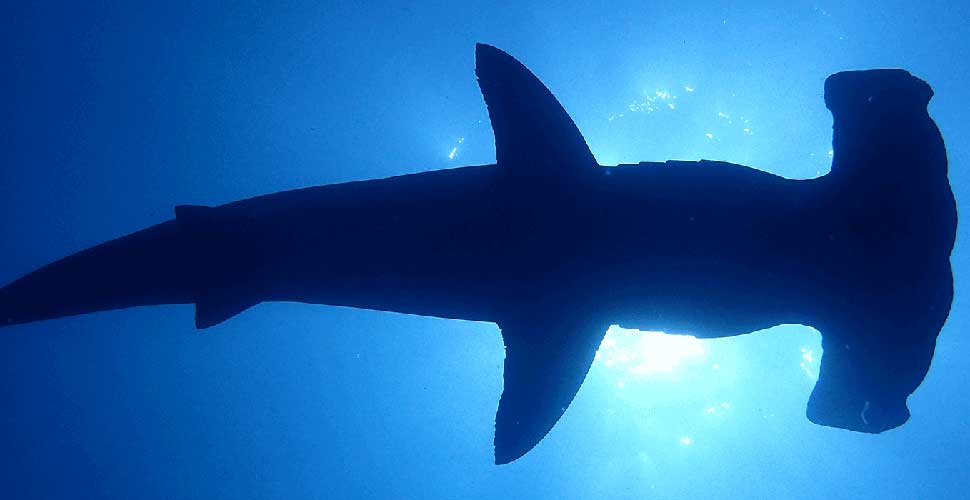
Hammerhead shark
Cousins Rock, Santiago Island
Cousins Rock, just off the coast of Santiago Island, is home to penguins, sea lions, blue-footed boobies and pelicans, above the sealine as well as an abundance of marine life below the sea. Terraced steps descend to a depth of 40metres and with good visibility and regular currents, it’s one of the most reliable all-year-round dive sites in the Galápagos, best suited to intermediate and advanced divers. As well as sea turtles, spotted eagle rays, manta rays, Galápagos sharks and white-tipped reef sharks, you’ll also see the Galápagos black coral here.
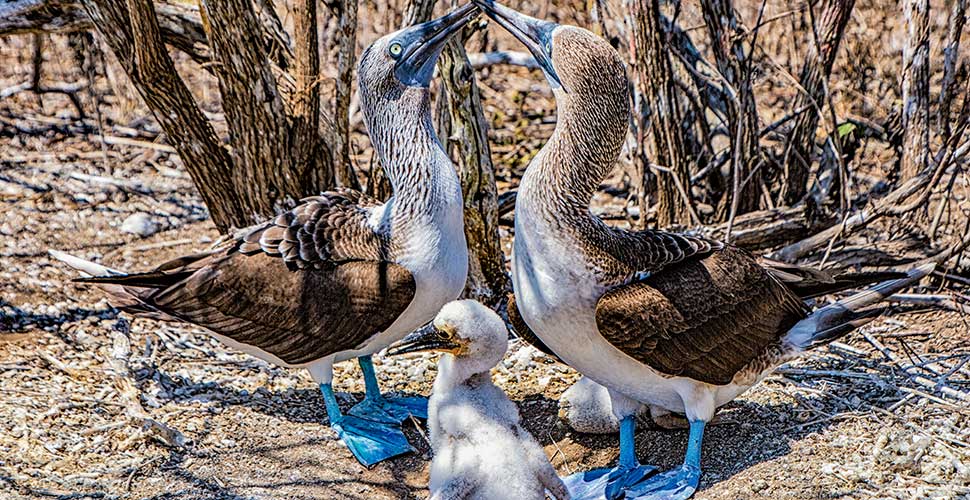
Blue footed Boobie couple and their egg
SHARE THIS POST
popular-posts-title