



Claire
Travel in South America is a joy to behold. The rich variety of destinations, experiences, landscapes and geography fascinated me so much, that I chose to relocate here, over 20 years ago! The best thing I ever did! Allow me to share my knowledge and passion for Central and South America with you and help you plan your holiday of a lifetime!

WHEN TO VISIT THE GALAPAGOS
Written by:Claire
Last Update: 2024-12-05
The Galapagos Islands have long been a bucket-list destination for adventure travellers, looking to see animal species such as blue-footed boobies, aquatic iguanas, and giant sea tortoises in their natural habitat. But when exactly is the best time to visit the Galapagos? Happily, there isn't really a bad time to visit and it comes down to the activities that you would like to do while you are there. Found 1000km off the coast of Ecuador, the Galapagos Islands are located almost on the equatorial line, which generally means year-round, warm temperatures. However, the islands, also fall in the path of the Humboldt Current, which feeds a steady stream of cold ocean water into the air, resulting in frequent rain storms throughout the year, and cooler temperatures. Deciding exactly when to go to the Galapagos isn't quite as easy as simply finding out what time of year offers the best weather. The most stable conditions are found between December and May, which is considered the high season and when most people visit. if you want to see certain animals or be on the islands during a specific natural event, the date could be vital. Before you book, check out the following information which may be able to help you decide when to go.

Galapagos Penguins with Iguana backdrop
The Wet Season (December-May)
The Galapagos Islands are at their warmest from December to May each year, with temperatures generally around the 22°C mark for this period. That same time frame also sees an increase in rainfall bringing more intense storms, when they do arrive, though the rain generally is over and done with quite quickly. Winds are generally calm and the skies are frequently clear, with plenty of sunshine making it feel warmer.
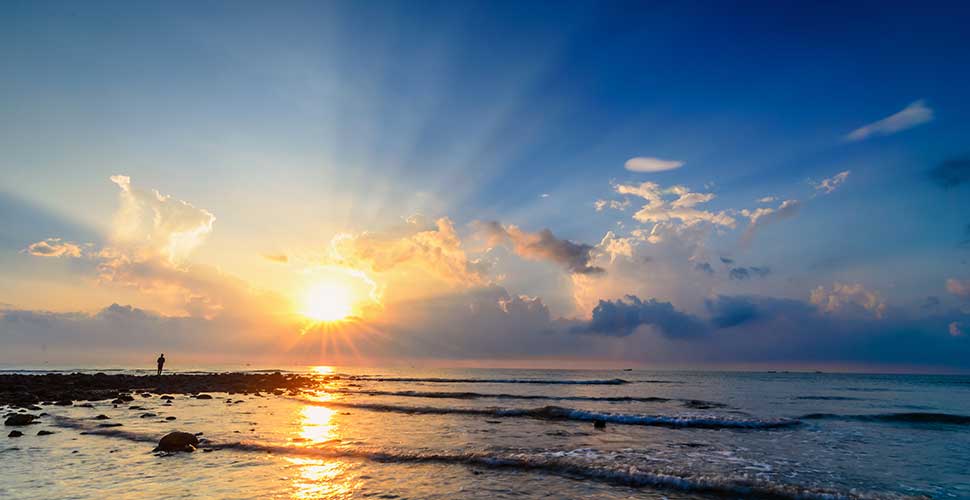
Stunning Galapagos sunset
The busiest travel season during this period falls between mid-December and mid-January, which is when the most popular wildlife is on display. If you're looking to visit the Galapagos at this time of year, plan on booking your accommodation, tours, and airfares in advance to avoid any interruptions. Expect to pay a little more for your trip during this time also, as demand rises considerably.
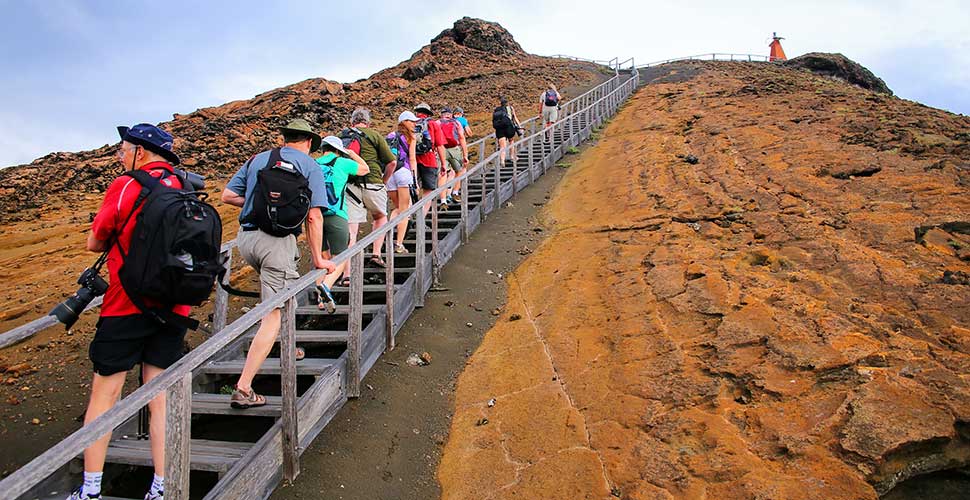
Busy Galapagos!
The Dry Season (June-November)
The time period between June and November in the Galapagos is called the "dry season", however don’t let this mislead you! While the heavier storms are definitely found during other months of the year, the dry season also features damp days and little sunshine. Cold, steady winds from the south bring the average temperature down to around 15 °C which can make things feel damp and downright cold!
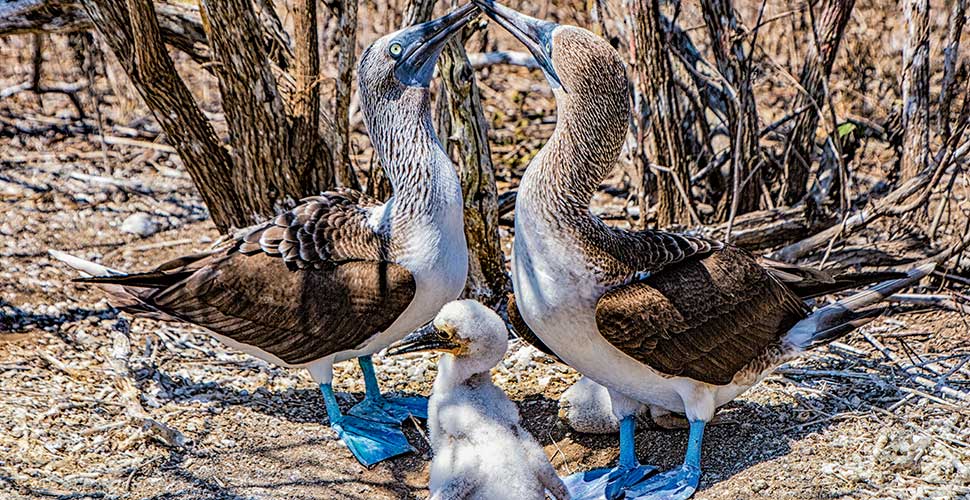
Blue footed boobie family
Despite these conditions, the Dry Season is a popular time to visit the Galapagos. From mid-June to early-September, the islands get very crowded with travellers from around the globe, mainly the Northern hemisphere, which coincides with their school holidays. If your plans are to visit during this time of the year, make sure your itinerary is organized early. High demand, also means there aren't a lot of vacancies and hotels can also be booked out.
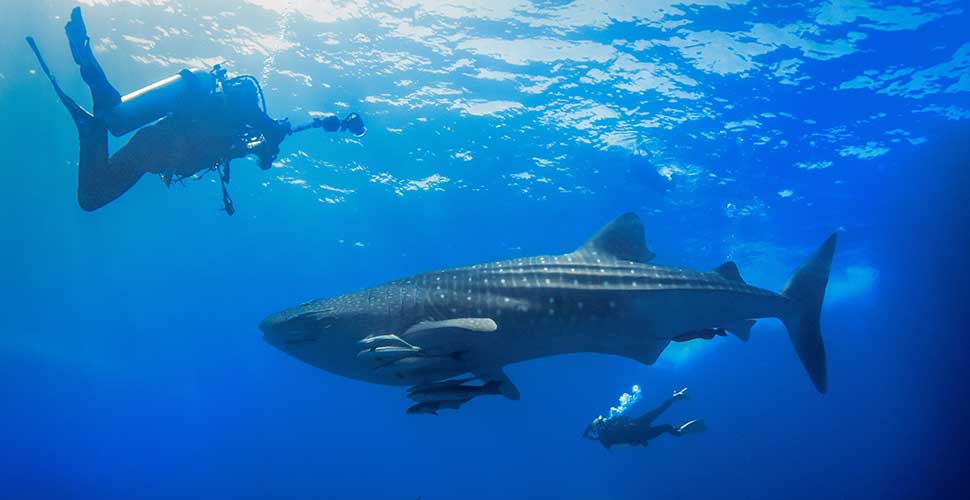
Diving with whale sharks
Seasonal Wildlife Highlights
Avoiding unwanted weather and large crowds aren't the only factors to consider when booking your Galapagos vacation. The things that you want to see and do while is another important factor to bear in mind, especially if you want to witness certain wildlife-related activities. For instance, if you want to see the famous blue-footed boobies in their mating dance, the best time to go to the Galapagos is in the Dry Season.
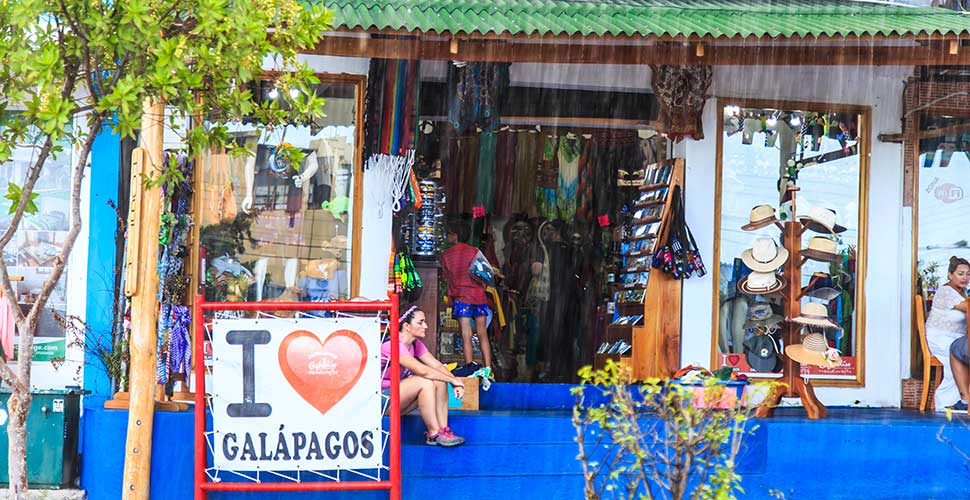
Rainy Galapagos!
Conversely, if spotting baby sea lions or turtles is high on your list of activities, you'll want to go during the Wet Season instead. Knowing what experience is most important to you, ahead of time, can help you decide exactly when you should you go.
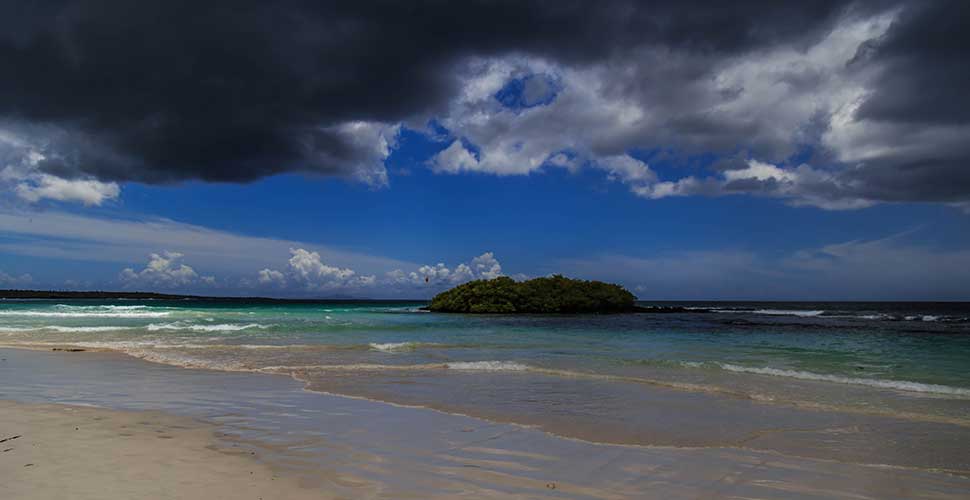
Storm clouds over the galapagos
Wet Season Wildlife Events
The top wildlife events during December to May, include a large number of green turtles in the area, as well as the start of the marine iguana season. The Galapagos is the only place in the world where you can see these swimming iguanas, which are generally active in the early months of the year. Other Wet Season animal events include the arrival of large numbers of waved albatrosses to Española Island. Nearly the entire world's population of these birds arrive to The Galapagos in the spring for their annual mating season, while the Galapagos' flightless cormorants also begin their nesting season around this time.
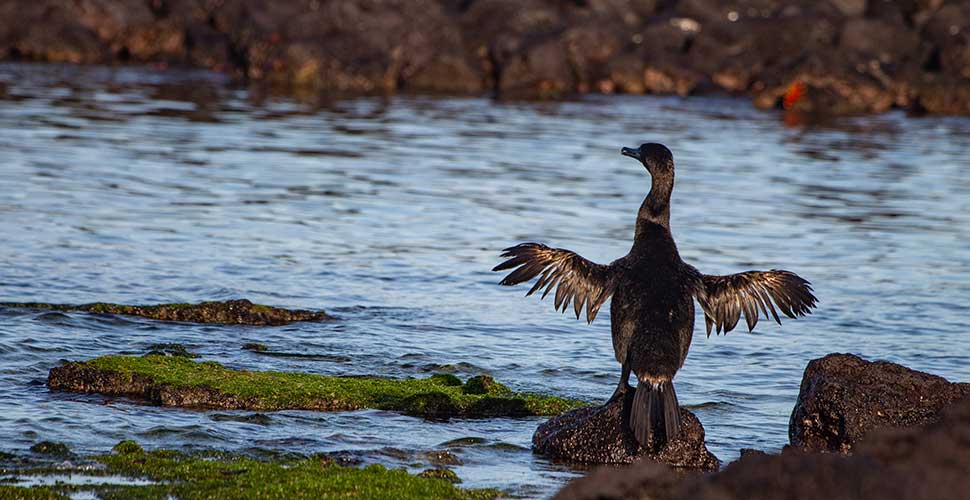
Flightless cormorant
Dry Season Wildlife Events
The Dry Season has its own wildlife highlights that make it a time for travellers to visit too. For example, many of the Galapagos' birds begin hatching their eggs following the spring breeding season, meaning a wide variety of hatchlings can be found in nests at this time of year. Also, the many flamingo species on the islands begin their elaborate mating ritual, which is an excellent experience especially for budding ornithologists. September is an especially busy time in the Galapagos as two of the more popular animal species enter their breeding seasons too. Both the local sea lions and the Galapagos penguins are extremely active during this month, making it one of the best times to witness these creatures.
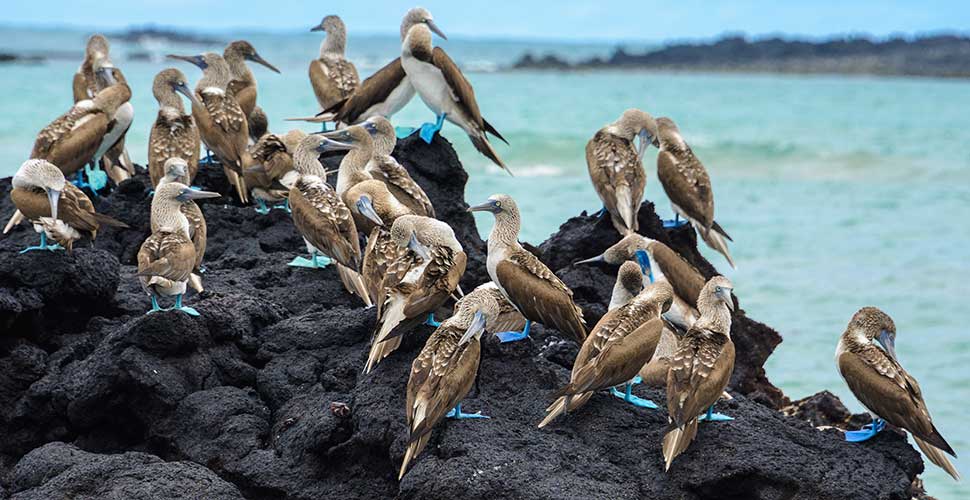
Blue footed boobie colony
Scuba Diving and Snorkelling
Scuba diving and snorkelling are major activities in the Galapagos Islands all year round, with most divers masking-up to take a plunge in the ocean waters during their visit. But, the arrival of the Humboldt Current during the Dry Season makes it the best time visit if you want the best diving or snorkelling experience. The Humbolt current brings a wide array of marine life along with it, with most of those species attracted to the Galapagos Islands nutrient-rich waters. The number of ocean creatures found offshore during this period rises dramatically, making it an all-round better experience for divers and snorkellers.
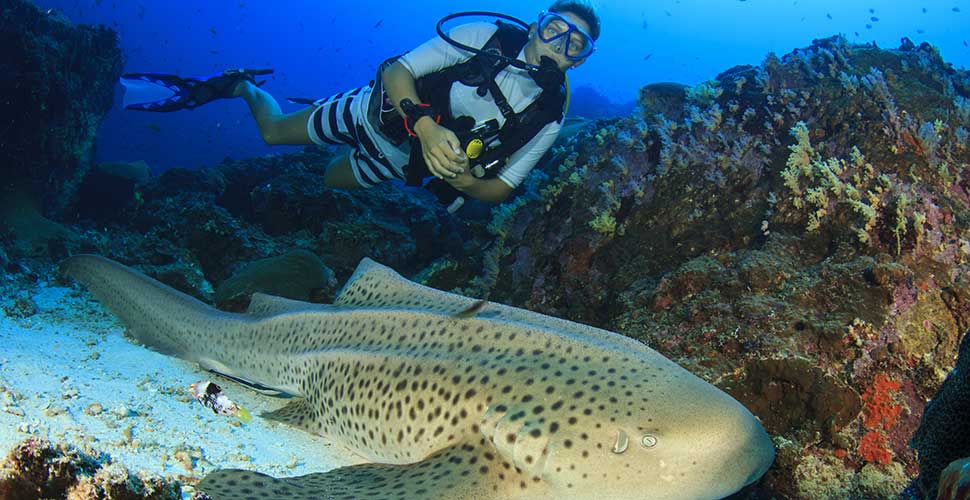
Diving with whalesharks
SHARE THIS POST
popular-posts-title