


Claire
Travel in South America is a joy to behold. The rich variety of destinations, experiences, landscapes and geography fascinated me so much, that I chose to relocate here, over 20 years ago! The best thing I ever did! Allow me to share my knowledge and passion for Central and South America with you and help you plan your holiday of a lifetime!
ABOUT MEXICO
Written by:Claire
Last Update: 2024-12-05
Mexico is officially known as the United Mexican States and is a country located in the southern part of North America. It shares borders with the United States to the north and Belize and Guatemala to the south. Mexico has a diverse culture and rich history, dating back to ancient civilizations such as the Aztecs and Mayans. Here is some general information about Mexico.
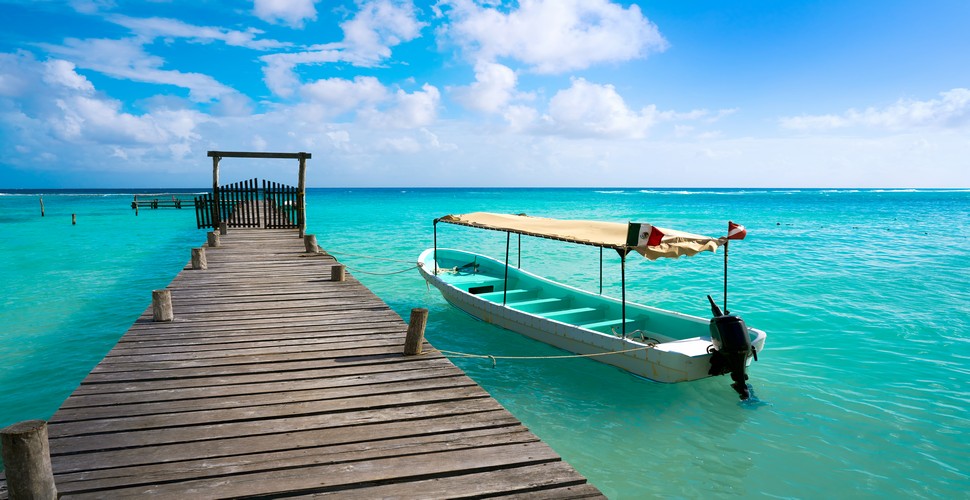
Cancun
Capital
The capital city of Mexico is Mexico City, one of the largest and most populous cities in the world.
Language
The official language is Spanish, and it is widely spoken throughout the country. There are also several indigenous languages spoken by various indigenous communities.
Population
Mexico has a population of over 128 million people, making it the 10th most populous country in the world. The population is diverse, with people of indigenous, European, African, and Asian ancestry.
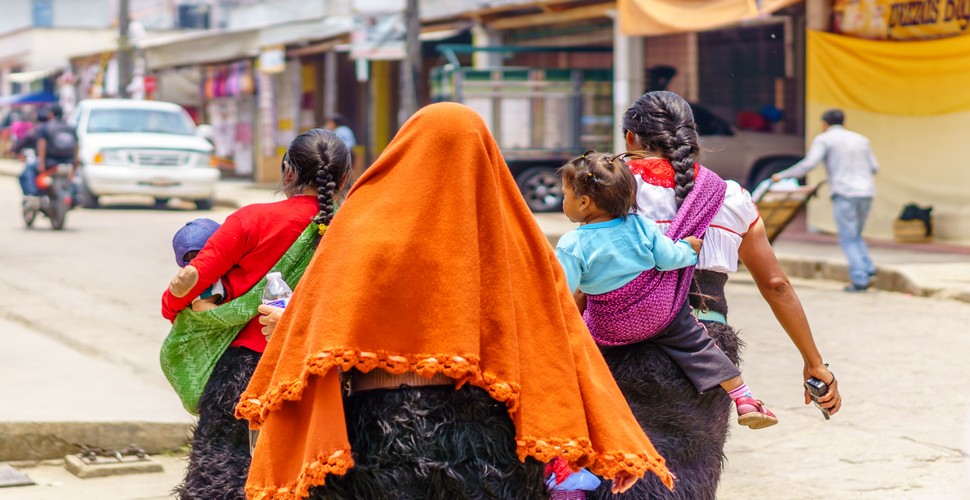
Indigenous Women in San Cristobal
Geography
Mexico is divided into several regions, each with its own distinct geography, culture, and traditions. The country's regional divisions are not officially defined, but the following are commonly recognized regions in Mexico:
Baja California: Located in the northwestern part of Mexico, Baja California consists of the Baja California Peninsula, which is divided into two states: Baja California and Baja California Sur. The region is known for its stunning beaches, deserts, and outdoor recreational activities.
Northern Mexico: This region includes the states of Sonora, Chihuahua, Coahuila, Nuevo Leon, Tamaulipas, and Durango, among others. It is characterized by its arid and desert landscapes, vast cattle ranches, and important industrial centers.
Central Mexico: Central Mexico encompasses the central highlands of the country and includes the capital, Mexico City. The region is known for its diverse landscapes, including mountains, valleys, and plateaus. It is home to significant historical sites, colonial cities, and cultural landmarks.
Gulf Coast: Located along the eastern coast of Mexico, the Gulf Coast region includes states such as Veracruz, Tabasco, and Tamaulipas. It is known for its beautiful beaches, vibrant port cities, and rich cultural heritage influenced by indigenous and Afro-Mexican traditions.
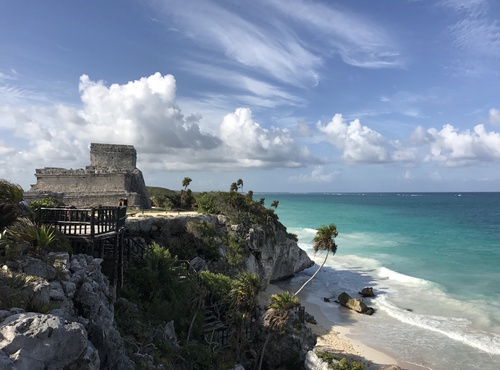
Yucatan Peninsula: The Yucatan Peninsula is located in southeastern Mexico and is comprised of the states of Yucatan, Quintana Roo, and Campeche. This region is known for its stunning Caribbean coastline, ancient Mayan ruins (such as Chichen Itza and Tulum), cenotes (natural sinkholes), and a unique blend of Mayan and Spanish colonial cultures.
Pacific Coast: The Pacific Coast region extends along the western coast of Mexico and includes states such as Sinaloa, Nayarit, Jalisco, Guerrero, and Oaxaca. It is famous for its picturesque beaches, beach resorts (such as Acapulco, Puerto Vallarta, and Mazatlan), and diverse marine life. The region also boasts a rich culinary tradition, including seafood specialties.
Southern Mexico: Southern Mexico includes states like Chiapas, Oaxaca, and Guerrero. It is known for its lush tropical forests, mountains, indigenous communities, and archaeological sites. The region is home to a vibrant indigenous culture and traditions.
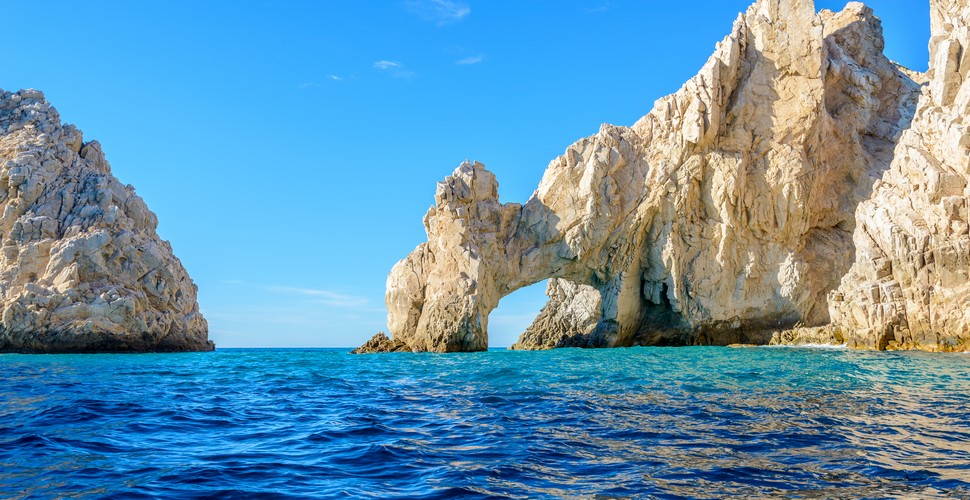
Baja California
History
Mexico has a rich history that dates back thousands of years. The ancient civilizations of the Maya, Aztecs, and Olmec once thrived in the region. Mexico was home to several advanced indigenous civilizations before the arrival of the Spanish. The Olmec civilization, considered one of the oldest in Mesoamerica, emerged around 1200 BCE. They were known for their colossal stone heads and complex social organization. The Maya civilization flourished in southern Mexico and Central America from around 2000 BCE to 1500 CE. They developed a sophisticated writing system, advanced mathematics, and remarkable architectural structures such as pyramids and temples. Another prominent civilization was the Aztecs, also known as the Mexica, who established their capital, Tenochtitlan (present-day Mexico City), in the 14th century. They formed a powerful empire and built extensive infrastructure, including causeways, aqueducts, and temples. The Aztecs were known for their complex religious practices and human sacrifices. In 1519, the Spanish conquistador Hernan Cortes arrived in Mexico and began the conquest of the Aztec Empire. With the help of indigenous allies who were dissatisfied with the Aztec rule, Cortes defeated the Aztecs and claimed the territory for Spain. Mexico became part of the Viceroyalty of New Spain, a Spanish colony that encompassed much of present-day Mexico, Central America, and the southwestern United States. Spanish colonial rule lasted for approximately 300 years, during which indigenous populations were subjugated, and Catholicism became the dominant religion. In the 16th century, Mexico was colonized by Spain and remained under Spanish rule until gaining independence in 1821.
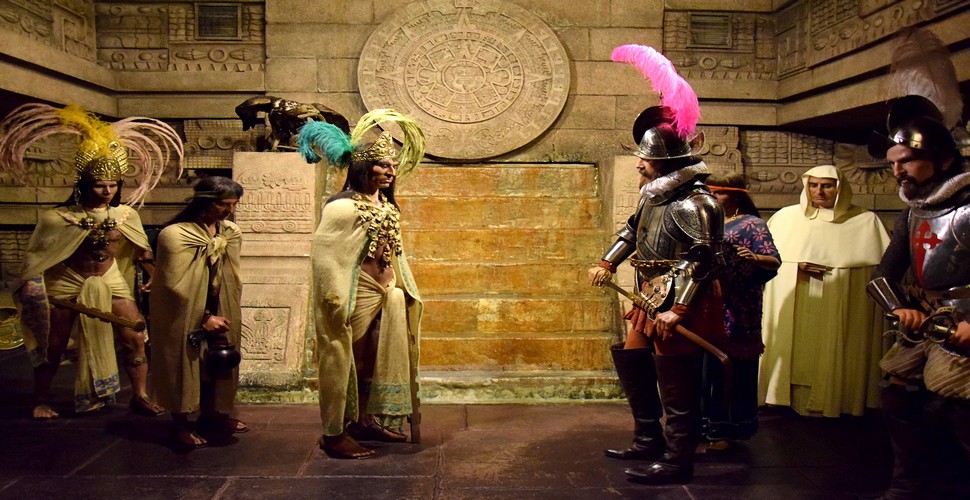
Museum of the Spanish Arrival
Culture
Mexican culture is a blend of indigenous and Spanish influences. It is known for its vibrant festivals, traditional music (such as mariachi and ranchera), dance (including Folklorico), and iconic art, such as the works of Frida Kahlo and Diego Rivera. Mexican culture is rich and diverse, with influences from indigenous civilizations, such as the Maya and Aztecs, as well as Spanish colonial heritage. Traditional music, dance, art, and cuisine play significant roles in Mexican culture, with mariachi music, folkloric dances like the Jarabe Tapatío (Mexican Hat Dance), and dishes like tacos, enchiladas, and guacamole being widely recognized. Traditional Mexican festivals such as Dia de los Muertos (Day of the Dead) and Cinco de Mayo are celebrated with great enthusiasm throughout the country.
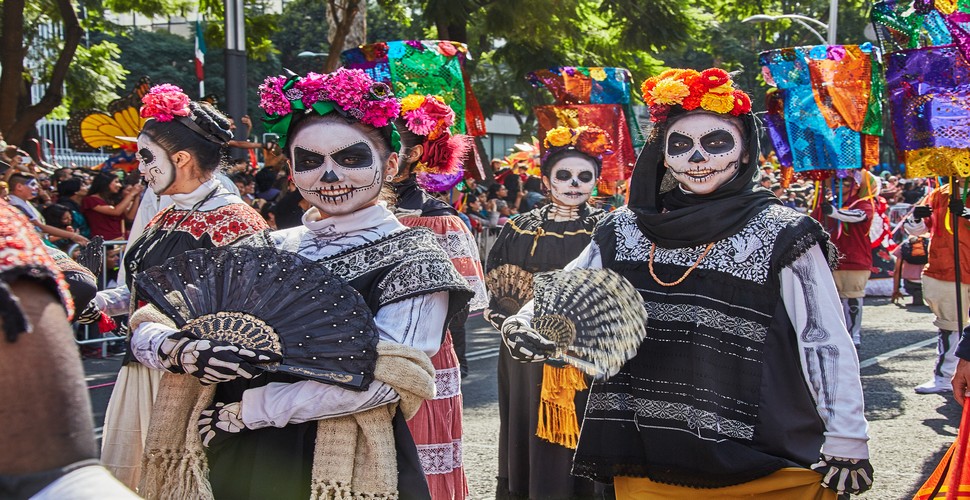
Day of the Dead Celebrations
Cuisine
Mexican cuisine is famous worldwide for its flavors and variety. Some popular dishes include tacos, enchiladas, tamales, guacamole, and mole sauce. Mexican food often incorporates ingredients like corn, beans, chili peppers, tomatoes, avocados, and various herbs and spices.
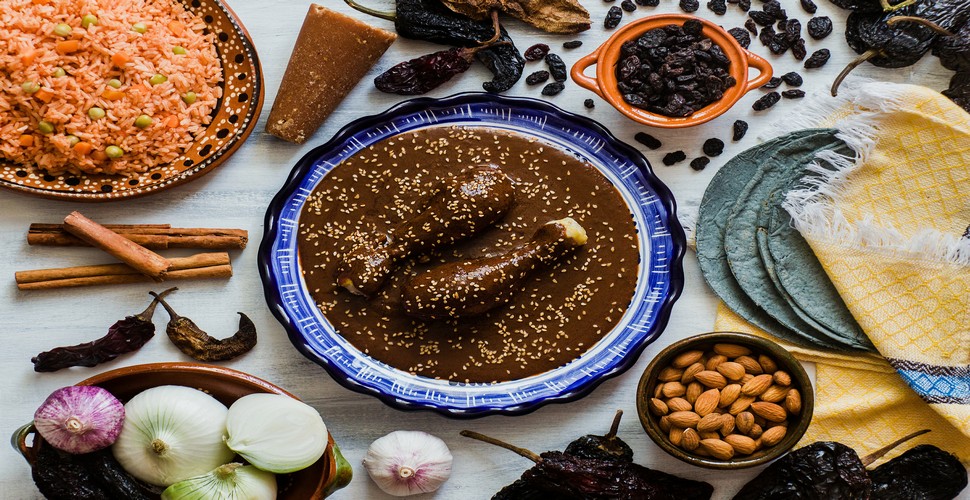
Mole
Tourism
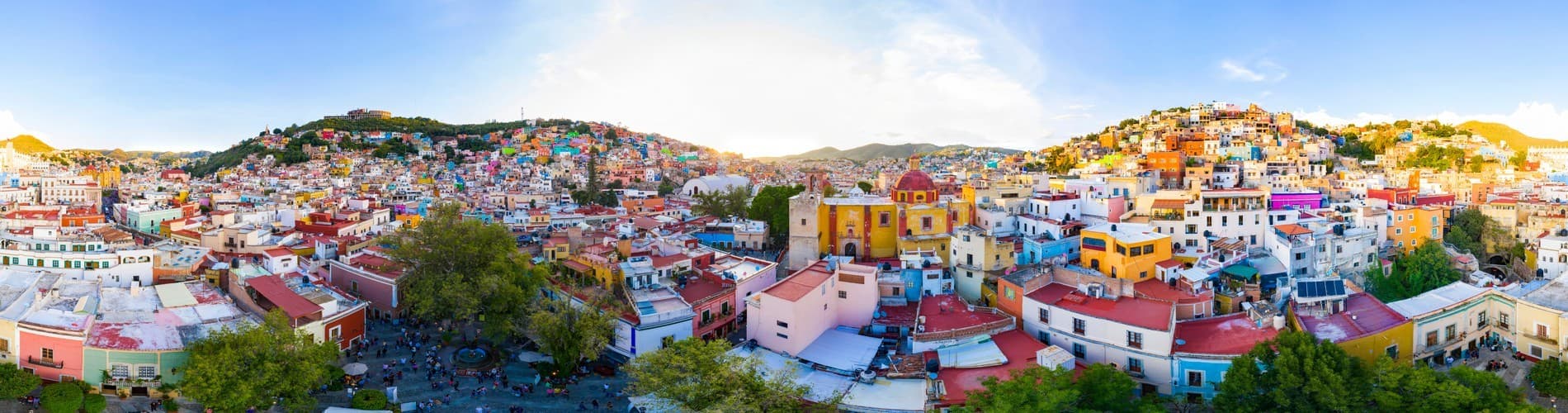
Mexico is a popular tourist destination, attracting millions of visitors each year. It offers a wide range of attractions, including ancient ruins (such as Chichen Itza and Teotihuacan), beautiful beaches (like Cancun and Playa del Carmen), colonial cities (such as Oaxaca and Guanajuato), and natural wonders (like Copper Canyon and the cenotes). Some of the most famous tourist spots include Cancun and the Riviera Maya, which boast beautiful beaches and ancient Mayan ruins; Mexico City with its historical center, museums, and iconic landmarks like the Palacio de Bellas Artes and the Frida Kahlo Museum; and Chichen Itza, a UNESCO World Heritage site and one of the New Seven Wonders of the World.
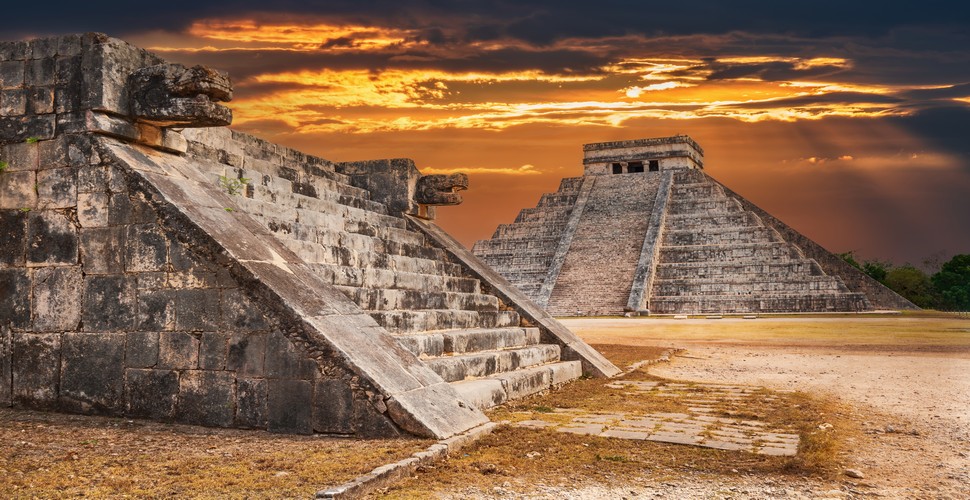
Chichen Itza
Economy
Mexico has one of the largest economies in the world, characterized by a diverse range of industries. It is a major exporter of goods, including automobiles, electronics, petroleum, and agricultural products. The country is also rich in natural resources, including oil, silver, and copper. Tourism is another important sector of the Mexican economy, with visitors attracted to its historical sites, beautiful beaches, and vibrant culture.
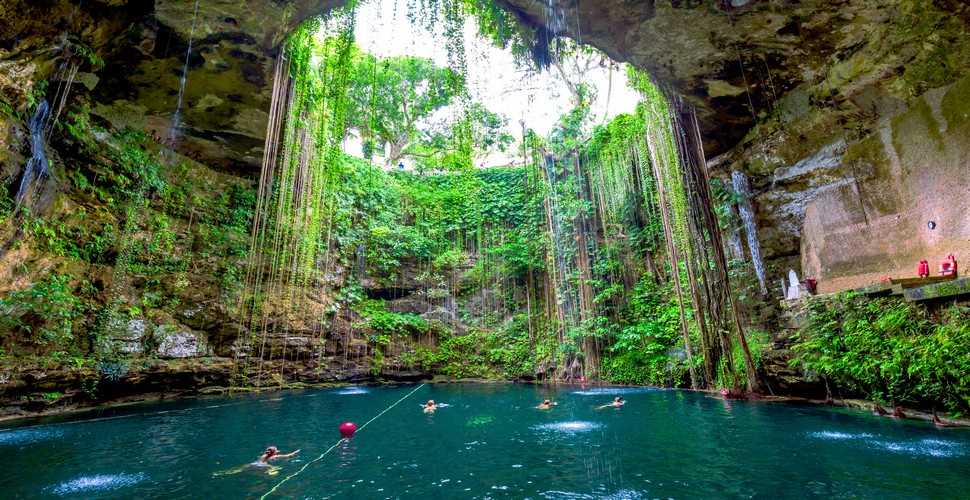
Cenote in Cancun
Mexico Today
Like any country, Mexico faces its share of challenges. These include issues such as poverty, inequality, crime, drug trafficking, and corruption. However, the Mexican government is working to address these issues and promote social and economic development. Touristic destinations have a high police presence and are safe to travel so you can relax to the full on your Mexico vacation!
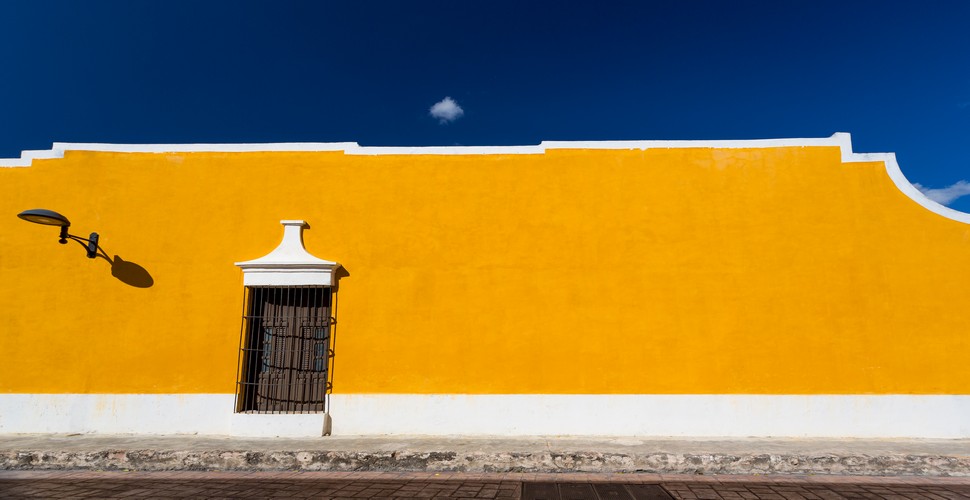
Izamal House
If you are looking to travel to Mexico for your next vacation then contact us here for more information!
SHARE THIS POST
popular-posts-title