
Día de Muertos (Day of the Dead) is one of Mexico's most iconic and deeply revered cultural traditions, recognized by UNESCO as Intangible Cultural Heritage. Blending ancient Mesoamerican spirituality with Spanish Catholic traditions, this colorful celebration honors deceased ancestors with joyful love, music, and remembrance.
From candlelit cemetery vigils and fragrant marigold-draped ofrendas (altars) to sugar calaveras and spectacular street processions across Oaxaca, Michoacán, and Mexico City, discover how to experience this profound celebration of life and memory.
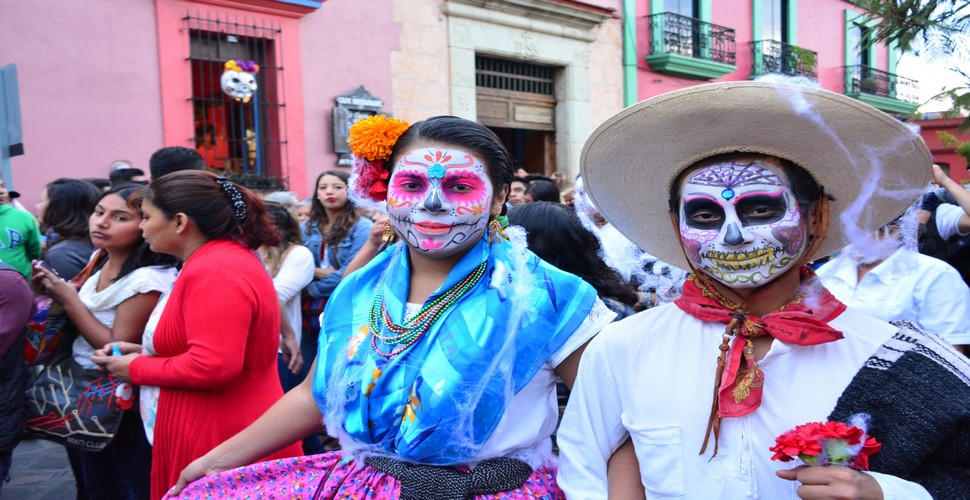
In the heart of Mexico, a vibrant and transcendent celebration unfolds each year, uniting the living and the departed in a symphony of colors, emotions, and cultural profundity. Día de Muertos, or the Day of the Dead, is not a mournful occasion; it's a jubilant festival that showcases the Mexican reverence for life, family, and the eternal cycle of existence and is one of the most famous Mexican traditions, celebrated throughout the country.
A Tapestry of Tradition: From Ancient Roots to Modern Revelry
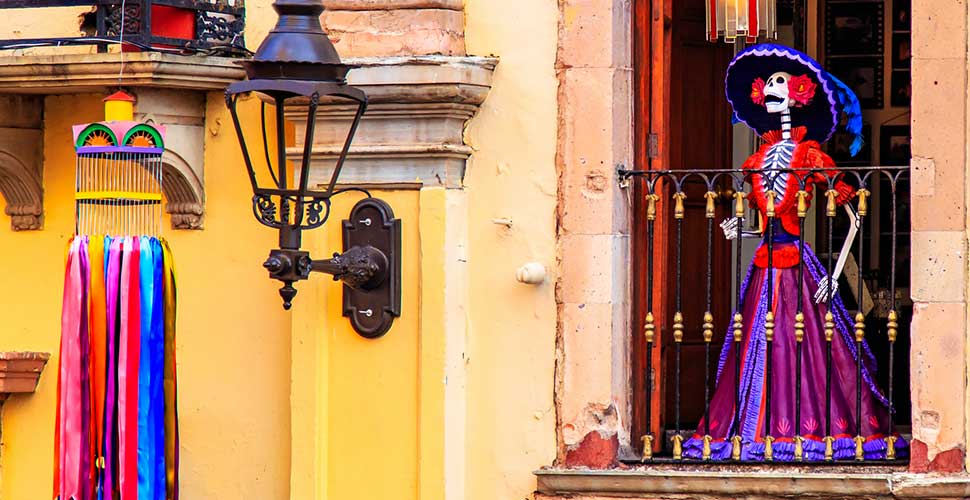
Día de Muertos traces its origins back to ancient Mesoamerican civilizations such as the Aztecs and Maya, who held deep spiritual beliefs regarding death and the afterlife. These indigenous cultures believed that death was merely a step into a new chapter of existence, and their rituals celebrated this continuity. Modern-day Día de Muertos is a harmonious fusion of indigenous traditions and Catholic influences brought by Spanish colonization. Celebrated from October 31st to November 2nd, the festivities coincide with the Catholic holidays of All Saints' Day and All Souls' Day. The juxtaposition of pre-Hispanic and Christian elements is a testament to Mexico's rich cultural tapestry.
An Artistic Expression of Remembrance
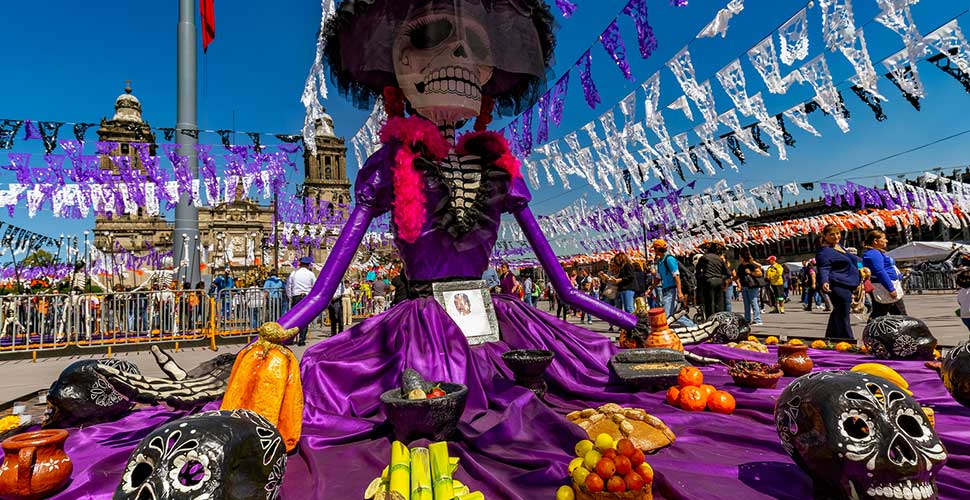
At the heart of Día de Muertos are the meticulously crafted altars, or "ofrendas," which serve as welcoming portals for departed souls. Families create these altars in their homes, adorned with marigold petals, candles, incense, and the favorite foods and possessions of the deceased. These offerings are believed to guide the spirits back to the world of the living, allowing them to partake in these Mexican traditions. The visual splendor of Día de Muertos extends to the iconic calacas and calaveras, elaborately decorated sugar skulls, and skeleton figurines. Far from morbid, these intricately designed pieces are a whimsical reminder of the interconnectedness of life and death. Local artisans pour their skill and creativity into crafting these symbolic works of art, each one a testament to the belief that death is merely a continuation of life's grand mosaic.
A Spectrum of Celebrations Across Mexico
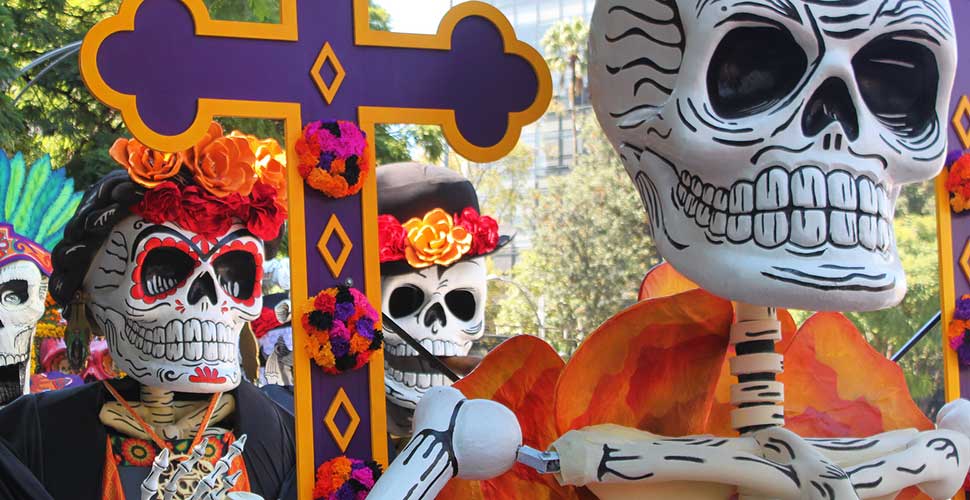
While Día de Muertos is celebrated nationwide, some regions have distinct and captivating variations of the festivities. In Oaxaca, the ancient city comes alive with vibrant parades and intricately designed sand tapestries known as "alfombras." Michoacán's festivities include breathtaking candlelit processions that lead to cemeteries awash in a sea of flickering light.
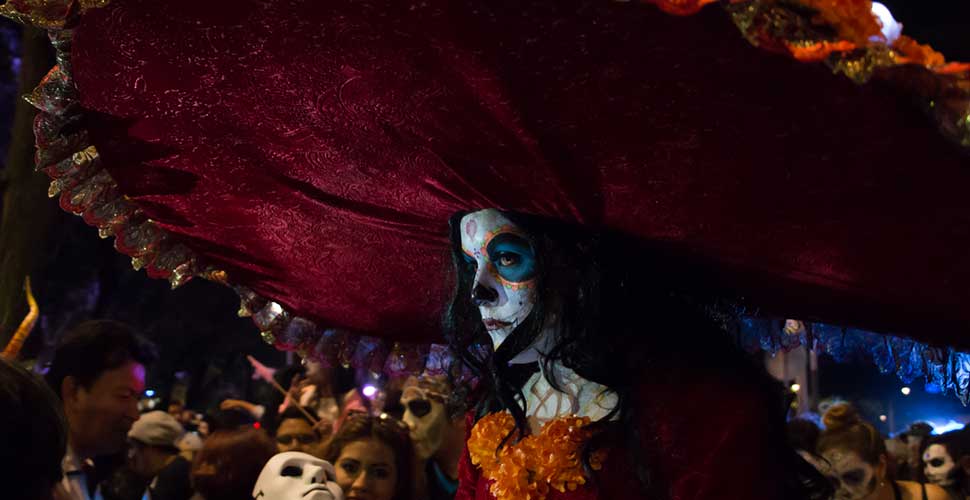
Mexico City itself is a tapestry of Día de Muertos celebrations. The iconic Zócalo square transforms into a kaleidoscope of colors, hosting massive altars and installations that pay homage to historical figures, artists, and loved ones. Museums and galleries across the city curate exhibitions dedicated to the artistry of Día de Muertos, offering visitors a deeper appreciation for the cultural intricacies of the celebration.
A Call to Experience
Día de Muertos is more than a festival; it's an invitation to embrace mortality, celebrate life, and connect with Mexican culture at its most intimate. It's a time to honor the departed with love, laughter, and shared stories, bridging the gap between the living and the dead.
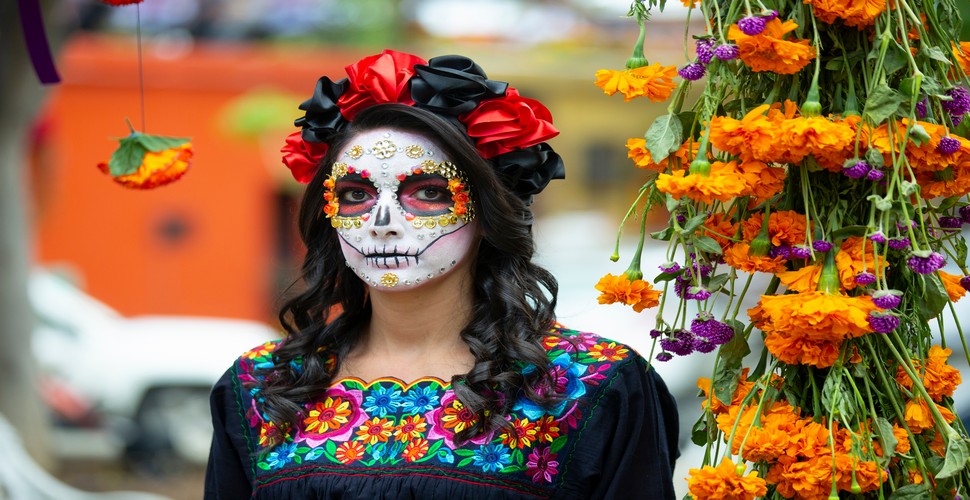
As the marigold petals dance in the breeze, and the flickering candlelight casts its enchanting glow, Día de Muertos beckons you to Mexico—a journey that transcends mere tourism and becomes an immersion into a cultural spectacle that leaves an indelible mark on your soul. Embrace the vibrancy, partake in the traditions, and let the spirits of Mexico's past guide you through a celebration that promises to inspire, uplift, and connect you to the essence of life itself. Find out more here about why you should plan your next vacations in Central America, including the Dia de Muertos, and partake in this impressive Mexican tradition for yourself!