
Claire
Travel in South America is a joy to behold. The rich variety of destinations, experiences, landscapes and geography fascinated me so much, that I chose to relocate here, over 20 years ago! The best thing I ever did! Allow me to share my knowledge and passion for Central and South America with you and help you plan your holiday of a lifetime!
WHAT YOU NEED TO KNOW ABOUT PANAMA
Written by:Claire
Last Update: 2024-12-05
About three million years ago, the emergence of the Panama Isthmus separated the marine life of the Atlantic and Pacific Oceans and formed a land bridge that allowed the previously distinct floras and faunas of North and South America to mix. This unique history of Panama offers opportunities for the study of evolutionary and ecological processes unequaled anywhere else in the world. Located at the geographical center of the American continent, Panama joins North and South America. It borders the Caribbean Sea to the north, the Pacific Ocean to the south, Colombia to the east, and Costa Rica to the west. Panama is the youngest area of land in the Americas, having emerged from the oceans approximately 3 to 10 million years ago. In biological terms, the fact that Panama linked the landmasses of the two Americas helps explain its incredible biodiversity. Despite its small size (75,900 sq. km. to be exact), Panama is home to more than 10,000 varieties of plants and more than 1,000 species of birds. Panama City is the only major Latin American city with a rainforest that is only minutes from downtown. The country is best known for the Panama Canal, a man-made waterway, that opened in 1914. The canal cuts through the country, linking the Caribbean Sea (Atlantic) with the Pacific Ocean. The canal is owned and administered by the Republic of Panama, it is one of the two most-strategic artificial waterways in the world (the other is the Suez Canal in Egypt). Here is some important information about Panama to get the most out of your Panama vacation!

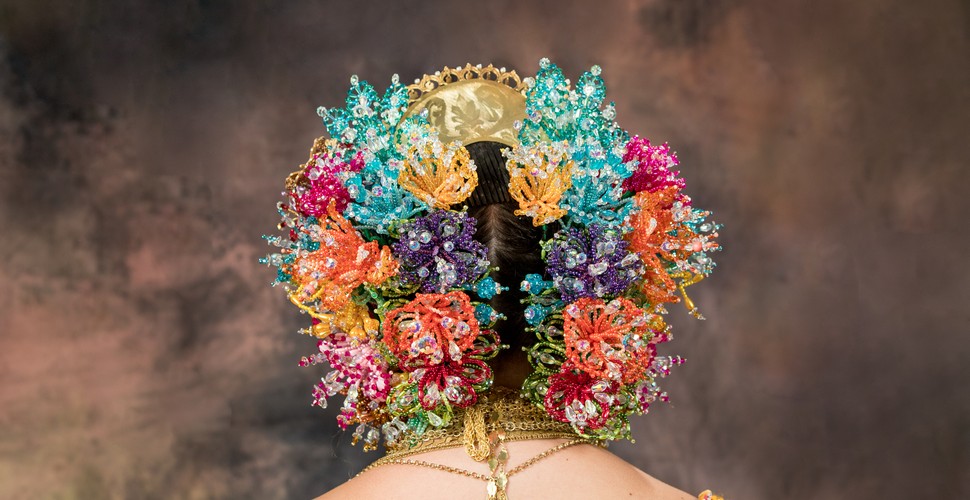
Panamanian Traditional Headdress
General Information
Official Name: República de Panamá
President: Laurentio Cortizo
Land area: 75,990 sq km
Population: 4.3 million
Language: Spanish (official language), English 14% (most Panamanians are bilingual)
Life expectancy: 73 years (men) and 80 years (women).
The Currency: The Balboa which is the equivalent of 1 US dollar. Balboa coins are used but Panama does not print notes and instead used the US dollar as legal currency.
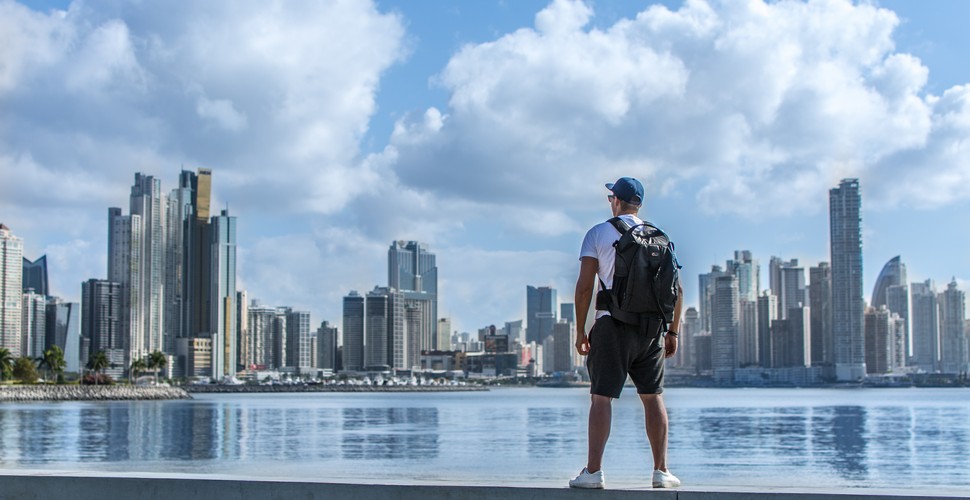
Panama City View
Geography
The Republic of Panamá, which connects North and South America, has a relatively recent geologic history. Approximately three million years ago, tectonic movements and volcanic activity created the emergence of one narrow strip of land from the ocean floor. The resulting isthmus of Panama extends 480 miles (772 km) from east to west. This S-shaped band of land separated the waters of the Atlantic and Pacific Oceans and united the continental masses of North and South America. The isthmus initiated a massive interchange of flora and fauna between the continents, acting as a bridge that included the passage of humans who would later populate South America. Panama’s landscape consists of three major physical regions: mountains, coastal lowlands, and archipelagos. The dominant feature of the country's landform is the central spine of mountains and hills that extend almost the entire length of Panama, known as the Cordillera Central. The tallest peaks of this cordillera are found to the west, near the border with Costa Rica, and gradually decline in elevation as the range runs east toward the middle of Panama. The highest point in the country is the Barú Volcano, with a summit of 11,401 feet (3,475 meters) above sea level. Nearly 500 rivers flow across the length of Panama’s rugged landscape. Mostly unnavigable, many originate as swift highland streams, meander in valleys, and form coastal deltas. Rio Chagres and Rio Chepo are the principal rivers of Panama. Panama’s extensive coastal lowlands make up more than 85 percent of Panama’s total land area. The lowlands on the Pacific coast begin with the Chiriqui Gulf to the west, continuing east with the Azuero Peninsula jutting south to define the Gulf of Panama. The Atlantic lowlands along the Caribbean coast are very narrow. Several archipelagos line the coast, including the Archipiélago of Bocas del Toro near the Costa Rican border and the San Blas Islands to the east near Colombia. Like the Pacific lowlands, the Atlantic lowlands contain forest and farmland. Panama’s diverse island geography is unique. There are more than 1,500 islands forming several archipelagos in the Pacific and Caribbean territorial Waters of Panama. Many of these islands are popular attractions for citizens and tourists alike. The Archipiélago de las Perlas (Pearl Islands) includes a well-known resort island, Isla Contadora. Isla de Coiba (Coiba Island) is the largest island in Central America. It is a national park where many marine organisms are studied and is a destination for diving enthusiasts.
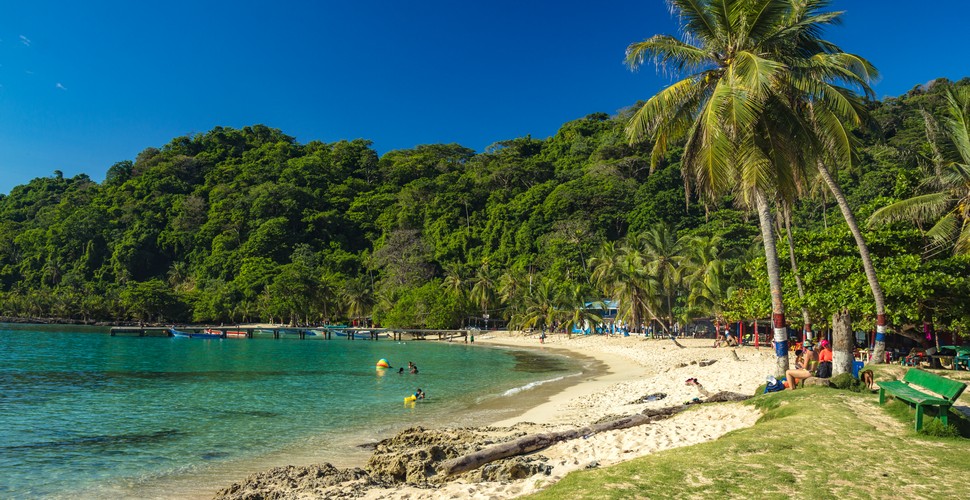
Panama Beach
Nature
Despite its small size, Panama is incredibly rich in biodiversity. This biodiversity is a direct result of the country’s history. Nearly three million years ago, Panama became a land bridge that linked North and South America, allowing species from both continents to mix. Many scientists, therefore, say that Panama is “hyperdiverse”. While the country is quickly developing, the government is working to protect the natural landscapes and one-third of the country has been given protected status. Panama is home to 218 mammal species including elusive cats like jaguars and pumas as well as more common monkey species like howler and spider monkeys. Anteaters, sloths, and armadillos are present, while Baird’s Tapir is the largest mammal in Panama. With two coastlines, one on the Caribbean Sea and one on the Pacific Ocean, Panama hosts a vast array of marine life. Turtles like Leatherback Sea Turtles and Olive Ridley Sea Turtles are found in the country. Humpback whales can be spotted off the Pacific coast from June to September while whale sharks, nurse sharks, and bottle-nosed dolphins can also be seen. Panama is perhaps most famous for being a haven for birdwatchers. There are approximately 940 bird species found in the country, the largest number of bird species found in Central America. The Harpy Eagle is the national bird of Panama and is one of the most powerful birds of prey. Other birds found throughout the country include macaws, parrots, toucans, and quetzals. Some of the best places for birdwatching in Panama are Cana in Darien National Park and Soberanía National Park. Recent years have witnessed an increase in government initiatives to protect Panama’s varied ecosystems that include tropical rainforests, mangroves, cloud forests, beaches, and mountains. Approximately 22% of Panama’s land is protected through fourteen national parks. Some of the most popular national parks in the country are Soberanía National Park, Volcán Barú National Park, La Amistad International Park, and Isla Coiba National Park.
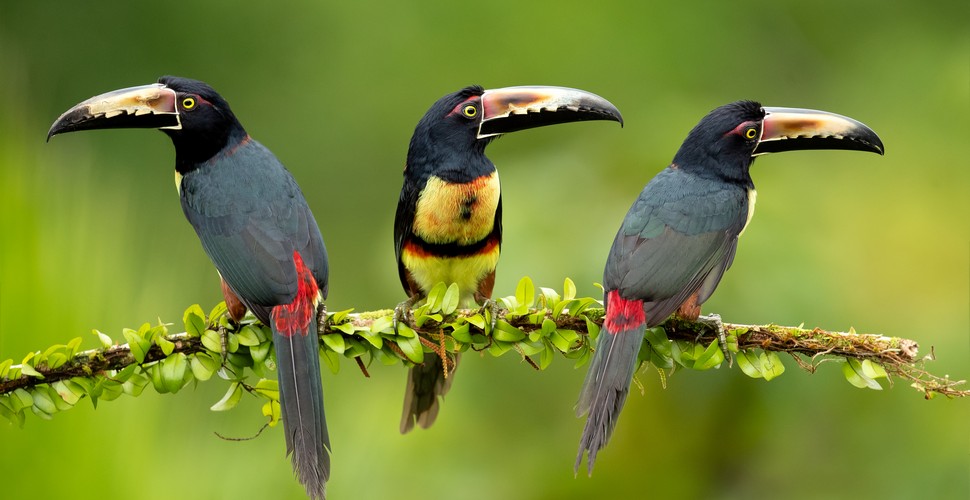
Panama Toucans
History
The isthmus of Panama was settled by an estimated 500,000 indigenous people belonging to different tribes distributed across coastal lowlands, offshore islands, and along the river banks of rain forests. Three indigenous tribes, the Kuna on the Caribbean coast, the Chocó on the Pacific side, and the Guaymí of the highlands near the Costa Rican border constituted the largest groups of the isthmus. Tribes lived in circular thatched huts on small independent villages, each ruled by a cacique, and cultivated corn, cotton, cacao, vegetables, fruits, and various root crops. Hunting and fishing were also very important for their survival. The indigenous people of Panama were skillful potters, stonecutters, goldsmiths, and silversmiths. Villages specialized in producing pottery, gold jewelry, and other goods, and participated in trade with larger indigenous civilizations, including the Aztecs. Dugout canoes allowed tribe members to travel long distances along the rivers and coastal waters, enabling them to flourish as successful merchants and traders. It is estimated that as many as sixty different tribes lived in Panama, but the prosperity they enjoyed would soon change with the arrival of European explorers. Rodrigo de Bastidas, sailing westward from Venezuela in search of gold, was the first European to encounter the Isthmus of Panama in 1501. A year later, Christopher Columbus arrived on the isthmus on his fourth voyage to the New World. Several Spanish expeditions followed, and the village of Antigua (Santa Although Diego de Nicuesa and Alonso de Ojeda were the crown’s representatives in Antigua, colonists rejected them as leaders and elected Vasco Núñez de Balboa as the mayor of Antigua. In an effort to verify the existence of another ocean across the mountains spoken of by the indigenous people, Balboa led an expedition across the Isthmus of Panama in 1513 and became the first European to see the Pacific Ocean.
Spanish leaders soon realized that Panama was a valuable conduit to the Pacific Ocean. In 1519 the capital was moved from Antigua to a fishing village on the Pacific coast that the natives called Panama (present Panama City), meaning “abundance of fish.” Panama City thrived as a slave market and served as a staging ground for further explorations for riches and conquest expeditions. Trade items—including gold from the Inca Empire in Peru— were carried across an overland route that was built across the isthmus, linking Panama City to the Pacific and Atlantic oceans. Panama quickly became the crossroads and marketplace of Spain’s empire in the New World. However, economic decline followed as gold was exhausted from Peruvian mines, shipment assaults by buccaneers increased, and contraband trade wiped out legal trade. Panama remained part of the Spanish empire for 300 years, until an independence movement, led by General Simon Bolivar (from Venezuela,) led to the defeat of the Spanish in his fight for Colombian independence in 1819. Panama declared its independence from Spain in 1821 and became part of the newly independent Republic of Gran Colombia, which included modern-day Colombia. Venezuela, and Ecuador. In 1830, the death of President and Liberator Simon Bolivar provoked the separation of the republics forming Gran Colombia and contributed to political instability and corruption during the first decades of the newly formed republic. Even though Panama was unable to achieve Independence and remained a Colombian province, the incursion of the United States into Panamanian territory in the early 1850s for the construction of a transcontinental railroad across the isthmus would play an important role in Panama’s journey towards independence.

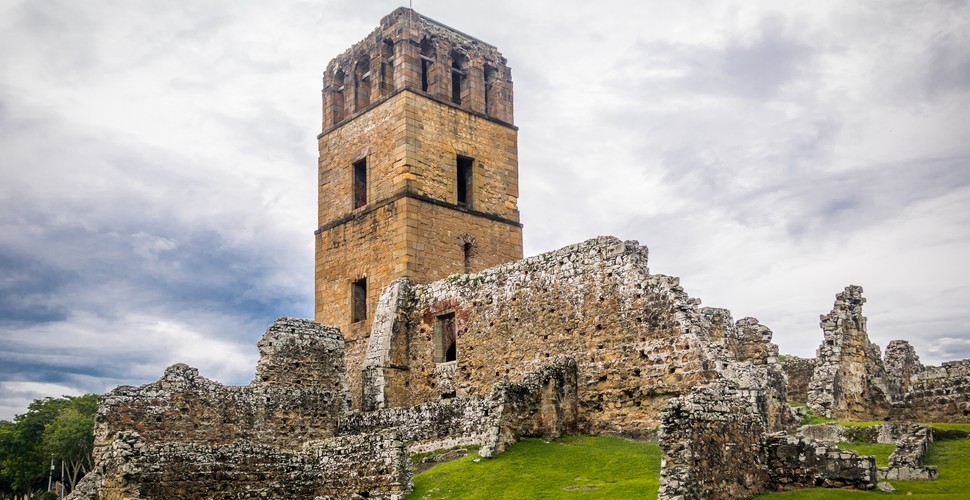
Casco Viejo
Economy
Panama has built its economy more on business, banking, and commerce than on tourism. But this is changing, as Panama is making a concerted effort to draw attention to her natural offerings, as well as her financial benefits. These elements, then, comprise the dual personality of this little country that holds such an important geographic position. Steadily increasing numbers of foreigners looking for inexpensive vacations and quality retirement are moving to Panama. The tourist industry accounts for about 9% of the GDP and has undoubtedly contributed to Panama’s economic boom. Special benefits for foreign retirees attract even more visitors and potential residents to the country. Panama is the most advanced nation in the region, the hub of the Americas, and one of the world’s biggest trading zones, thanks to geography and the Canal. Despite ongoing global economic problems, Panama is a prosperous country that boasts continued stability and growth. This is a young and healthy democracy and a safe and peaceful nation. It’s been 14 years since the Americans left and handed over control and management of the Panama Canal to the Panamanians. The Panama Canal is completing its newest expansion, which promises further economic prosperity. There is no doubt that the Panama Canal continues to contribute a great deal to Panama’s economic progress.
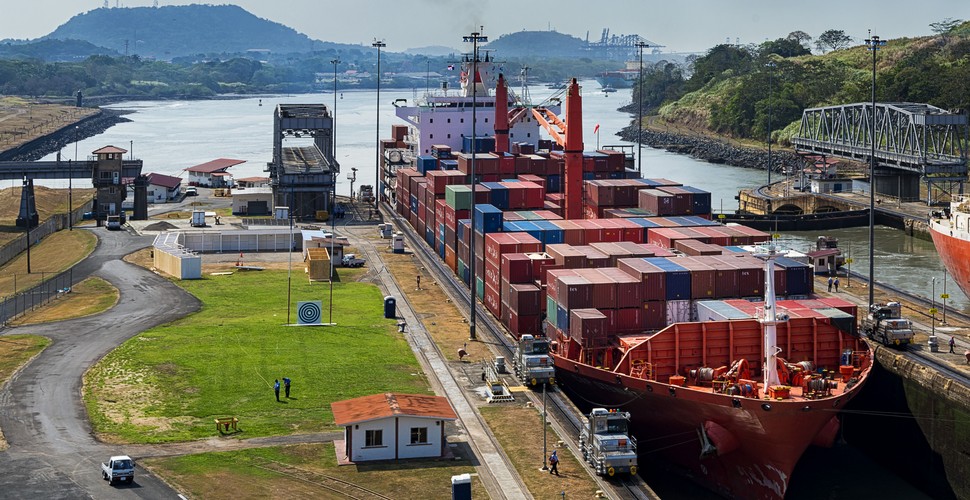
Panama Canal
Culture
Panama is a true melting pot of ethnic diversity. Its importance as a crossroads between two continents brought together many races and cultures over time. In the early 16th century, Spanish explorers intermarried with native people that were related to the Mayas of Guatemala and Mexico and the Chibchas of Colombia. Their descendants are called Mestizos (mixed Spanish and Indian) and are the largest ethnic group in Panama, comprising 70 percent of the population. Panama’s black population is the second largest ethnic group. Most arrived in Panama with the Spanish conquistadors to work as slaves. The rest descended from slaves imported from the West Indies to build the Panama Railroad and the Panama Canal, or to work on the banana plantations. There is also a smaller white population in Panama, called criollos. Most are descendants of the Spanish Colonists, and their families have traditionally held economic and political power in Panama. The dominant white class still shapes the country’s economy to a great extent. People of East Indian, Chinese, Middle Eastern, and European heritage also live in modern-day Panama. https://vaexpeditions.com/package/the-best-of-panamaMany of their ancestors arrived in Panama in the late 19th century. Today, three major Indian groups still remain in Panama. The Guaymi is the largest group. They live in western Panama, Bocas del Toro, and Veraguas provinces. The Guaymi still live as farmers, raising crops on their land, or as laborers on large banana and coffee plantations. The Guna people live in the San Blas Islands, where they maintain their own economic system, language, customs, and culture. The Embera Indians live in the province of Darien, selling craft items and agriculture. These remaining indigenous people represent Panama’s heritage. The constitution protects their ethnic identity and language.
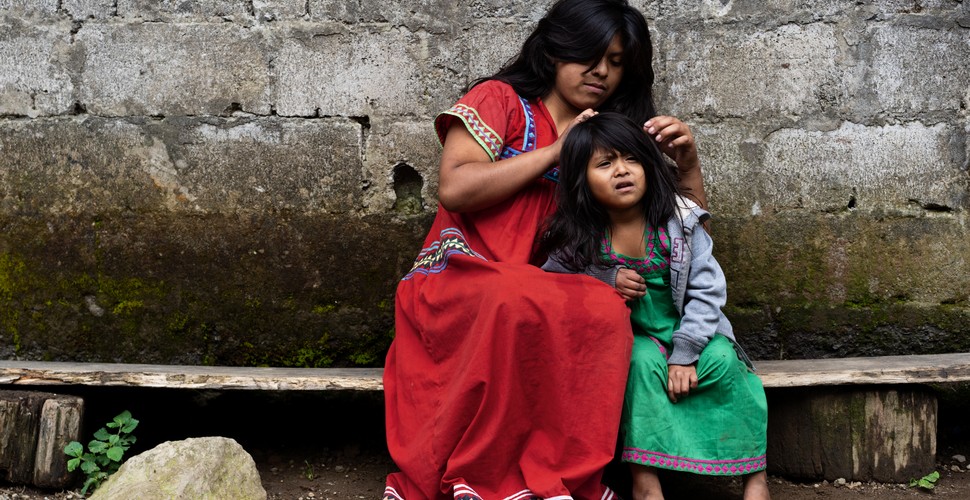
Guaymi Family
If this has inspired you to book a vacation to Panama then contact us here for more information!