


Claire
Travel in South America is a joy to behold. The rich variety of destinations, experiences, landscapes and geography fascinated me so much, that I chose to relocate here, over 20 years ago! The best thing I ever did! Allow me to share my knowledge and passion for Central and South America with you and help you plan your holiday of a lifetime!

MIND-BLOWING THINGS TO DO IN BOLIVIA
Written by:Claire
Last Update: 2024-12-05
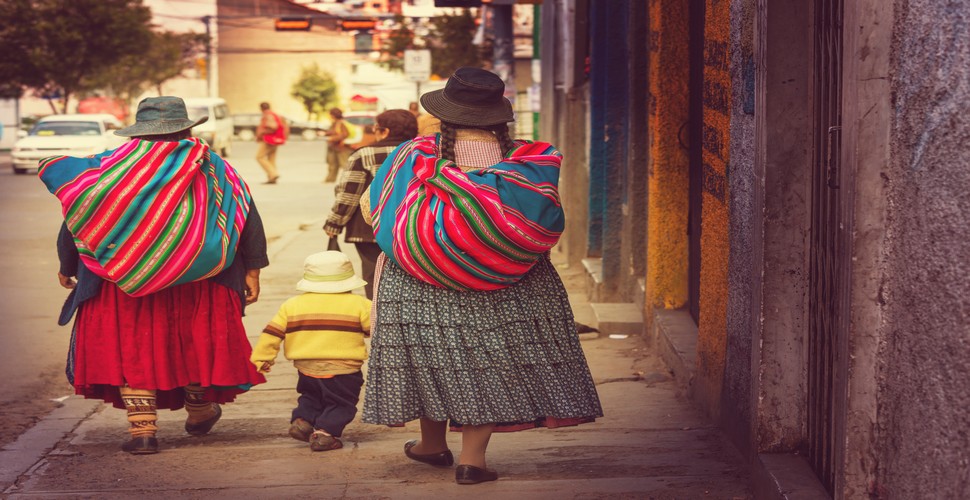
Typical Bolivia street scene
La Paz
The unofficial capital of Bolivia is set deep in a high -altitude valley is a sprawl of the modern and the traditional with this inter-mingling of cultures uniting in the most magnificent of settings. La Paz boasts the The moon valley at one end of the valley with ludicrous lunar landscapes to marvel at one end and traditional women wrestlers in full Andean garb at the other, for a fascinating insight into what makes this city tick.
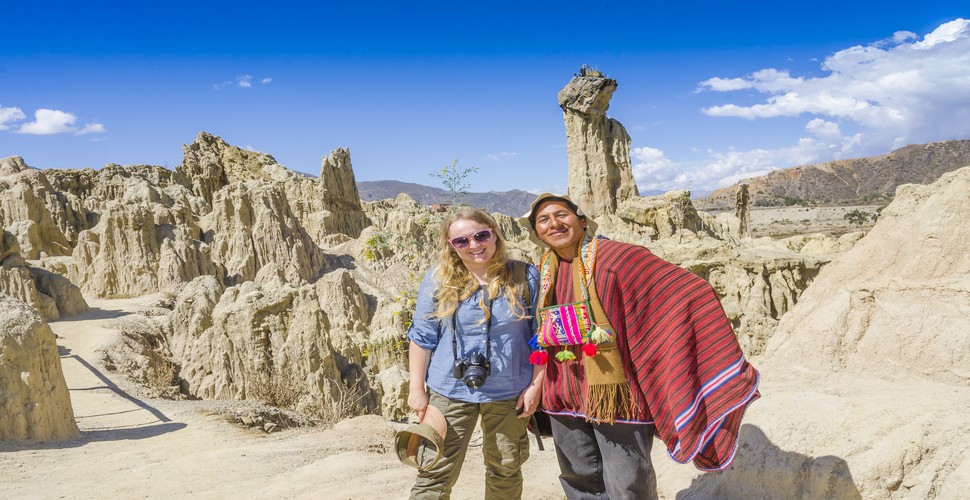
Moon Valley
Tucked in the middle, are the colonial, historical buildings, the witches’ market and a fine array of modern upmarket restaurants, as well as a high security “open” prison where inmates rule the roost and where zebras will help you across the busy main avenue that traverses the city. Eclectic, doesn’t even begin to describe this fascinating Andean city, which is most peoples first port of call in Bolivia.
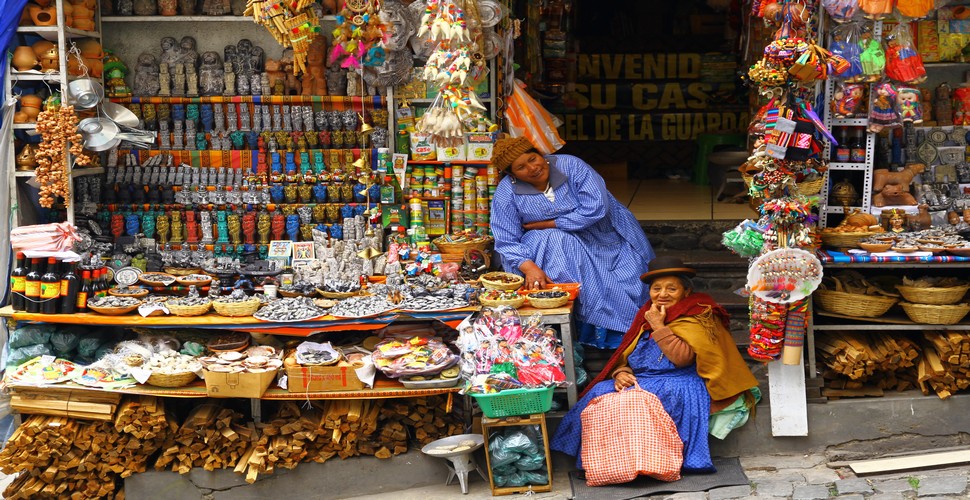
Witches market
Huayna Potosi
Huayna Potosi, in the Cordillera Real overlooks the city of La Paz and is a spectacular glacial sight in the distance. Reaching an altitude of 6,088m the Huayna Potosi summit is considered to be one of the easiest of the world’s 6000 metre summits, to climb. Don’t let this lull you into a false sense of security however, the air is thin and the climb is steep, just acclimatize appropriately and concentrate on the magnificent views below!
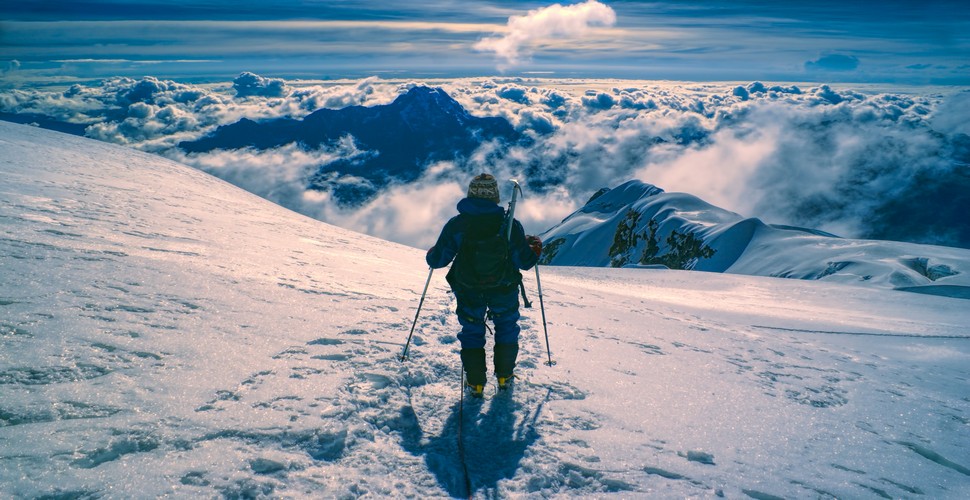
Huayna Potosi climb
The Cordillera Real
Those who don´t fancy the Huayna Potosi climb can head for their fix of the mountains to The Cordillera Real. There are a number of trekking options including the Tuni Cordoriri that don´t involve technical climbs, which offer just as spectacular views. The trekking in the Cordillera Real is pristine and virtually untouched with fewer visitors to the area. Blessed with glaciers, turquoise lakes and very little oxygen, what more could you ask for when trekking in The Andes!
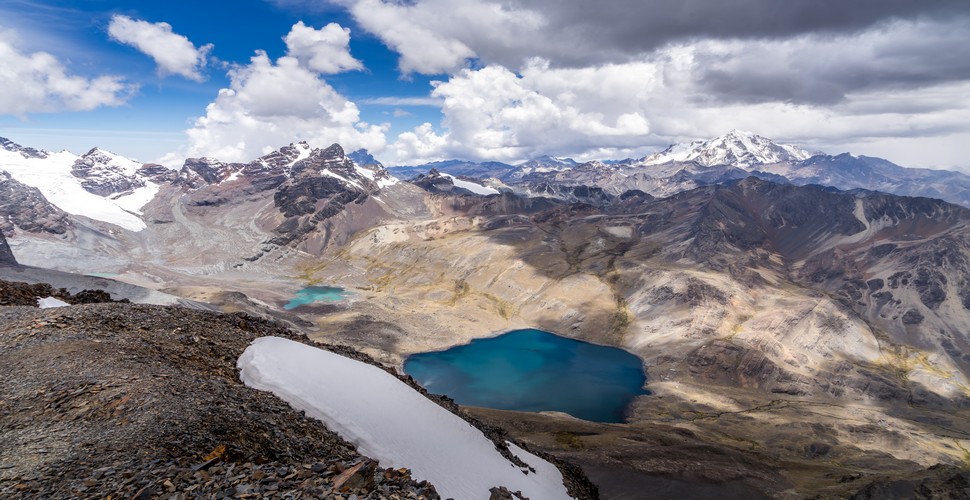
Cordillera Real
Lake Titicaca
Found on the border between Peru and Bolivia, tucked under the majestic mountains of the Cordillera Real, traditional Andean communities live in peace on the shores of this massive expanse of water, weaving their brightly coloured textiles and farming their high-altitude crops. This mystical lake was the mythical birth place of the Inca civilization and there are a number of ceremonial sites where Quechuas and Aymara’s pay homage to their natural deities of the sun, moon and the natural elements. The Island of the sun and Island of the moon from Copacabana, are the perfect trip to simply get away from it all and get back to grass roots Andean peacefulness.
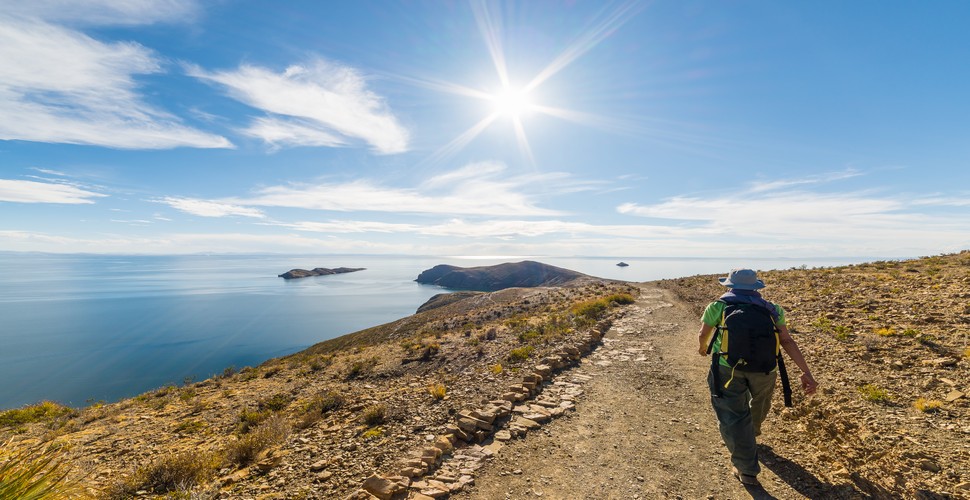
Lake Titicaca - Isla del Sol
Salar de Uyuni
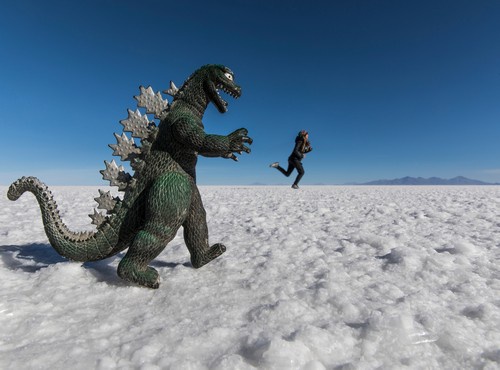
This immense salt flats of Uyuni were once a lake as large as Titicaca. This white expanse of salt as far as the eye can see offers no limit of scale and is a photographer’s dream. When the seasonal rains flood the surface of the world’s largest salt flat, it creates a mirror- like effect that is spectacular to see. This region is perfect to visit all year round for different experiences on these magnificent salt flats.
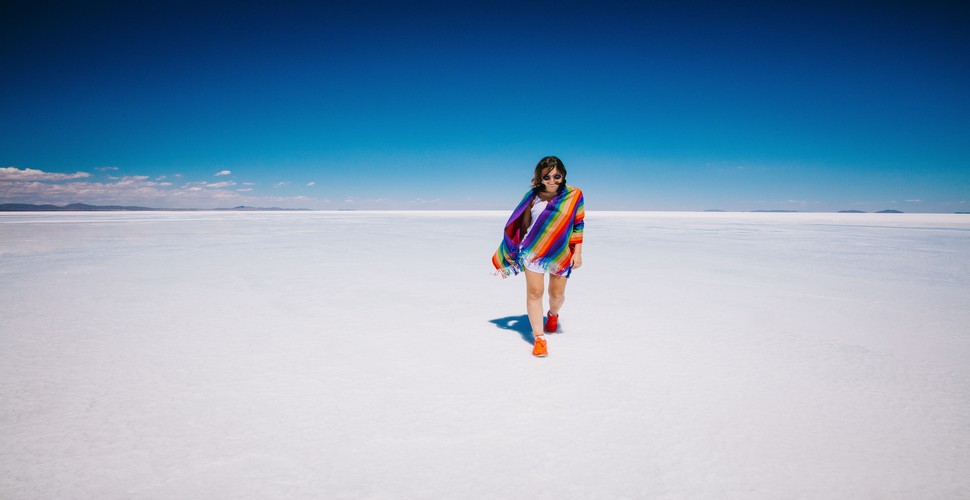
Uyuni Salt Flats
Sajama
This lesser-known national park close to Uyuni, features a giant volcano surrounded by high altitude lagoons, hot springs, and geysers. Bolivia’s oldest National Park found in the high-altitude desert, is home to some 100 locals who live in the same way they have done for thousands of years. Its unique landscapes and remoteness offer the perfect off the beaten track experience if you are looking for something further afield from the salt flats of Uyuni.
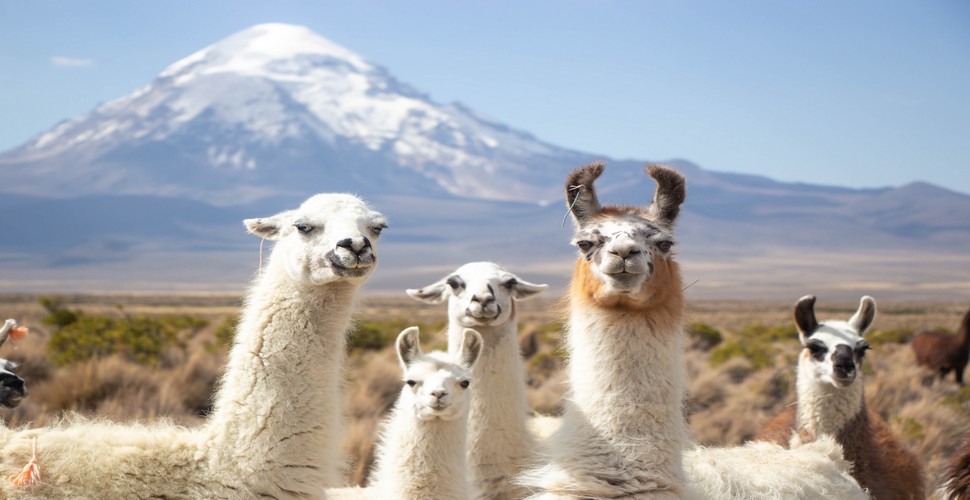
Sajama Volcano and llamas
The Eduardo Avaroa National Park
This land of steaming geysers, snow-capped volcanoes, welcoming hot springs, and flamingo filled lagoons, form part of Salar de Uyuni tour. This national Park will take you close to the border of Chile and Northern Argentina and is one of the highest deserts in the world, with associated extreme temperatures. Witness rock formations such as the Dahli desert, said to have influenced the famous French painter and the Stone tree in the middle of the desert are just examples of the remarkable geography of this remote region.
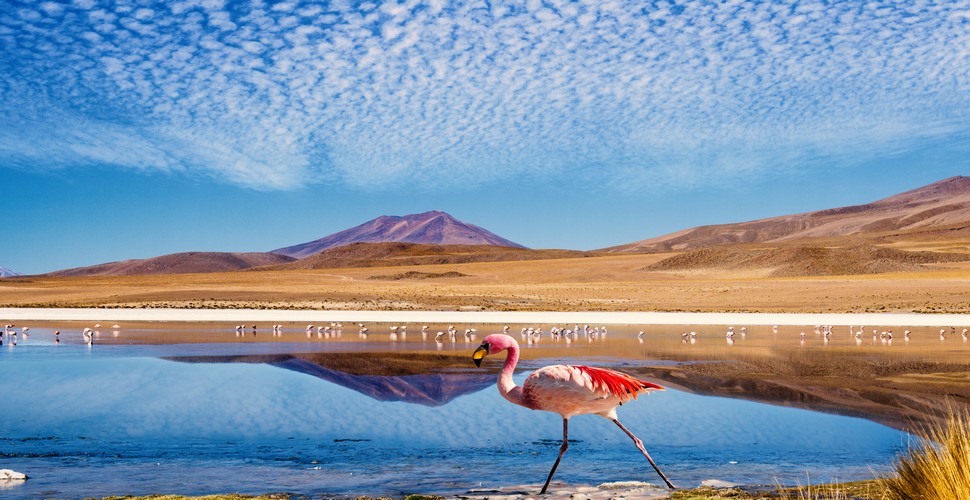
Eduardo Avaroa National Park
The Train Cemetery
Just outside of the town of Uyuni, these neglected old locomotives have been left to rust in the harsh desert air. These trains were brought over from the UK in the 19th century, when British engineers and laborers arrived in the town to build a connection between the local mines, La Paz and the sea-ports of Chile. Once the mines dried up these trains where all that remained in this remote region, left to rust and rot away, making for a bizarre image on your way to the salt flats.
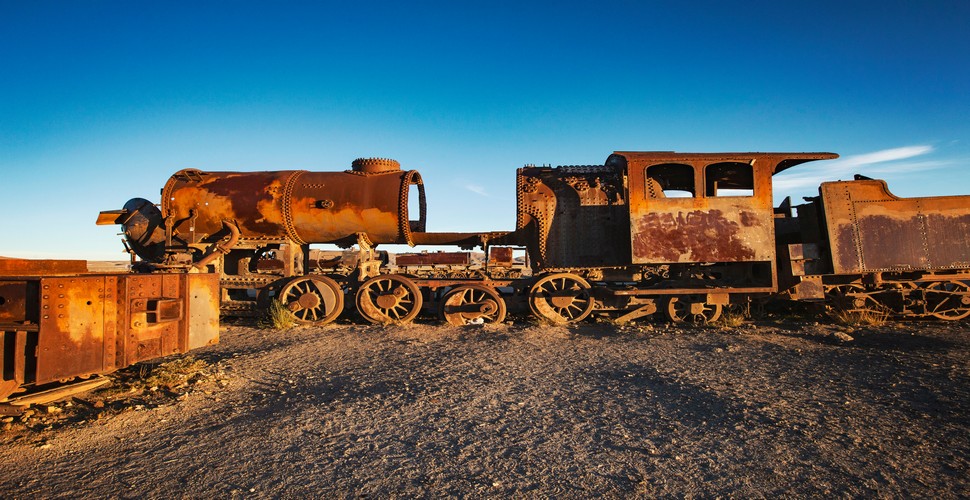
Train Cemetery
Sucre
The official capital of Bolivia and the home of the Spanish new world empire, the white-washed colonial magnificence of central Sucre offers a glimpse into its colonial past. Sucre has become a traveller’s hub in Bolivia, with coffee shops, cafes and even a dinosaur park called Cal Orko, where you can observe the giant footprints of our predecessors. The city is also the perfect base for exploring the traditional Indigenous market of Tabuco, famous for its magnificent textiles and native handicrafts.
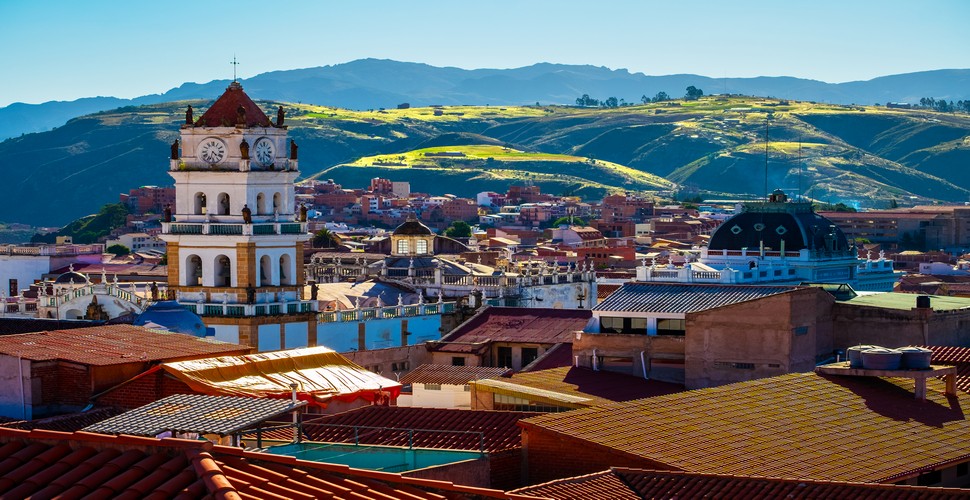
Sucre
The churches of Chiquitos
Jesuit missionaries descended on eastern Bolivia in the 17th century to convert non-believing “natives to their sect of Christianity. They did however leave behind a number of ornate churches throughout Chiquitos attracting many of visitors. Steeped in history and immaculately preserved, these impressive churches portray a different side of Bolivia’s history which is seldom explored. Their state of preservation has led to many churches appearing on the UNESCO list of World Heritage Sites.
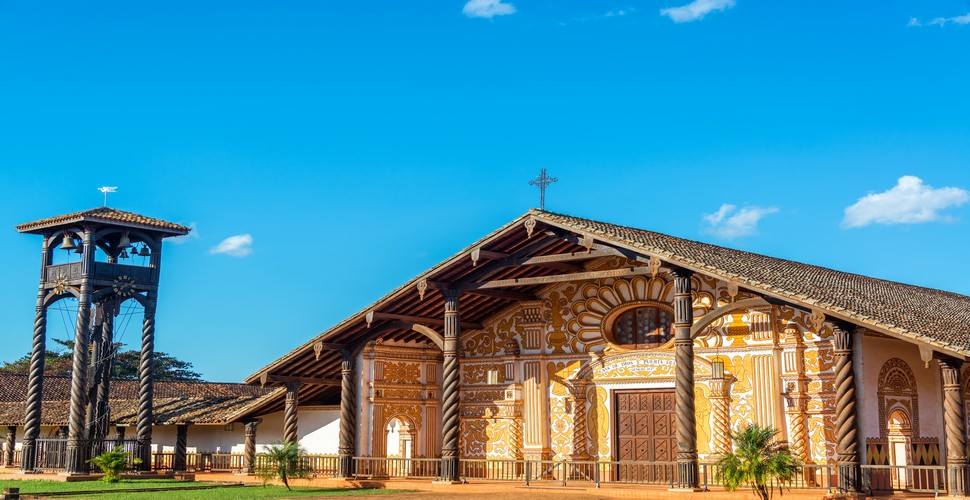
Chiquitos Church
The Amazon basin
Covering a large expanse of the country, Bolivia’s lowland jungles are thriving with exotic wildlife and full of striking Amazon scenery. The Madidi National park is excellent for wild life opportunities and was officially declared as the home to the greatest variety of animal and plant life on the planet. making it the most biodiverse place on the planet! There are a recorded 4,000 species, of which, 132 are new to science, including 13 types of butterflies, a spiny rat, and an amphibian called the whiptail lizard. These numbers don’t include the 10,000 insect species found in the park!
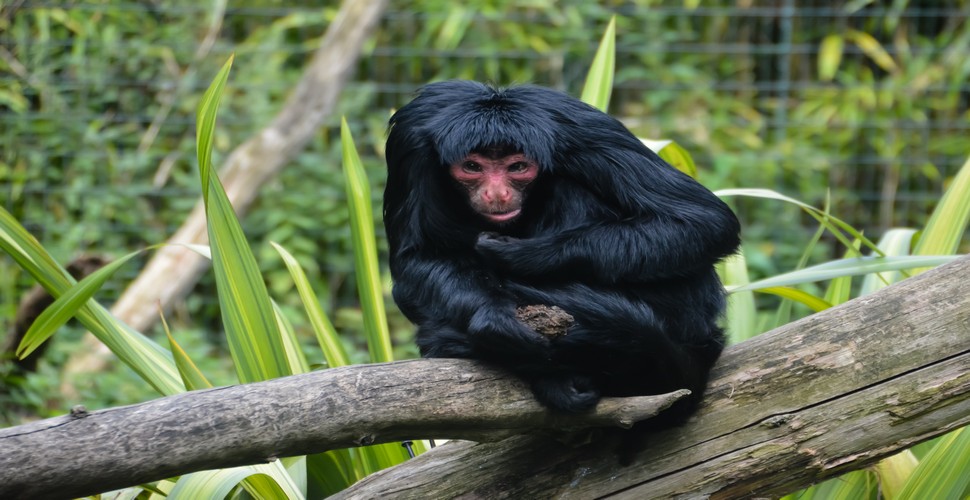
Madidi National Park
SHARE THIS POST
popular-posts-title