

Claire
Travel in South America is a joy to behold. The rich variety of destinations, experiences, landscapes and geography fascinated me so much, that I chose to relocate here, over 20 years ago! The best thing I ever did! Allow me to share my knowledge and passion for Central and South America with you and help you plan your holiday of a lifetime!
FAQs ABOUT BOLIVIA
Written by:Claire
Last Update: 2024-12-05
Here re some of the most frequently asked questions that we get about Va Expeditions tours and about Bolivia. Many answers are also on our website so please also check out the information there If not, please e-mail or call us and one of our travel advisors will answer your questions.
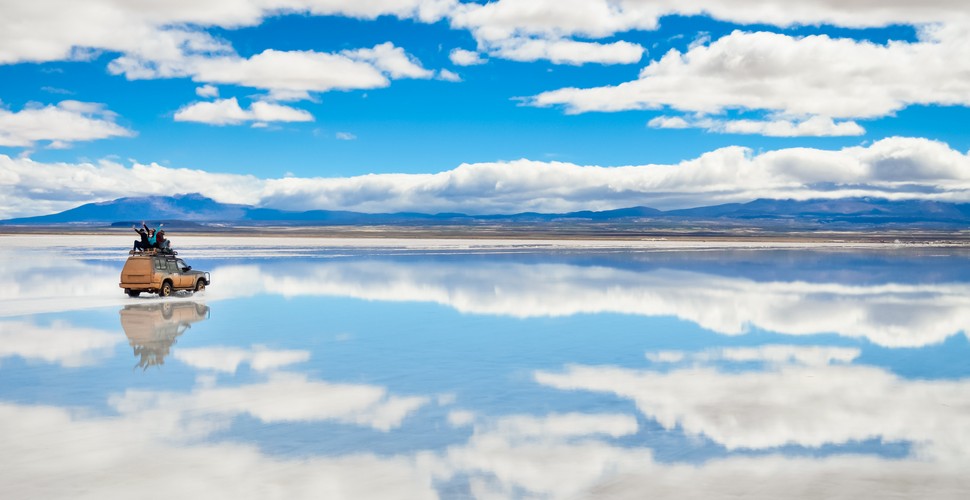
Salar de Uyuni
Who Can Travel on our Bolivia Trips?
Our trips are for anyone with an adventurous spirit who want to experience a unique country and learn about a different culture. Complete beginners and extreme experts have traveled with us ranging from 15 to 75 years old. We will help you choose the trip that best suits your interests and abilities and can customize any tour for any date for any size group.
What Types of Trips Are Offered?
Bolivia has a lot of potential for the complete vacation, whether casual or adventurous. Depending on your interests, time and budget you can choose the journey that suits your needs. Traditional tourism involves travel to cities and regions to learn in depth the traditions and cultural aspects of Bolivia. On the other hand, if you’re more adventurous, you have many options to travel through Bolivia to experience the un-discovered areas and the great geographic wonders of this land. Va Expeditions specializes in adventure travel that fits both categories – “soft” or “hard”. Depending on your needs and desires there are many options to choose from. We often combine regions and activities that offer an excellent variety. We specialize in designing custom-made itineraries and we are experts in adventure activities.
How Do I Get To Bolivia?
If flying, the gateway city to Bolivia from the US is usually Miami. An overnight flight of approximately 6 hours will have you in the cities of Santa Cruz or La Paz early the next morning. Departures from Bolivia to the US are either very early in the morning or early evenings from La Paz or Santa Cruz – depending on your airline. For example: flights offered by Aerosur from Miami to Santa Cruz & La Paz depart late in the evening and from La Paz to Santa Cruz and onto Miami in the early evening. Flights offered by AA (American Airlines) depart late in the evening from Miami to La Paz and depart back to Miami from La Paz, via Santa Cruz, very early in the morning.
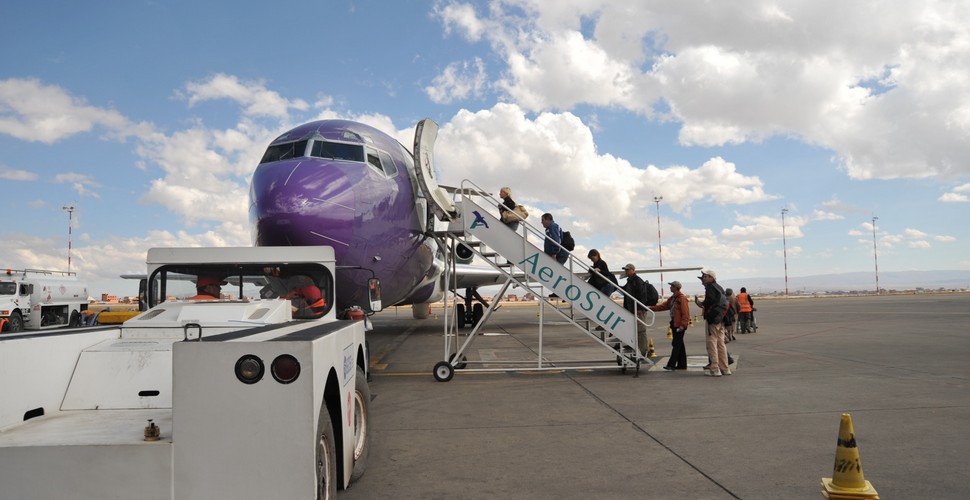
Aero Sur Domestic Airline
What Is Included in The Price?
Our prices are for land services as per the itinerary only and does not include international airfare. As a general rule, we include all transportation, guides, lodging, camping equipment (except sleeping bag or pad) and some specific equipment needed for an activity. The inclusions are specified in the terms and conditions well as the final itinerary that explains what accommodations and meals are included, as well as the rest of our services. We provide a detailed pre-departure packet including clothing and equipment list, vaccinations, altitude info, reading lists and other relevant and important information.
When Is The Best Time To Go To Bolivia?
The “optimum time” for travel is during the dry season (April to November) for most activities that are better suited to take advantage of the better climatic conditions, but we offer many trips year-round. For most trips the dry season is best because the weather is stable and the roads are in good condition. Depending on your activity and region you are traveling to, weather, road or river conditions may warrant travel only during certain seasons. Please ask us for specifics.
How Big Are The Groups And Can I Travel Alone?
Our goal is to offer quality trips for all participants so we keep our groups small, usually less than 12 people. We work with private groups so often this depends on how many people are in your group. Single travelers are welcome to travel with us but usually will have to pay a single supplement for hotels. We can accommodate tours for larger groups with prior planning. We generally do not offer set departures as we generally work with custom itineraries.
Do You Offer Custom Trips?
Most of our tours are customized in one way or another. Many of our custom trips are similar to the regular trips but have specific dates. Customization of our trips is what we do and we are quite flexible and can accommodate just about any request. Custom dates are available for specialized groups, private organizations family groups, etc.
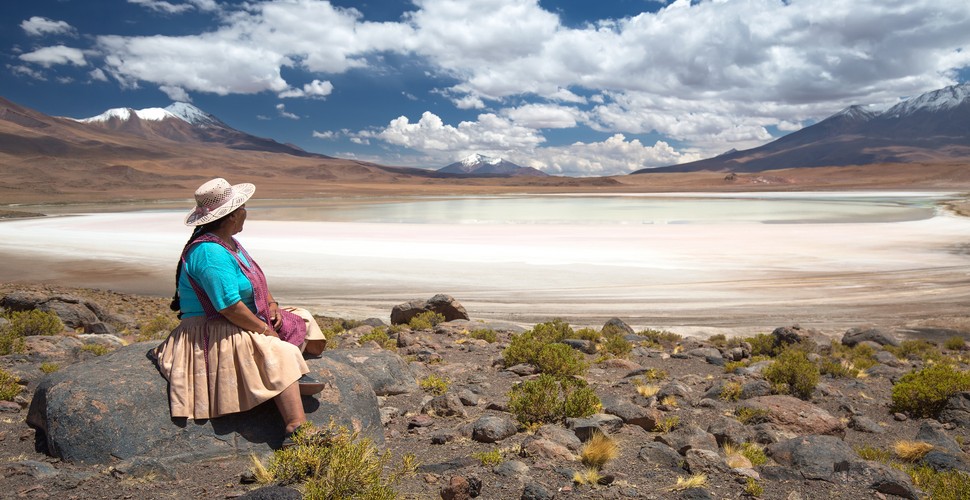
Lagua Colorada
What Types of Guides Will Be Leading the Trips?
The guides are usually native-born Bolivians and foreign nationals that are experienced, bilingual, and professional experts in the activity and the regions they travel in. The guides know every corner of the country and they are there to make sure that the guests have a unique and exciting adventure travel experience. A guide is often the most important person on a trip and we believe that the magic trip happens when the right guide is there. We strive to pick the best guide for the situation and are very careful of who works for us.
Can Va Expeditions Make Tours to Remote Locations?
This is one of our passions at Va Expeditions ! We LOVE adventure and off the beaten track experiences. We are always looking for new river descents, first ascents in the mountains, a new mountain bike ride, a remote wildlife spectacle to visit or find more hidden Inca Trails to explore. Most us have years of experience doing expeditions and love a challenge. You can count on us to arrange logistics, drop-off and pick-up, food,and whatever else you might need. We also offer luxury tours that focus on remote travel, with a luxury service!
Do I Need to Be in Good Shape?
Being in “good shape” is a relative term. We always prefer that people arrive in Bolivia in the best physical shape possible for their activity. Some trips don’t require a lot of physical effort but more of a mental attitude that is agile at dealing with surprises that may come along. The best is to be physically fit with a positive mental attitude. Of course, some trips require top physical and mental conditioning. When dealing with the altitude we highly recommend that you arrive in good cardiovascular shape and quit smoking before you arrive. Adequate acclimatisation can literally be a life-saver.
How Long Are Your Trips?
Our trips range from two days to 3 weeks – depending on the specific itinerary. Most trips average 7-9 days and are designed to take advantage of the weekends on either end of a 5-day week as much as possible. Since the trips are custom there really is no average length but there is a minimum number of days one needs in order to acclimatize properly.
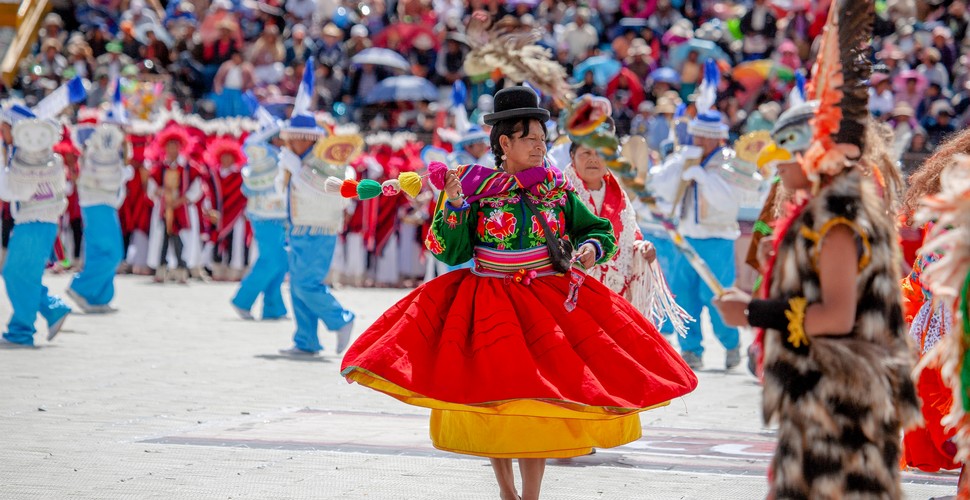
Oruro Carnival
How Do I Reserve a Trip?
To reserve a trip with Va Expeditions, you need to contact us with an itinerary in mind. You can see set itineraries on our website; however, you can adapt and change the activities as you wish with the help of our travel advisor. You trip is confirmed as soon as we receive your deposit. We will need full payment 60 days prior to departure date of the trip. You have the option of paying in instalments in order to facilitate your trip planning. The deposit may be paid for by credit card, money order, or wire transfer.
Are Refunds Available If I Decide Not to Go?
Once a reservation has been made you will need to pay 40% deposit and the balance 60 days before your tour date. No one will be allowed to participate on a trip unless all necessary documentation and paperwork is received, which includes a copy of your passport, a medical and liability form, your insurance details. The responsibility for obtaining proper documentation for international travel (i.e., visas, vaccinations and other expenses) rests with the passenger. See our flexible risk-free booking conditions here.
Do Many Tourists Visit Bolivia?
Actually, very few people visit Bolivia – mostly because no one hears about it much. That’s the reason why Bolivia is still authentic and untouched in many ways. Bolivia is an adventure lover’s paradise, with untouched nature and diverse geography, the cost of living is also one of the cheapest in South America, which makes it the perfect vacation destination.
What Language Do They Speak in Bolivia?
There are over thirty Indigenous groups in Bolivia but the official and universal language is Spanish. The official indigenous languages are Aymara (northern highlands, Lake Titicaca and northern Altiplano) and Quechua (southern highlands, southern Altiplano and temperate valleys). Few people speak English in the country side, but in the cities there are better chances of finding someone who may speak English.
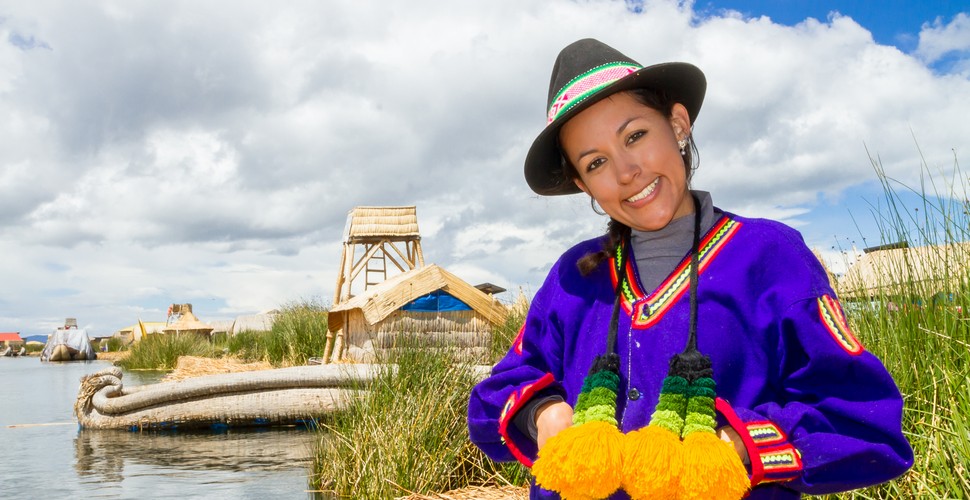
Titicaca
Where Is Bolivia?
Bolivia is located in the heart of South America. It is one of two landlocked countries in South America. (The other is Paraguay). Bolivia shares borders with Brazil in the north and east; Paraguay in the southeast; Argentina in the south; Chile in the southwest and west and Peru in the west and northwest.
How Big Is Bolivia?
Bolivia encompasses 1,098,000 sq. km. (680,760 sq. mi.). It is 1,500 km from north to south and 1,300 km at its’ widest point (930 and 806 miles respectively). It is roughly the size of Texas and California together or a little smaller than Alaska.
Is Bolivia Safe?
It is safe to say that Bolivia has been and is still one of the most peaceful, safe and hospitable countries in the Americas. Thousands of tourists per year have been traveling to this unknown destination for decades and have experienced warm hospitality, charming people and a welcome hand. Bolivians in general can be said to be very polite and helpful and always welcome people from all over the world. Big cities have their risks as does any city in the world, keep your wits about you and pack some trip savvy and you will have a trouble-free vacation! See our blog on travel safety for more information.
What Type of Government Does Bolivia Have?
Bolivia is a democratic Republic with three branches: Legislative, Executive and Judicial. It has embraced democracy many years ago yet still struggles with the peculiar model of democracy that, like many countries around the world, has ups and downs as it develops and grows into a system that strives to represent every citizen in the country equally.
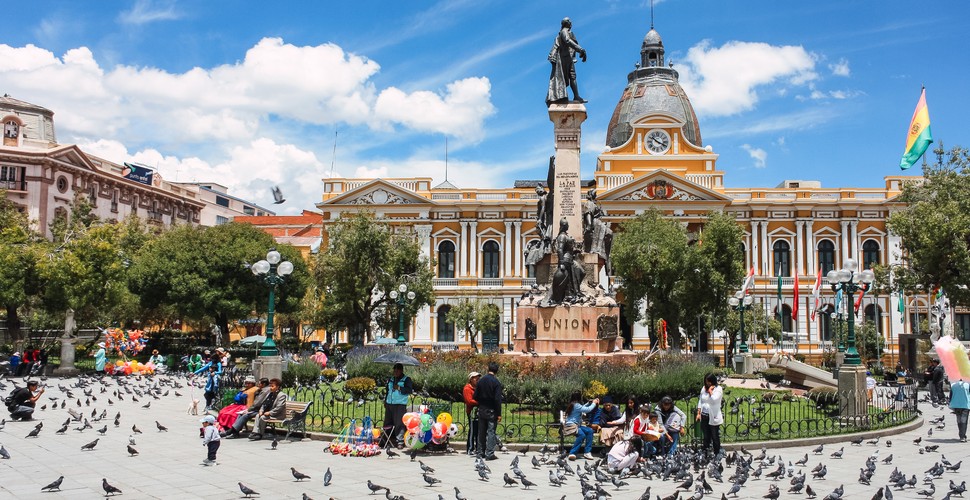
Government Palace, La Paz
What Is the Environment Like?
Within the last twenty years the evolution of an environmental consciousness has arisen and the cataloguing and protection of biologically diverse regions has taken place. Scientists and environmental groups worldwide have recognized that Bolivia has some of the most biologically diverse regions in the world. Within its borders lie the Andes Mountains, the vast Altiplano plateau, Lake Titicaca, the Salar de Uyuni (the world’s largest salt flat), virgin cloud forests in the Yungas, semi-tropical and tropical forests from the highland valleys to the eastern lowlands of the Amazon basin and the scrub forests and deserts of the Chaco in south-eastern Bolivia. All these regions have flora and fauna that live relatively undisturbed – and many that are not catalogued yet. There are about 30 national parks established in Bolivia.
What Is the Capital of Bolivia?
The official capital is Sucre (seat of the Judicial branch) but the de-facto and more well-known capital is La Paz (seat of the Executive & Legislative branches). It has an international airport, the embassies, many aid organizations and N.G.O.’s and is the headquarters for some of the largest businesses in the country.
What Are the Major Religions in Bolivia?
Approximately 97% of the population is Roman Catholic. However, there is a significant mixture of Catholic and pagan rituals, superstitions, and beliefs that are expressed by mostly the indigenous population (but certainly not limited to them) on a daily basis.
What Type of Education Is Offered in Bolivia?
Compulsory school attendance from ages 7 to 16 is the norm. However, due to a lack of resources and teachers in rural areas, children may not reach their teenage years and graduate from high school. The literacy rate of Bolivia is approximately 78%.
What Are the Different Geographical Regions of Bolivia?
Bolivia is made up of six geographic regions:
The Andes
The Altiplano
The Yungas and Chapare
The Highland Valleys
The tropical lowlands of the Upper Amazon Basins
The Gran Chaco
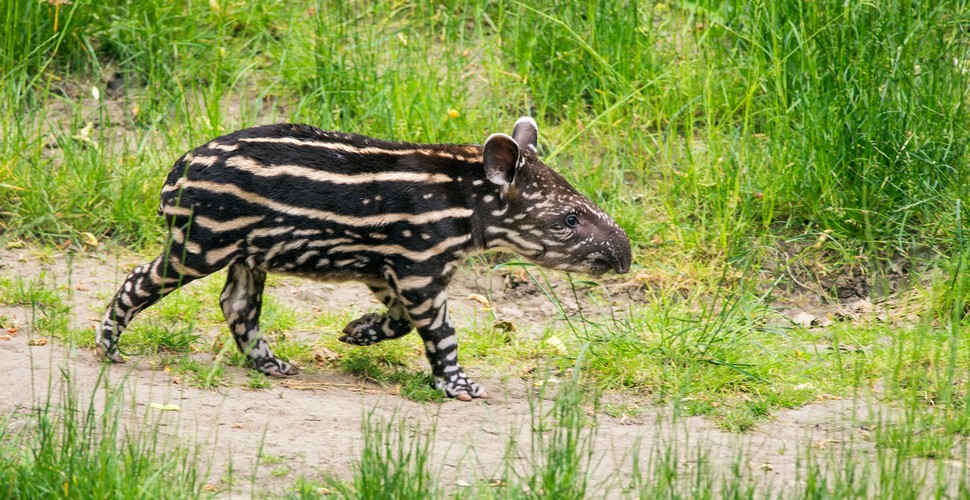
Tapir in The Yungas
What Is the Climate Like?
In general, the climate in Bolivia are dictated mostly by altitude not latitude. The basic weather pattern of Bolivia is the wet and the dry season, which happens at the same time countrywide. There are basically five separate climatic regions: The Andes and Altiplano, the Yungas and Chapare, the temperate valleys, the Chaco and the tropical lowlands of the upper Amazon basin. See this blog for more information about the best time to visit Bolivia.
What Is the Altitude in Bolivia?
The altitude in Bolivia varies greatly from the lowlands which has altitudes as low as 200 feet above sea level to the Andes, which has several peaks over 21,000 feet. La Paz averages an elevation of 11,500 feet so an acclimatization period of a day or two is usually necessary.
What Are the Visa Requirements?
Requirements for all countries change with frequency so you must contact the Bolivian Embassy in your country to get the latest details. Currently, American citizens DO NEED a visa to enter Bolivia. Your passport should have validity for at least 30 days beyond your departure date from Bolivia. A minimum 30-day stay is allowed and can be extended to 90 days at the airport or at the Immigration department in La Paz or other major cities. Some countries require you to have visas to enter their country as well, so make sure you have the right visa before trying to enter them from Bolivia. You can obtain visas from the consulates of other countries in La Paz, Bolivia. Check out this blog for more detailed information.
What Is the Currency of Bolivia?
The currency in Bolivia is called a Boliviano. It is divided into 100 cents (centavos). The Boliviano comes in paper notes of 5, 10, 20, 50, 100, and 200 Boliviano denominations. The coins are in centavos of 10, 20, 50, 1 Boliviano and 2 Bolivianos.
To change money, can go to Casas de Cambio (money exchange houses), or to the money changers on the street. Banks will do so as well but not all of them. Credit cards are more widely accepted today and most hotels, restaurants, travel agencies, rent-a-car agencies, airlines, and other businesses. ATM machines are quite abundant and ATM cards can be used if they are within the systems shared by most international banks.
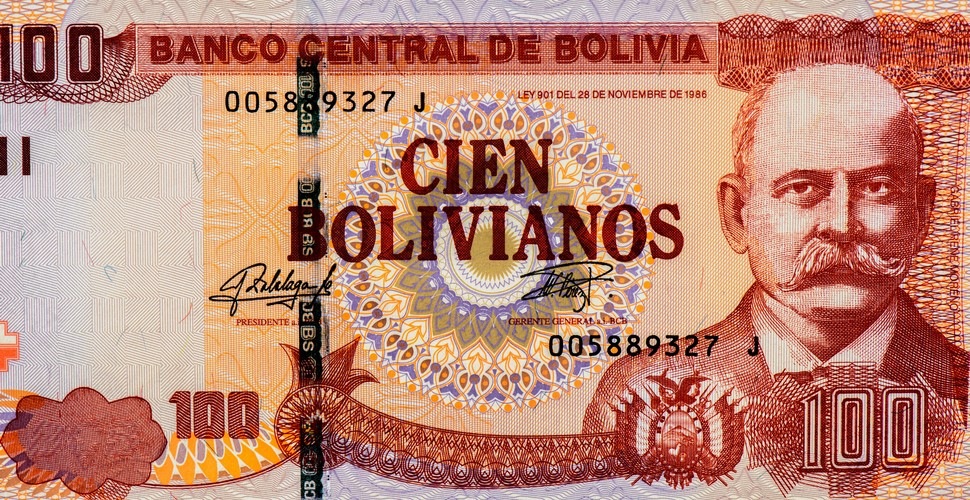
100 Bolivianos
.
What is The Accommodation Like In Bolivia?
The range of accommodations throughout the country can be anything from a hammock under a thatched roof to rooms in private homes and residenciales, and from hostels to 1 to 5-star hotels in the major cities. In general, the more remote it is, the less chances of finding quality and comfortable accommodations. Most cities and towns offer hotels, hostels and residenciales of all levels. The more you pay the better the service, security and accommodations and the better the neighborhood as well.
Is It Safe to Drink the Water and Eat the Food?
Since Bolivia is still a developing country, travelers still need to develop a common-sense approach to travel and diet while visiting Bolivia, especially in more remote areas. Be aware that your body and the organisms living in your digestive system are used to one type of diet and when you travel, your diet changes, so you may experience an upset stomach or worse. Some people traveling to more developed countries have run into the same problems as people going to Bolivia. In the larger cities and towns food and beverages served in reputable restaurants will generally be safe to eat and drink. If you are not sure, “boil it or peel it” is a safe course of action. In general, it is best to stay with bottled beverages or boiled drinks and maintain yourself hydrated as much as possible, especially in the highlands and the tropics. If you are not sure, either treat it chemically or physically with a quality water filter that kills and removes bacteria and viruses. But, by all means do not think that it is all going to make you ill. Psychologically you are not helping your body and system and for sure you will be missing out on a culinary spectacle that Bolivia is known for. Experiment and try everything; eat and drink and use common sense. The food and drink of this country are one of the things that what make it so special. Don’t miss out on some delicious local fare just because it looks strange!
Where Are the Hospitals Located?
All major cities and towns of any considerable size will have hospitals and clinics available to the public. The clinics tend to be better than hospitals in most cases as they are privately owned and operated. Thus, their services and doctors are not dependent on the local governments for supplies, training and equipment.
What Types Of Flora And Fauna Are In Bolivia?
The variety of flora and fauna is so huge that it would take volumes to showcase. Suffice it to say that there are over 1500 bird species in Bolivia, a great variety of mammals from mice to jaguars, reptiles of all sizes and shapes, insects that would take a lifetime to catalogue and flora ranging from cactus to bromeliads and from palm trees to lichens. Bolivia has great biological diversity in all regions.
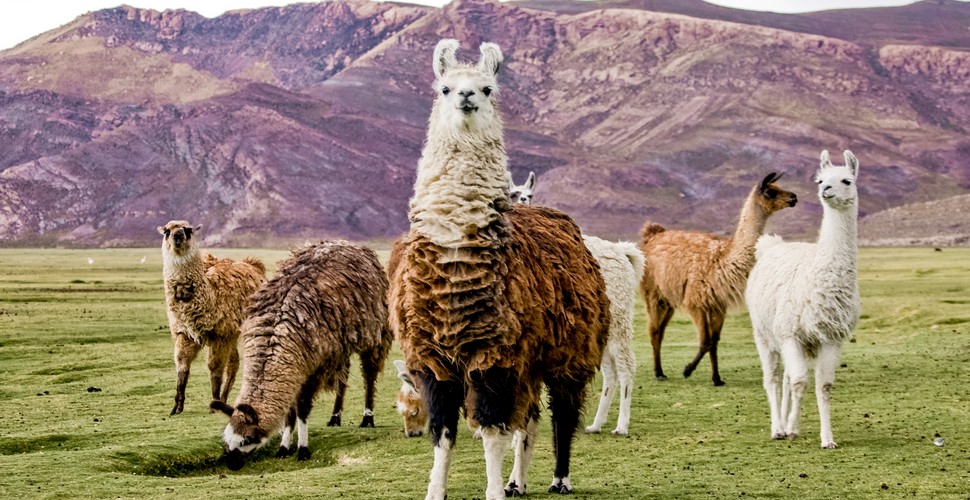
Llama Herd
Can I Make International Calls From Bolivia?
The national telephone company, Entel, has national and international offices across the country. One can call internationally from all major cities and some smaller towns and villages. Faxes can also be sent easily. Prices vary depending on where you are. Cellular phones are quite popular and all major cities have the service from either Entel or other private phone companies. Cellular telephone service is available across the country and is quite modern and reliable. Phone cards are readily available and you can call anywhere in the world and solar-powered telephone booths can be found in the middle of nowhere. Little by little the Internet is making its way into remote areas and Internet Cafes are in all major and minor cities. There is no lack of communication possibilities in Bolivia.
Is There a Postal Service Available?
There is a national postal system that serves the whole country. All capitals, major cities and towns have post offices that serve national and international destinations. There are also offices of the major courier companies (UPS, FedEx, and DHL) in all capitals.
What Type of Electricity Does Bolivia Use?
Bolivia, like most of the world, uses the standard 220 volts at 50 cycles. However, in certain areas like La Paz and a few other areas in Bolivia, 110 volts at 50 cycles is also used (like the US and Canada). Be sure to ask before you plug in. If in doubt assume its 220 and use a converter, but be sure that it is for the intended purpose and the for the correct electrical appliance.
Do I need Travel Insurance?
We highly recommend that you purchase insurance for the following: trip cancellation, lost/stolen baggage, extended medical and evacuation costs. An unforeseen illness or unexpected event may require you to cancel your trip. In order to protect yourself, your baggage and/or personal property, a short-term traveler’s insurance package may be purchased through your travel or insurance agent who can advise you as to what is available and their costs.
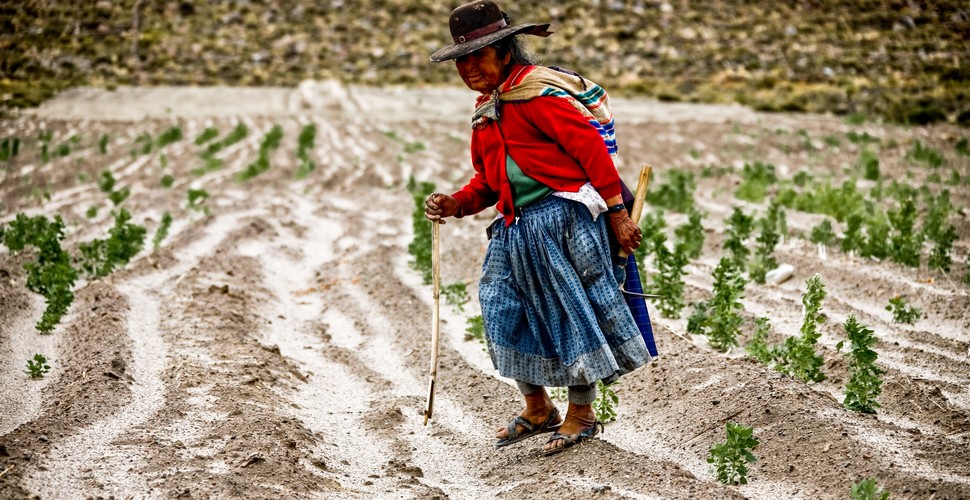
Native Potato Farmer
SHARE THIS POST
popular-posts-title